The best wheel cleaners make routine detailing faster by loosening brake dust, road film, and tire grime before you scrub. The right formula can also help protect delicate finishes from unnecessary abrasion.
This roundup compares 10 wheel cleaners across non-acid formulas, iron-removing sprays, ready-to-use bottles, and larger concentrates so you can match performance and value to your vehicle.
Best 10 Wheel Cleaners Picks for 2026
Professional-Grade Protection

- Gallon-size non-acid formula
- Foams to lift brake dust and grime
- Suitable for many wheel finishes
Best For: Frequent detailing and high-volume wheel care
Visible Iron Decontamination
Turtle Wax Hybrid Solutions Iron Remover
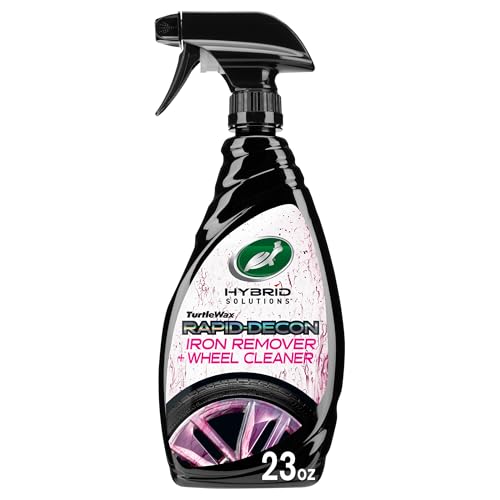
- Turns purple around iron contamination
- pH-neutral and acid-free
- Works on wheels and several exterior surfaces
Best For: Compact iron-removal and wheel-cleaning jobs
Color-Changing Wheel Care

- Red color change signals iron reaction
- pH-neutral, non-acid formula
- Suitable for many wheel finishes
Best For: Visible, routine brake-dust decontamination
All-in-One Tire and Wheel Cleaning
Adam's Polishes Wheel & Tire Cleaner

- Cleans wheels, tires, and wheel wells
- Targets browning and old dressing residue
- Gallon size for frequent detailing
Best For: Whole-wheel-and-tire preparation before dressing
Professional Non-Acid Protection
- Acid-free and suitable for many wheel finishes
- Removes brake dust, iron, oil, and road grime
- Usable on wheels, tires, and brake parts
Best For: Multi-surface wheel and tire cleaning
Fast Everyday Cleaning
Armor All Extreme Wheel & Tire Cleaner

- Ready-to-use 24-ounce spray
- Works on several wheel and trim materials
- Loosens grime in a 30-second soak
Best For: Quick routine wheel and tire cleaning
Professional Foam Value
Nanoskin Non-Acid Wheel & Tire Cleaner

- Concentrated 1-gallon formula
- 4:1 dilution and thick cling foam
- Safe for multiple wheel finishes
Best For: High-volume DIY and professional detailing
Versatile Finish-Safe Pick
Chemical Guys Signature Series Wheel Cleaner

- Foaming formula targets brake dust and road grime
- Safe for multiple gloss wheel finishes
- Works across cars, trucks, motorcycles, and more
Best For: Routine cleaning across varied wheel finishes
Heavy-Duty Visual-Cleaning Pick
Griot's Garage Heavy-Duty Wheel Cleaner

- Turns purple when interacting with brake dust
- pH-balanced and non-acidic
- Includes a generous 35-ounce bottle
Best For: Stubborn brake dust and frequent detailing
Value Multipack Pick
Chemical Guys Diablo Wheel Cleaner

- Two 16-ounce bottles for 32 ounces total
- pH-balanced for regular maintenance washes
- Cleans wheels, rims, and tires
Best For: Routine cleaning and keeping a spare bottle on hand
Professional-Grade Protection – P & S Brake Buster
For shoppers comparing wheel cleaners for regular detailing, P & S Brake Buster stands out as a gallon-size, non-acid formula designed to tackle brake dust, oil, dirt, and light corrosion. It can be used straight from the bottle or diluted for foaming applications.
Best For: Detailers and high-use garages that want broad wheel-finish compatibility and a large professional-size bottle.
Pros:
- Non-acid formula is designed for chrome, aluminum, painted, powder-coated, and steel wheels.
- Foaming action helps lift grime from hard-to-reach areas.
- Targets brake dust, iron buildup, oil, dirt, and light corrosion.
- Leaves a protective coating intended to help repel future grime and oxidation.
Cons:
- The one-gallon size may be more product than occasional users need.
- It is primarily a wheel-and-tire cleaner rather than a compact travel-size option.
Brake Buster is a practical pick when you want professional-oriented wheel cleaners in a high-volume container. Its non-acid formulation and foaming flexibility make it versatile, while the gallon size suits frequent vehicle care.
Visible Iron Decontamination – Turtle Wax Hybrid Solutions Iron Remover
Turtle Wax Hybrid Solutions combines wheel cleaning with iron removal in a 23-ounce bottle. Among wheel cleaners, it is especially useful when you want a visible color-changing reaction while treating brake dust, embedded iron particles, and road grime.
Best For: Drivers who want a compact, pH-neutral cleaner for wheels and selected exterior surfaces before polishing, waxing, or coating.
Pros:
- Color changes from clear to purple when it contacts iron or rust.
- pH-neutral, acid-free formula is listed as suitable for paint, metal, glass, and all wheels.
- Helps remove embedded brake dust and road grime with less heavy scrubbing.
- Scent-blocking technology is designed to reduce the typical iron-remover odor.
Cons:
- The 23-ounce bottle offers less product than the gallon-size alternatives.
- Its iron-removal focus may be more specialized than needed for light routine dirt.
This Turtle Wax option is a strong choice for occasional decontamination and surface preparation. The color-changing reaction makes it easy to see where iron contamination is being addressed, while the smaller bottle keeps it convenient for home use.
Color-Changing Wheel Care – SONAX The Beast Wheel Cleaner
SONAX The Beast is a 1-liter option for shoppers seeking wheel cleaners that visibly react with iron-containing brake dust. Its spray-and-rinse process is designed for cool, dry wheels and allows two to four minutes of working time before rinsing.
Best For: Routine wheel detailing when you want visible contamination feedback and compatibility with multiple wheel finishes.
Pros:
- Turns red as it reacts with iron-containing brake-dust contamination.
- pH-neutral, non-acid formula is listed for steel, light-alloy, painted, chrome, polished, and matte finishes.
- Designed to loosen heavy brake dust and road grime with limited scrubbing.
- Works around wheel systems equipped with TPMS sensors when used as directed.
Cons:
- Must not be allowed to dry on the wheel surface.
- Stubborn areas may still require agitation.
The Beast offers a useful balance of visible iron reaction, broad stated wheel compatibility, and a straightforward spray-and-rinse routine. It is best suited to users who can follow the timing and rinsing instructions carefully.
All-in-One Tire and Wheel Cleaning – Adam's Polishes Wheel & Tire Cleaner
Adam’s Polishes Wheel & Tire Cleaner is a gallon-size choice among wheel cleaners for shoppers who also want to address tire browning, old dressings, grease, wax buildup, and polymers. Its high-sudsing formula is intended for frequent detailing and tire-prep work.
Best For: Vehicle owners and detailers cleaning both wheels and tires before applying tire dressing.
Pros:
- Targets heavy brake dust, dirt, tire browning, silicones, grease, wax buildup, and old dressings.
- Listed as safe for clear-coated, powder-coated, chrome, alloy, and painted wheels.
- High-sudsing formula supports wheel, tire, and wheel-well cleaning.
- Cleaning tires first can help maximize the performance and longevity of tire dressings.
Cons:
- The gallon container may be inconvenient for users who only detail occasionally.
- Its stronger all-in-one cleaning focus may be unnecessary for lightly soiled wheels.
Adam’s is a versatile bulk option when tire cleaning matters as much as wheel cleaning. It is particularly useful before dressing because it is designed to remove residues that can interfere with a clean, even finish.
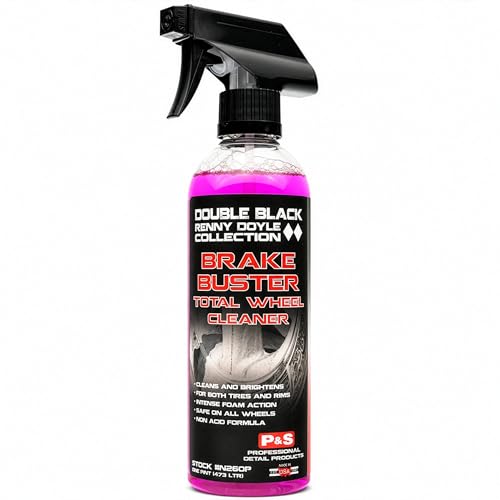
Professional Non-Acid Protection – P&S Brake Buster
For shoppers comparing wheel cleaners, P&S Brake Buster is a versatile non-acid option designed to tackle brake dust, iron, road fallout, oil, dirt, and light corrosion. It can be used on wheels, tires, and brake parts, either straight from the bottle or diluted in a foam sprayer.
Best For: Drivers and detailers who want broad finish compatibility and a cleaner that can also be used on tires and brake components.
Pros:
- Acid-free formula is listed as safe for steel, aluminum, chrome, painted, and powder-coated wheels.
- Targets brake dust, iron, road fallout, oil, dirt, and light corrosion.
- Can be sprayed, agitated with a soft-bristle brush, and rinsed with water.
- Leaves a protective coating intended to help repel future grime buildup.
Cons:
- The 16-ounce bottle is smaller than the gallon-size option in this roundup.
- Stubborn contamination requires brush agitation rather than spray-and-rinse use alone.
Brake Buster stands out as a flexible choice for routine wheel and tire care, particularly when finish safety and multi-surface use are priorities.
Fast Everyday Cleaning – Armor All Extreme Wheel & Tire Cleaner
Armor All Extreme Wheel and Tire Cleaner is a practical pick among wheel cleaners for quick maintenance. Its spray formula is designed to penetrate hard-to-reach areas and loosen dirt, grease, tar, and brake dust, with a stated 30-second soak time before rinsing.
Best For: Routine car care when you want a ready-to-use spray for factory or aftermarket wheels, tires, hubcaps, and plastic wheel trims.
Pros:
- Works on alloy, steel, chrome, and plastic wheel trims according to the supplied notes.
- Targets dirt, grease, tar, and brake dust in hard-to-reach areas.
- Designed to work after a 30-second dwell time.
- The 24-ounce spray bottle is ready to use without mixing.
Cons:
- Instructions call for cool wheels and tires, rinsing, and drying to prevent water spots.
- The notes emphasize cleaning performance rather than a protective coating or dilution flexibility.
This is a straightforward maintenance cleaner for shoppers who value speed and convenience over concentrated, professional-size formats.
Professional Foam Value – Nanoskin Non-Acid Wheel & Tire Cleaner
Nanoskin Non-Acid Wheel and Tire Cleaner is a concentrated gallon-size choice for wheel cleaners, offering a 4:1 dilution ratio and cling-focused foam. The alkaline formula is intended to lift brake dust, oil, dirt, stains, light corrosion, grease, wax buildup, and old tire dressing.
Best For: DIY enthusiasts and professional detailers who need a high-volume concentrate with extended foam cling and tire-cleaning capability.
Pros:
- One-gallon concentrated format can be diluted at a stated 4:1 ratio.
- Xtreme Cling foam adheres to vertical surfaces for longer dwell time.
- Non-acid formula is listed as safe for clear-coated, powder-coated, chrome, alloy, and factory-painted wheels.
- Cleans tires and removes old dressings, leaving rubber ready for fresh dressing.
Cons:
- Requires dilution and suitable spraying equipment for the intended workflow.
- The gallon container is less convenient for occasional users than a ready-to-use spray.
- Heavy contamination may still benefit from a wheel or tire brush.
With its large format, dilution flexibility, and thick cling foam, Nanoskin is especially compelling for repeated detailing jobs and higher-volume cleaning.
Versatile Finish-Safe Pick – Chemical Guys Signature Series Wheel Cleaner
For shoppers comparing wheel cleaners, Chemical Guys Signature Series is a practical all-around option for removing brake dust, road grime, and light oxidation. Its foaming spray clings to surfaces, helping give the cleaner more dwell time before rinsing or agitation.
Best For: Drivers who want one wheel cleaner for chrome, painted, powder-coated, anodized, clear-coated, and custom wheels.
Pros:
- Designed for all listed gloss wheel finishes.
- Foaming action helps lift brake dust and road grime.
- Works on barrels, center caps, lug nuts, and suspension components.
- Suitable for cars, trucks, SUVs, motorcycles, RVs, and off-road vehicles.
Cons:
- The 16-ounce bottle provides less product than some larger-format options.
- Heavy buildup may still require agitation.
This is a flexible choice for routine wheel maintenance, especially if you clean multiple vehicle types or wheel materials. The citrus-scented, fast-acting formula is geared toward convenient weekly detailing.
Heavy-Duty Visual-Cleaning Pick – Griot's Garage Heavy-Duty Wheel Cleaner
Among wheel cleaners for stubborn buildup, Griot’s Garage Heavy-Duty formula stands out for its cling and color-changing action. It turns deep purple as it interacts with brake dust, while the pH-balanced, non-acidic formula is designed for several wheel finishes.
Best For: Detailers and vehicle owners tackling stubborn brake dust on painted, chromed, aluminum, powder-coated, or anodized wheels.
Pros:
- Color-changing technology makes brake-dust activity visible.
- pH-balanced, non-acidic, and non-caustic formula.
- Safe for all listed wheel finishes.
- Large 35-ounce size supports repeated cleaning.
Cons:
- The recommended 3-5 minute dwell time adds time to the cleaning process.
- Stubborn grime may require gentle agitation.
Choose this option when seeing the cleaner react is useful and brake dust is a primary concern. Its larger bottle and heavy-duty positioning make it well suited to frequent or more demanding wheel care.
Value Multipack Pick – Chemical Guys Diablo Wheel Cleaner
For shoppers seeking wheel cleaners in a multipack, Chemical Guys Diablo provides two 16-ounce bottles for regular maintenance. The pH-balanced spray clings to wheels and tires to help loosen brake dust, road grime, and dirt without harsh chemicals.
Best For: Vehicle owners who want a two-bottle supply for routine cleaning of wheels, rims, and tires.
Pros:
- Two-bottle pack provides 32 fluid ounces total.
- pH-balanced formula is designed for frequent use.
- Safe for chrome, aluminum, painted, powder-coated, and custom wheels.
- Usable on cars, trucks, SUVs, RVs, and motorcycles.
Cons:
- At 16 ounces per bottle, each bottle is smaller than the 35-ounce alternative.
- Embedded dirt may still need rinsing or wiping after dwell time.
This multipack makes sense for ongoing maintenance or keeping a spare bottle available. Its broad surface compatibility and tire-and-wheel versatility reduce the need for separate products during a wash.
How We Picked These Wheel Cleaners
We focused on formulas designed for common wheel-cleaning jobs, including baked-on brake dust, oily road residue, tire grime, and light corrosion. The selection includes non-acid cleaners suitable for many wheel finishes, color-changing iron removers, heavy-duty options, and larger containers for frequent detailing.
We also considered practical buying details such as spray format, container size, stated surface compatibility, dilution or ready-to-use convenience, and whether a product is better suited to occasional maintenance or repeated professional-style work. Always follow the label, test an inconspicuous area, and avoid allowing cleaner to dry on the wheel.
Quick Comparison
| Best For | What to Look For |
|---|---|
| Routine maintenance | Ready-to-use, non-acid spray with broad finish compatibility |
| Heavy brake dust | Iron-reactive or heavy-duty formula with clear dwell-time instructions |
| Frequent detailing | Gallon-size container or a concentrate that lowers cost per wash |
| Convenience | Trigger sprayer, visible reaction color, and minimal scrubbing |
Key Buying Factors for Wheel Cleaners
Formula and Wheel Compatibility
Non-acid cleaners are a practical starting point for painted, clear-coated, factory-finished, and many aftermarket wheels. Acid formulas may be more aggressive but require closer attention and are not appropriate for every finish. Check the product label before using any cleaner on polished aluminum, anodized surfaces, chrome, or damaged coatings.
Cleaning Strength
For ordinary road grime, an all-purpose wheel-and-tire cleaner is usually sufficient. Iron-reactive products can help identify and break down embedded metallic brake dust, while heavy-duty formulas are better suited to neglected wheels. Stronger is not always better: dwell time, agitation, and rinsing technique often matter just as much.
Size and Application
A 16- to 24-ounce bottle is convenient for occasional washing. Gallon containers make more sense for multiple vehicles, frequent maintenance, or users who already have a preferred dilution ratio. Consider whether the sprayer produces enough coverage to reach spokes, barrels, and tight corners without excessive product use.
Safe Detailing Technique
Work on cool wheels, clean one wheel at a time, and rinse thoroughly before the product dries. A soft wheel brush or microfiber mitt can reach areas spray alone cannot. Avoid mixing cleaners, and use separate tools for wheels and paint to prevent transferring abrasive brake dust.
Who Should Buy Which Wheel Cleaners?
Choose a non-acid, broad-compatibility cleaner if you want a dependable option for regular home washing. Pick an iron-reactive wheel cleaner if your vehicle accumulates stubborn brake dust or you want a visible indication that the formula is working. A heavy-duty product is better for neglected wheels, provided the finish is compatible and you can monitor dwell time carefully.
For professional detailers, enthusiasts, or households with several vehicles, gallon-size options can reduce waste and operating cost. If convenience is your priority, choose a ready-to-use spray with a comfortable trigger and clear instructions. Whichever wheel cleaner you select, consistent maintenance and proper rinsing will usually deliver better results than waiting until contamination becomes heavily baked on.