The right recovery rope can make a difficult roadside or off-road extraction safer, faster, and less stressful. This roundup compares 10 options across tow straps, kinetic ropes, tree-saver straps, and hook-equipped kits.
We focus on rated strength, construction, length, connection hardware, and practical vehicle compatibility so you can choose recovery gear suited to your emergency towing needs.
Best 10 Recovery Ropes for Emergencies Picks for 2026
Heavy-Duty Flat Recovery
Rhino USA 3in x 20ft Tow Strap

- 31,518-lb break strength
- Weather-resistant polyester
- Lifetime replacement warranty
Best For: Heavy-duty flat recovery for trucks, Jeeps, UTVs, and ATVs
Kinetic Off-Road Recovery
Grip 20ft Kinetic Recovery Rope

- Stretching kinetic design
- 21,970-lb breaking capacity
- Mesh drying and storage bag
Best For: Sand, snow, mud, and other off-road recoveries
Versatile Loop Strap
2in x 20ft Heavy-Duty Tow Strap
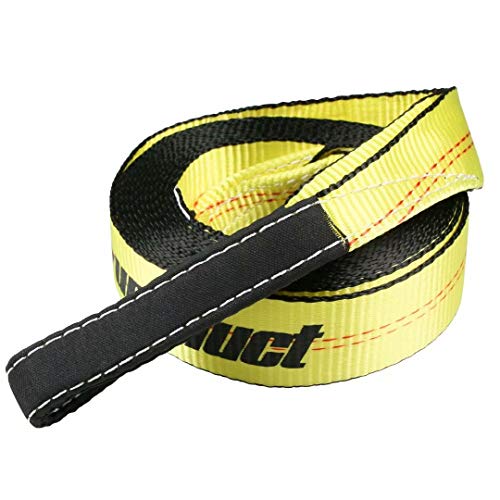
- 20,000-lb breaking strength
- Reinforced polyester loops
- Works with multiple recovery setups
Best For: Cars, SUVs, trucks, ATVs, and UTVs
Compact-Car Emergency Tow
Keeper 13ft Emergency Recovery Rope

- 3,500-lb maximum vehicle weight
- 6,800-lb break strength
- Safety-latch slip hooks
Best For: Compact and midsized passenger cars
Maximum Stretch Recovery

- 1.26-inch nylon rope with up to 30–35% stretch
- Includes two soft shackles and storage bag
- Designed for trucks, SUVs, and off-road vehicles
Best For: Heavy-duty off-road recovery with a complete rope-and-shackle kit
Winch Support Essential

- 36,000-pound stated break strength
- Reinforced loops with protective sleeves
- Works as a tree saver, winch extender, or backup strap
Best For: Winch-based recoveries requiring a tree anchor or stable extension
Compact Kinetic Option
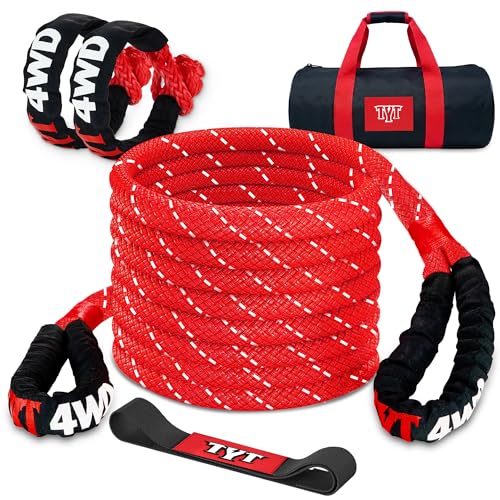
- 48,500-pound stated breaking strength
- Includes two soft shackles and a storage bag
- Flexible nylon design for SUVs, trucks, and ATVs
Best For: Portable emergency recovery gear for common off-road vehicles
High-Capacity Polyester Pick

- 24,000-pound stated break strength
- Triple-reinforced loops
- Includes storage bag
Best For: Loop-style recovery setups for trucks, SUVs, and ATVs
Hook-Ready Roadside Option

- 15,216-pound stated break strength
- Forged steel hooks with spring closures
- Rust-resistant coated hook finish
Best For: Roadside recovery kits needing attached hooks
Complete Heavy-Duty Kit

- 36,000-pound stated break strength
- Includes two 3/4-inch D-ring shackles
- Long, 3-inch-wide recovery strap
Best For: Off-road and heavy-duty truck or SUV recovery
Heavy-Duty Flat Recovery – Rhino USA 3in x 20ft Tow Strap
For drivers building a kit around recovery ropes for emergencies, the Rhino USA tow strap offers a broad 3-inch polyester design, 20-foot length, and 31,518-pound break strength. It is intended for pulling vehicles stuck on flat surfaces and includes reinforced loop ends for demanding connection points.
Best For: Truck, Jeep, UTV, and ATV owners who need a heavy-duty static strap for flat-surface recovery.
Pros:
- 31,518-pound break strength with a 10,000-pound listed load capacity.
- Weather-resistant polyester construction and triple-reinforced loop ends.
- Includes an unlimited lifetime replacement warranty.
Cons:
- As a static strap, it does not provide the stretch-based assistance of a kinetic recovery rope.
- The 3-inch width and 4.6-pound weight may be more than compact-car owners need.
This is a strong choice when maximum strap strength and reinforced loop durability matter most. Use it for the flat recovery situations specified by the manufacturer, with compatible recovery hardware and a properly rated vehicle setup.
Kinetic Off-Road Recovery – Grip 20ft Kinetic Recovery Rope
For recovery ropes for emergencies involving sand, snow, or mud, the Grip kinetic rope is designed to stretch and build kinetic energy during a vehicle recovery. Its 20-foot nylon construction has a 21,970-pound breaking capacity and comes with a mesh bag that helps wet gear drain and dry.
Best For: Off-road vehicle recovery where a stretch-based rope is useful for trucks, ATVs, UTVs, or farm machinery.
Pros:
- Kinetic design stretches to build recovery energy.
- 21,970-pound breaking capacity and 10,985-pound safe working load limit.
- UV-resistant rope includes a ventilated mesh storage bag.
Cons:
- The listed warranty is limited to 30 days.
- The 10,985-pound safe working load is lower than its breaking capacity and should guide use.
The Grip rope is the most purpose-built option here for dynamic off-road recoveries. Its storage bag is especially practical after wet use, but buyers should size the rope to the vehicle and stay within the stated safe working load.
Versatile Loop Strap – 2in x 20ft Heavy-Duty Tow Strap
This yellow polyester strap is a practical option for a recovery kit focused on recovery ropes for emergencies across cars, SUVs, trucks, ATVs, and UTVs. Its 20-foot length, 20,000-pound breaking strength, and reinforced loop ends support use with a hitch receiver, winch, snatch block, or D-ring bow shackles.
Best For: Vehicle owners seeking an affordable, non-hook tow strap with loop ends for varied recovery setups.
Pros:
- 20,000-pound listed load capacity and tensile strength.
- Moisture- and heat-resistant polyester construction.
- Reinforced loop ends help protect high-wear connection points.
Cons:
- It has no attached hooks, so compatible recovery hardware is required.
- The supplied notes do not specify a formal warranty duration.
With its visible yellow color and loop-only design, this strap is easy to integrate into different recovery systems. It is a flexible general-purpose choice, provided your shackles, winch, or other connection equipment are correctly rated.
Compact-Car Emergency Tow – Keeper 13ft Emergency Recovery Rope
For smaller vehicles needing recovery ropes for emergencies, the Keeper 13-foot rope is designed specifically for compact and midsized cars. Its abrasion-resistant diamond-braided polypropylene construction helps absorb towing jerks, while zinc-coated slip hooks include safety latches.
Best For: Emergency towing of compact or midsized passenger cars up to the listed 3,500-pound maximum vehicle weight.
Pros:
- Designed for emergency vehicle towing and recovery.
- 6,800-pound break strength with a 3,500-pound maximum vehicle rating.
- Rust-resistant zinc-coated slip hooks feature safety latches.
Cons:
- It is not intended for vehicles over the listed 3,500-pound maximum weight.
- At 13 feet, it provides less reach than the 20-foot options.
- It is suited to passenger cars rather than trucks, UTVs, or ATVs.
The Keeper is a compact, straightforward emergency option for appropriately sized cars. Its hooks make connection simple, but vehicle weight must be confirmed before use because the capacity is substantially lower than heavy-duty recovery straps.
Maximum Stretch Recovery – 1.26-Inch Kinetic Tow Rope
For drivers comparing recovery ropes for emergencies, this 30-foot kinetic rope emphasizes high stretch, shock absorption, and broad vehicle compatibility. Its 1.26-inch nylon construction, protective coating, and included soft shackles make it a substantial kit for off-road recovery in mud, sand, or snow.
Best For: Trucks, SUVs, Jeeps, ATVs, UTVs, tractors, and other heavier vehicles needing a complete kinetic recovery setup.
Pros:
- High-strength 1.26-inch nylon rope with up to 30–35% stretch capacity.
- Includes two UHMWPE soft shackles rated at up to 48,500 pounds breaking strength.
- Protective coatings and sleeves help resist abrasion, sand, mud, moisture, and temperature extremes.
- Includes a storage bag and a lifetime satisfaction solution from the seller.
Cons:
- The 1.26-inch construction is bulkier than the slimmer 1-inch option.
- Its higher-capacity design may be more equipment than smaller passenger-car owners need.
This is the most substantial all-in-one choice of the three, pairing a thick kinetic rope with soft shackles and extensive protective features. It makes sense when you want additional capacity and shock absorption for demanding vehicle recoveries.
Winch Support Essential – 3-Inch Tree Saver Strap
This tree saver strap is a practical addition to emergency recovery ropes for emergencies, especially when a winch needs a secure anchor around a tree. Its limited stretch supports stable pulling, while reinforced loops and protective sleeves help it handle repeated recovery use.
Best For: Winch-equipped 4×4 owners who need a tree anchor, winch extension, bridle strap, or backup tow strap.
Pros:
- Three-inch-wide, eight-foot polyester webbing with a stated 36,000-pound break strength.
- Reinforced eye loops and neoprene sleeves help reduce cuts and abrasion.
- Can serve as a tree saver, winch extension, bridle strap, or emergency recovery strap.
- Limited stretch provides a more stable pulling force than a kinetic rope.
Cons:
- It is a static-style strap, so it does not provide the shock absorption of a kinetic recovery rope.
- It is primarily an anchoring and winch accessory rather than a standalone snatch rope.
Choose this strap when your recovery plan centers on a winch and suitable anchor points. It complements a kinetic rope well, but buyers seeking elastic vehicle-to-vehicle recovery should look at one of the dedicated nylon ropes instead.
Compact Kinetic Option – 1-Inch 30-Foot Recovery Rope
For a more compact approach to recovery ropes for emergencies, the TYT kinetic rope combines a 30-foot length with flexible nylon stretch and two soft shackles. It is sized for common off-road vehicles and includes a storage bag for keeping recovery gear ready in the vehicle.
Best For: SUV, truck, Jeep, ATV, UTV, tractor, and trailer owners wanting a portable emergency recovery rope kit.
Pros:
- 100% Nylon 66 rope with a stated 48,500-pound breaking strength.
- Double-braided construction provides elasticity intended to reduce sudden pulling force.
- Includes two lightweight synthetic soft shackles for setup and vehicle-friendly connections.
- Protective sleeves and a storage bag support outdoor use and transport.
Cons:
- The 1-inch width provides less physical bulk than the thicker 1.26-inch alternative.
- The notes do not specify the rope’s exact stretch percentage or a warranty.
This is a straightforward, portable kinetic-rope kit for drivers who want essential recovery equipment without the larger profile of a heavier rope. Its included shackles and bag make it convenient for keeping in an SUV, truck, or off-road vehicle.
High-Capacity Polyester Pick – 20-Foot Reinforced Tow Strap
For drivers comparing recovery ropes for emergencies, this 2-inch-by-20-foot polyester tow strap offers a high stated 24,000-pound break strength. Its triple-reinforced loops support vehicle recovery, tree-saver use, and winch-extension tasks.
Best For: Pickup trucks, SUVs, ATVs, and emergency recovery kits needing a loop-style strap.
Pros:
- 24,000-pound stated break strength
- Triple-reinforced loops for flexible connection options
- Usable as a tow strap, tree saver, or winch extension
- Includes a storage bag for compact organization
Cons:
- Does not include hooks or shackles
- A 20-foot length may not suit every recovery setup
This is a straightforward, high-capacity strap for buyers who already have compatible recovery hardware. Its storage bag and broad vehicle compatibility make it practical for keeping in an emergency kit.
Hook-Ready Roadside Option – 20-Foot Tow Strap with Hooks
For recovery ropes for emergencies that can connect directly to suitable attachment points, this 2-inch-by-20-foot strap includes sewn-on forged steel hooks. The zinc-coated, painted hooks and spring closures are designed for roadside recovery involving cars, trucks, Jeeps, SUVs, and ATVs.
Best For: Roadside emergency kits that prioritize attached hooks and a familiar 20-foot strap length.
Pros:
- 15,216-pound stated break strength
- Forged steel hooks are sewn securely to the strap
- Zinc coating and exterior paint help resist rust
- Includes a packing bag and box
Cons:
- Lower stated break strength than the other listed options
- Hook compatibility depends on the vehicle’s recovery points
The attached hooks make this a convenient choice for users who do not want to add separate shackles. Before use, confirm that the hooks and vehicle recovery points are suitable for the intended load.
Complete Heavy-Duty Kit – 30-Foot Strap with Shackles
Among recovery ropes for emergencies, this 3-inch-by-30-foot kit stands out for including two 3/4-inch D-ring shackles and a storage bag. Its stated 36,000-pound break strength and longer strap are aimed at truck, SUV, ATV, UTV, and off-road recovery situations.
Best For: Off-roaders, emergency crews, farmers, and truck or SUV owners wanting a more complete recovery setup.
Pros:
- 36,000-pound lab-tested stated break strength
- Long 30-foot, 3-inch-wide recovery strap
- Includes two 3/4-inch D-ring shackles
- Shackles have an electro-galvanized finish and protective bumpers
Cons:
- Larger and potentially less compact than 20-foot straps
- Its included hardware may be more than needed for basic roadside towing
This is the most equipment-rich option in the group, combining a longer, wider strap with connection hardware. It is a strong fit for demanding recovery scenarios, provided the vehicle’s recovery points and the kit’s components are used appropriately.
How We Picked the Best Recovery Ropes for Emergencies
We evaluated these products by comparing their stated break strength, working design, length, width, attachment style, and intended vehicle use. The selection includes conventional tow straps for controlled pulls, kinetic recovery ropes that stretch to reduce shock loading, tree-saver straps for winching, and kits with hooks, shackles, or soft shackles.
Strength ratings are not interchangeable with safe working load or recommended vehicle weight. Always follow the manufacturer’s instructions, inspect gear before use, and confirm that every component in the recovery system is appropriately rated.
Quick Comparison
| Type | Best For | What to Check |
|---|---|---|
| Flat tow strap | Controlled vehicle pulls | Loop reinforcement, width, and break strength |
| Kinetic recovery rope | Stuck vehicles and off-road extractions | Stretch, diameter, length, and compatible recovery points |
| Tree-saver strap | Winching around trees | Load rating, width, and abrasion resistance |
| Hook-equipped strap | Quick roadside connections | Hook security, latch design, and rated attachment points |
Key Buying Factors for Recovery Ropes for Emergencies
Strength and Vehicle Compatibility
Choose a rope or strap with a rating appropriate for the vehicle and recovery situation, but do not rely on the headline number alone. A larger truck, deeply buried vehicle, steep incline, or heavy mud can create forces far beyond the vehicle’s curb weight. Check the product’s stated limits and use only factory-rated recovery points.
Rope Type and Stretch
Kinetic ropes stretch under load and can provide a smoother, more progressive pull when recovering a stuck vehicle. Flat straps generally offer less stretch and are useful for controlled towing or winch extensions. Neither should be used outside its intended purpose.
Length, Width, and Connection Method
Longer gear can provide more room between vehicles, while shorter straps are easier to store and manage. Wider straps may distribute force effectively, but bulkier products can be harder to handle. Loops, hooks, D-rings, and soft shackles each require compatible attachment points and careful inspection.
Storage and Inspection
Look for a carry bag or compact design if the rope will stay in an emergency kit. Keep recovery gear clean and dry, and replace it if you find cuts, melted fibers, severe abrasion, stretched stitching, bent hardware, or unreadable labels.
Who Should Buy Which Recovery Ropes for Emergencies?
Drivers who want a general-purpose roadside solution should consider a reinforced flat tow strap with a clearly stated rating. Jeep, truck, UTV, and ATV owners who regularly travel off-road may benefit more from a kinetic recovery rope and suitable soft shackles. Anyone using a winch around trees should add a dedicated tree-saver strap rather than wrapping a standard tow strap around a tree. Hook-equipped kits can be convenient for compatible vehicles, but verify that the hooks and vehicle attachment points are designed for recovery loads.
For the safest setup, carry more than one recovery option, add gloves and a recovery damper where appropriate, and practice connecting the system before an emergency occurs.