The right EV charging adapter can make more public chargers, home charging stations, and borrowed equipment usable with your vehicle. However, connector compatibility, charging speed, and safety ratings vary widely.
This roundup compares 10 EV charging adapters across common J1772, NACS, CCS1, and CCS2 combinations, with options for both AC charging and DC fast charging. Check your vehicle and charger specifications carefully before buying.
Best 10 Ev Charging Adapters Picks for 2026
High-Amperage Tesla Access

- Up to 80A and 240V
- UL 2252 certified with temperature monitoring
- IP67 protection; not for Tesla Superchargers
Best For: J1772 EV owners using compatible Tesla AC chargers
Compact Cross-Standard Pick
GUWIEYG Type 1 to Type 2 Adapter

- 32A and 240V charging support
- Compact, travel-friendly construction
- IP54 protection and one-year warranty
Best For: Type 2 EV owners using compatible J1772 chargers
Portable Tesla Compatibility
Lectron J1772 to Tesla Adapter

- Works with Tesla models and NACS-alliance EVs
- Supports Level 1 and Level 2 charging
- IP67 rated with TUV and UL 2251 certifications
Best For: Tesla owners accessing J1772 charging stations
DC Fast-Charging Access

- Rated up to 500A and 1,000V
- Designed for compatible Tesla Superchargers
- Interlock design and three-year warranty
Best For: Approved CCS1 EVs needing Tesla Supercharger access
Best Tesla-Connector Adapter for Everyday J1772 Charging
Portable NACS to J1772 Adapter

- Up to 80A and 250V support
- Works with select Tesla connectors
- Compact, IP65-rated design
Best For: J1772 EV owners using compatible Tesla Wall or Mobile Connectors
Best Cross-Standard Adapter for European EVs

- Supports AC and DC charging modes
- Up to 250A and 1000V DC rating
- Includes temperature protection and case
Best For: CCS2 EV owners using compatible U.S. CCS1 stations
Best Supercharger Adapter for Eligible CCS1 EVs

- Designed for approved Tesla Supercharger access
- Rated up to 500A and 1000V
- Locking connectors and two-year warranty
Best For: CCS1 EVs authorized to use Tesla Superchargers
Best Tesla J1772 Adapter
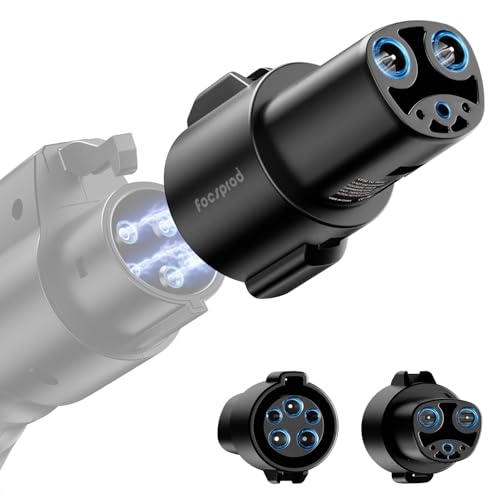
- Supports J1772 Level 1 and Level 2 AC charging
- Rated up to 80A and 250V
- Includes 3-year limited warranty
Best For: Tesla owners using J1772 AC charging stations
Best Broad-Compatibility DC Adapter
RAMATA NACS to CCS Fast Charger
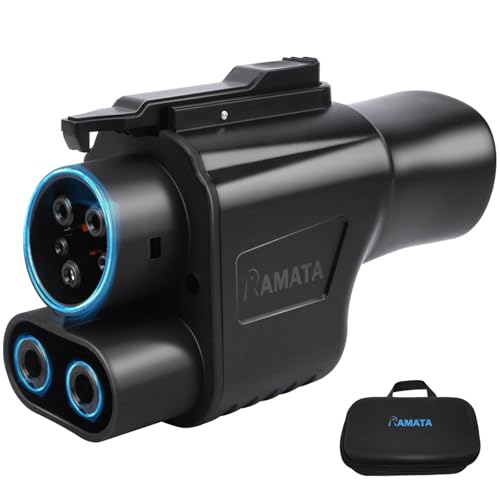
- Supports up to 500A and 1,000V DC
- Designed for listed CCS1 EVs at Tesla Superchargers
- Includes temperature shutoff and carrying bag
Best For: Supported CCS1 EVs using public Tesla Superchargers
Best Certified CCS Adapter
Lectron 500A NACS Fast Charger

- Accesses 12,000+ CCS1 fast-charging stations
- UL 2252 certified with thermal shutoff
- IP67-rated for water and dust resistance
Best For: Supported Tesla and NACS EVs using CCS1 fast chargers
High-Amperage Tesla Access – Lectron NACS to J1772 Adapter
This Lectron adapter is a strong option among ev charging adapters for J1772 vehicles that need access to compatible Tesla AC charging equipment. It supports up to 80A and 240V, with temperature monitoring, UL 2252 certification, and IP67 protection for indoor or outdoor use. It is not compatible with Tesla Superchargers.
Best For: J1772 EV owners using Tesla Wall Connectors, Destination Chargers, or Mobile Connectors.
Pros:
- Supports up to 80A and 240V for high-speed Level 2 charging.
- Compatible with all J1772 EVs and several Tesla AC charging products.
- UL 2252 certified with built-in temperature monitoring.
- IP67 dust and water protection with a reinforced housing.
Cons:
- Not compatible with Tesla Superchargers.
- Its high current rating may exceed the requirements of some vehicles or chargers.
Choose this adapter when broad Tesla AC compatibility and a high current rating matter most. Verify your vehicle and charger requirements before use.
Compact Cross-Standard Pick – GUWIEYG Type 1 to Type 2 Adapter
This compact Type 1-to-Type 2 adapter is a practical choice among ev charging adapters for IEC62196-compatible EVs that need to connect to J1772 charging equipment. It supports up to 32A and 240V, with a thermoplastic housing, IP54 water protection, and an operating range from -22°F to 122°F.
Best For: Type 2 EV drivers who want a portable adapter for compatible J1772 chargers.
Pros:
- Supports up to 32A for Level 2 charging.
- Compact design is convenient to store in a vehicle.
- Rated for temperatures from -22°F to 122°F.
- IP54 protection supports use in rainy conditions.
Cons:
- Limited to a 32A maximum current rating.
- Compatibility is intended for IEC62196-compatible Type 2 EVs and J1772 chargers.
- Offers IP54 protection rather than the higher IP ratings of some alternatives.
This adapter makes sense for drivers who prioritize portability and everyday compatibility over the highest available amperage. Confirm both connector standards before ordering.
Portable Tesla Compatibility – Lectron J1772 to Tesla Adapter
This Lectron model is one of the more versatile ev charging adapters for Tesla vehicles and other EVs in the NACS alliance. It connects to SAE J1772 chargers, supports Level 1 and Level 2 charging up to 80A and 240V, and has a compact IP67-rated design for use at home, work, or on the road.
Best For: Tesla Model S, 3, X, Y, and Cybertruck owners who need access to J1772 chargers.
Pros:
- Compatible with all listed Tesla models and NACS-alliance EVs.
- Supports Level 1 and Level 2 charging up to 80A and 240V.
- Lightweight, compact, and easy to keep in a glove box.
- IP67 weatherproof design with TUV and UL 2251 certifications.
Cons:
- Designed for J1772 charging connections, not described as a Supercharger adapter.
- The 80A capacity may be more than some J1772 chargers or vehicles can use.
For Tesla drivers who regularly encounter J1772 stations, this is a convenient high-capacity backup. Its certifications and weatherproof enclosure add reassurance for outdoor charging.
DC Fast-Charging Access – FOCSPROD NACS to CCS1 Adapter
This FOCSPROD adapter targets CCS1 EV owners seeking access to compatible Tesla Supercharger locations. Among ev charging adapters, it stands apart as a DC fast-charging model rated for up to 500A and 1,000V, with an interlock design and UL 2252 compliance. Network and vehicle approval are essential, and it is not compatible with Level 1 or Level 2 AC chargers.
Best For: Compatible CCS1 EVs from supported manufacturers, including certain Ford, GM, and Rivian models, after required network or vehicle updates.
Pros:
- Designed for Tesla Supercharger DC fast-charging access.
- Rated up to 500A and 1,000V.
- Interlock structure adds connection stability.
- Includes a three-year warranty and UL 2252 compliance.
Cons:
- Vehicle and charging-network compatibility must be confirmed before purchase.
- Listed as incompatible with several brands, including Audi, BMW, Mercedes-Benz, Kia, Nissan, Porsche, Toyota, Volkswagen, and Honda.
- Not compatible with Level 1 or Level 2 AC chargers.
This adapter is appropriate only for drivers whose vehicle manufacturer has enabled the relevant Tesla Supercharger protocol. Treat compatibility verification as a required step, not an optional feature check.
Best Tesla-Connector Adapter for Everyday J1772 Charging – Portable NACS to J1772 Adapter
For drivers comparing ev charging adapters, this EVDANCE model is a practical way to connect compatible J1772 vehicles to select Tesla charging equipment. It supports up to 80 amps and 250 volts, while its compact design suits home, destination, and travel charging.
Best For: J1772 EV owners who want access to compatible Tesla Wall Connectors, Mobile Connectors, and destination chargers.
Pros:
- Supports up to 80A, 250V, and charging power rates up to 20kW.
- Compatible with Tesla Mobile Connector Gen 1/2 and Wall Connector Gen 1/2/3.
- IP65-rated, compact, and equipped with an anti-drop lock.
Cons:
- Not compatible with Tesla Superchargers.
- Vehicle compatibility excludes several models, including Nissan Leaf SV and Kia EV6.
- Actual charging speed depends on the vehicle and charging equipment.
This adapter offers broad utility for compatible J1772 vehicles, especially for road trips and outdoor charging. Check the detailed vehicle exclusions before buying.
Best Cross-Standard Adapter for European EVs – CCS1 to CCS2 AC/DC Adapter
Among ev charging adapters, this CCS1-to-CCS2 model is designed for European CCS2 vehicles using compatible U.S. CCS1 or Type 1 charging equipment. It supports both AC and DC charging and includes temperature protection for added charging-session monitoring.
Best For: CCS2 EV owners who need to use compatible CCS1 DC fast chargers or Type 1/J1772 AC charging guns.
Pros:
- Supports AC charging up to 32A and 250V.
- Supports DC charging up to 250A and 1000V, with a claimed peak of 250kW.
- Temperature protection pauses charging above 85°C and resumes below 65°C.
- Includes silver-plated contacts and a portable impact-resistant storage box.
Cons:
- Charging performance varies by vehicle and charging station.
- After temperature protection activates, the vehicle must accept the charging signal again.
- Compatibility depends on the vehicle, connector, and station configuration.
This is a versatile option for cross-standard charging, with useful AC/DC support and thermal safeguards. Confirm your vehicle’s charging requirements before relying on it for fast charging.
Best Supercharger Adapter for Eligible CCS1 EVs – Lectron NACS to CCS Adapter
For CCS1 EV owners approved for Tesla Supercharging, this Lectron Vortex Plug is one of the more capable ev charging adapters for DC fast charging. It is rated for up to 500 amps and 1,000 volts, but access depends on automaker authorization and vehicle compatibility.
Best For: CCS1 EV drivers whose automaker has enabled access to the Tesla Supercharging network.
Pros:
- Designed for compatible CCS1 EVs at Tesla V3 and V4 Superchargers.
- Rated for up to 500A and 1,000V DC fast charging.
- Locking mechanisms on both NACS and CCS sides help secure the connection.
- Includes a two-year warranty.
Cons:
- Only for CCS1 EVs with automaker-approved Tesla Supercharger access.
- Charging speed varies by vehicle and Supercharger generation.
- Heat-related charging faults may require a 30-minute cooldown before retrying.
This adapter can significantly expand fast-charging access when your vehicle is authorized for the network. Verify compatibility with the automaker before purchase, since the adapter alone does not grant Supercharger access.
Best Tesla J1772 Adapter – Compact 80A Charging Adapter
For Tesla owners comparing ev charging adapters, this FOCSPROD model provides a straightforward way to use compatible J1772 Level 1 and Level 2 chargers. It supports up to 80A and 250V AC, making it useful for charging at home, work, or on the road.
Best For: Tesla Model 3, Y, X, S, and Cybertruck owners who want access to J1772 AC charging stations.
Pros:
- Supports Level 1 and Level 2 J1772 charging.
- Rated for up to 80A and 250V AC.
- Compact, portable design with silver-plated pins and polycarbonate construction.
- SGS certified to comply with UL 2252 and includes a 3-year limited warranty.
Cons:
- Designed for AC J1772 charging rather than DC fast charging.
- Compatibility notes specify that Model 3 vehicles should be manufactured after 2020.
- The charging port should be clean for proper connection.
This is a practical choice if your main goal is expanding a Tesla’s access to J1772 AC stations. Its broad temperature range and portable form add convenience, while the 80A rating provides substantial capacity for compatible charging equipment.
Best Broad-Compatibility DC Adapter – RAMATA NACS to CCS Fast Charger
Among ev charging adapters, this RAMATA NACS-to-CCS adapter is aimed at non-Tesla EV drivers who want to use compatible Tesla Supercharger locations. It is built for DC fast charging and carries a stated 500A/1,000V rating, but vehicle and station compatibility should be confirmed before ordering.
Best For: Drivers of supported Ford, GM, Rivian, Mercedes, Hyundai, Kia, Lucid, BMW, Nissan, Genesis, and other listed CCS1 EVs seeking Tesla Supercharger access.
Pros:
- Supports up to 500A, 1,000V, and a stated maximum of 500kW.
- Designed to unlock access to more than 17,800 Tesla Supercharger ports, according to the supplied notes.
- Includes temperature shutoff at 194°F (90°C), weather-resistant materials, and a carrying bag.
- Designed for durability with a stated rating of over 20,000 mating tests.
Cons:
- Not intended for home wall chargers.
- Not compatible with certain PHEVs and several older EV models listed in the product notes.
- High charging rates depend on the vehicle and charging station.
RAMATA offers a feature-heavy option for drivers focused on public DC fast charging and broad vehicle coverage. The extensive compatibility list is useful, but the exclusions and DC-only limitation make checking the vehicle manual and charging network requirements especially important.
Best Certified CCS Adapter – Lectron 500A NACS Fast Charger
This Lectron adapter is a strong contender for Tesla and other NACS EV drivers comparing ev charging adapters for CCS1 fast-charging access. It supports up to 500A and 1,000V, while built-in thermal protection and UL 2252 certification add reassurance for high-power public charging.
Best For: Tesla Model S, 3, X, and Y owners and supported NACS EV drivers who need access to CCS1 DC fast-charging stations.
Pros:
- Provides access to more than 12,000 CCS1 fast-charging stations across North America, according to the product notes.
- Supports up to 500A, 1,000V, and a stated maximum of 500kW.
- UL 2252 certified with automatic over-temperature shutoff and thermal protection.
- IP67-rated and tested for temperature extremes, impact, crush resistance, and high-power cycles.
Cons:
- Not compatible with Tesla Cybertruck.
- Tesla vehicles must have CCS Adapter Support enabled.
- Actual charging speed depends on the EV and charging station.
Lectron is a well-focused pick when certification, environmental protection, and CCS1 station access matter most. Its compatibility requirements are clear, but buyers should verify their vehicle’s software settings and DC fast-charging support before purchasing.
How We Picked These Ev Charging Adapters
We selected adapters that cover the most useful connector combinations represented in today’s North American and European-style EV charging systems. The lineup includes AC adapters for J1772, NACS, Type 1, and Type 2 connections, along with higher-capacity CCS-to-NACS and NACS-to-CCS adapters intended for DC fast charging.
Our comparison emphasizes stated amperage and voltage limits, connector direction, vehicle and charger compatibility, safety certifications where provided, physical interlocks, and practical use cases. Always verify the manufacturer’s current compatibility list because vehicle software, charging-network access, and adapter approval can affect whether a connection works.
Quick Comparison
| Adapter type | Typical use | What to check |
|---|---|---|
| NACS to J1772 | Use Tesla AC equipment with J1772 vehicles | 80A rating, 240V limit, vehicle compatibility |
| J1772 to NACS | Use J1772 AC stations with NACS vehicles | Direction, current limit, Tesla compatibility |
| NACS to CCS | Use compatible Tesla fast chargers with CCS1 vehicles | DC approval, network access, vehicle support |
| CCS to NACS | Use CCS1 fast chargers with NACS vehicles | UL certification, maximum amperage, firmware support |
| Type 1 to Type 2 or CCS1 to CCS2 | Bridge regional connector standards | AC versus DC capability and pin configuration |
Key Buying Factors for Ev Charging Adapters
Connector Direction
Adapters are not automatically reversible. A NACS-to-J1772 adapter may be designed for a J1772 vehicle using a NACS AC charger, while a J1772-to-NACS model serves the opposite arrangement. Match the plug and socket ends to both your vehicle inlet and charging cable.
AC or DC Compatibility
AC adapters for Level 1 and Level 2 charging are generally simpler and lower cost. DC fast-charging adapters require substantially higher voltage and current handling, secure locking, and vehicle-network compatibility. Do not use an AC-only adapter at a DC fast charger.
Electrical Ratings and Certification
Compare the adapter’s maximum amperage and voltage with your vehicle, charging station, and cable. A higher rating does not make the vehicle charge faster than its onboard charger allows. For fast charging, prioritize clearly stated safety testing or certification, such as UL 2252 where applicable.
Fit, Locking, and Weather Resistance
A firmly seated connector helps prevent charging interruptions. Look for an interlock or locking design when supported by your vehicle and charger. For outdoor use, consider sealing, strain relief, temperature limits, and whether the adapter is approved for wet conditions.
Who Should Buy Which Ev Charging Adapters?
Choose a NACS-to-J1772 adapter if you drive a J1772 EV and regularly use Tesla destination chargers or wall connectors. Choose a J1772-to-NACS adapter if your NACS vehicle needs access to conventional Level 2 stations.
For road trips, a compatible NACS-to-CCS or CCS-to-NACS adapter can expand DC fast-charging access, but confirm that the vehicle, charging network, and adapter are all approved for the intended service. Type 1-to-Type 2 and CCS1-to-CCS2 models are best for drivers who regularly cross regional charging standards and understand the AC/DC limitations.