Temperature-aware EV charging adapters add an extra layer of visibility and protection when you connect vehicles, chargers, and standards such as J1772, NACS, and CCS1.
This roundup compares 10 options across AC and DC charging, focusing on electrical ratings, connector compatibility, interlocks, display features, and practical safety considerations.
Best 10 Ev Charging Adapters with Temperature Sensors Picks for 2026
Best Displayed Monitoring
Tesla to J1772 Digital Adapter

- Real-time voltage, power, current, and temperature display
- Temperature protection can interrupt charging when heat is excessive
- Supports up to 60A/250V Level 2 AC charging
Best For: J1772 drivers who want visible charging-session data
Best DC Fast-Charging Access
NACS to CCS1 Interlock Adapter

- Designed for compatible CCS1 EVs at Tesla Superchargers
- Rated up to 500A and 1,000V DC
- UL 2252-compliant design with three-year warranty
Best For: Eligible CCS1 EVs needing Tesla Supercharger access
Best Temperature Cutoff Controls

- Automatically powers off at 85°C and may resume at 65°C
- Includes a one-click charging power-off button
- Supports Tesla AC chargers up to 50A and 250V
Best For: J1772 drivers wanting active thermal and charging controls
Best High-Output Thermal Monitoring
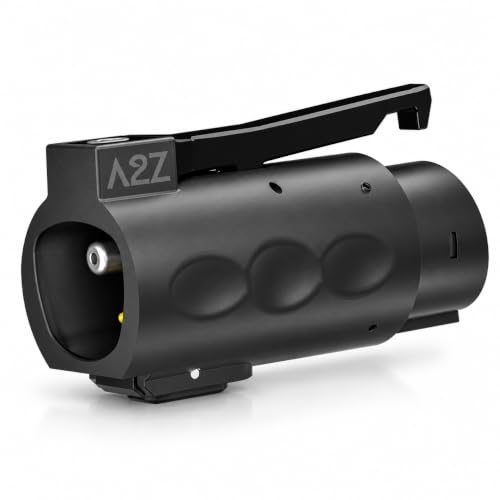
- Dual thermal sensors monitor operating temperature
- Rated up to 80A, 277V, and 19.2kW when supported
- UL2252 and CSA-C22.2 certified with IP67 enclosure
Best For: High-power J1772 AC charging with added thermal monitoring
Certified Fast-Charging Pick
Lectron Vortex Plus NACS-to-CCS Adapter

- UL 2252 certified by SGS
- Built-in high-voltage interlock
- 500A/1,000V DC rating
Best For: Supported CCS1 EVs using compatible Tesla Superchargers
Most Versatile Safety Design
EcofusionX 2-in-1 NACS Adapter

- CCS1 and J1772 charging support
- Thermal interlock cuts excess-temperature power
- IP65 waterproof construction
Best For: Non-Tesla EV owners needing DC and AC adapter flexibility
Best for Tesla AC Charging
Lectron J1772-to-Tesla Adapter

- Supports up to 80A at 240V AC
- IP67 weatherproof design
- TUV and UL 2251 certified
Best For: Tesla and NACS-alliance vehicles using J1772 chargers
Best Portable Tesla J1772 Adapter
FOCSPROD 80A J1772-to-Tesla Adapter
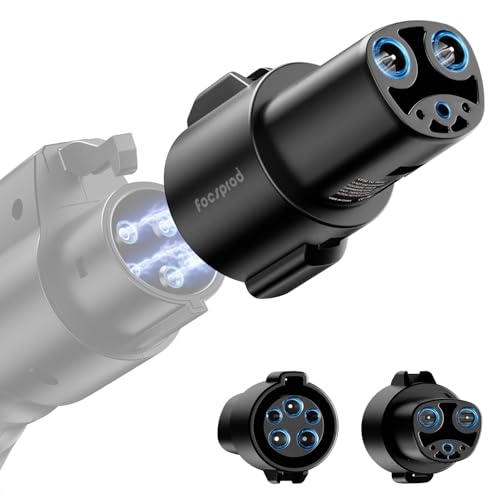
- Works with Tesla Model 3, Y, X, S, and Cybertruck
- Supports Level 1 and Level 2 charging up to 80A
- Three-year limited warranty and UL 2252-related certification
Best For: Tesla owners using compatible J1772 chargers
Best Temperature-Monitored J1772 Adapter
Lectron 80A NACS-to-J1772 Adapter

- Built-in temperature monitoring for safer charging
- Supports up to 80A and 240V Level 2 charging
- IP67-rated and compatible with Tesla AC chargers
Best For: J1772 EV owners using Tesla Wall or Destination Chargers
Best High-Power CCS Adapter
Lectron 500A CCS-to-NACS Adapter

- Thermal protection with automatic over-temperature shutoff
- Supports up to 500A and 1,000V DC fast charging
- IP67-rated and UL 2252 certified
Best For: Compatible Tesla and NACS EVs using CCS1 fast chargers
Best Displayed Monitoring – Tesla to J1772 Digital Adapter
If you want EV charging adapters with temperature sensors plus session data, this NACS-to-J1772 adapter adds a built-in digital display. It is designed for Level 2 AC charging from Tesla Wall Connectors, Mobile Connectors, and Destination Chargers, with support up to 60A and 250V.
Best For: J1772 EV and plug-in hybrid owners who want visible charging and temperature information.
Pros:
- Displays voltage, current, power, and connector temperature in real time.
- Temperature monitoring can interrupt charging if excessive heat is detected.
- UL 2252 tested, with a dual-lock design and IP65 housing.
- Rated for up to 60A and built for more than 15,000 insertion cycles.
Cons:
- Not compatible with Tesla Superchargers or DC fast charging.
- The notes do not specify that the adapter is submersible; do not immerse it in water.
This is a practical choice when at-a-glance charging data matters. Its display and temperature protection add monitoring convenience, while the included storage bag supports keeping it in the vehicle.
Best DC Fast-Charging Access – NACS to CCS1 Interlock Adapter
This NACS-to-CCS1 adapter is intended for compatible CCS1 EVs seeking access to Tesla Supercharger DC fast-charging stations. It is a heavy-duty, UL 2252-compliant option rated at up to 500A and 1,000V, but compatibility must be confirmed with the vehicle manufacturer and charging network.
Best For: Compatible CCS1 EV owners who need a Tesla Supercharger adapter for road trips and fast charging.
Pros:
- Rated for up to 500A and 1,000V DC fast charging.
- Interlock structure is designed to add connection stability.
- SGS certified to comply with UL 2252.
- Includes a three-year warranty.
Cons:
- Not compatible with Level 1 or Level 2 AC chargers.
- Compatibility is limited, with several automakers listed as unsupported in the supplied notes.
- The product notes do not identify a temperature sensor or temperature-monitoring feature.
This adapter suits drivers prioritizing Tesla Supercharger access rather than temperature-sensor functionality. Check both vehicle eligibility and Tesla Supercharger protocol support before purchasing.
Best Temperature Cutoff Controls – NACS to J1772 50A Adapter
For shoppers comparing EV charging adapters with temperature sensors, this NACS-to-J1772 model combines temperature protection with a one-click power-off button. It supports up to 50A and 250V AC charging from Tesla Wall Connectors, Destination Stations, and Mobile Chargers, excluding Superchargers.
Best For: J1772 EV owners who want temperature cutoff control and a convenient way to stop charging.
Pros:
- Monitors temperature in real time and automatically powers off at 85°C.
- Can resume at 65°C when supported by the charging gun and vehicle.
- One-click power-off button simplifies ending a charging session.
- Includes vehicle-lock compatibility and an additional mechanical anti-theft lock.
Cons:
- Not compatible with Tesla Superchargers.
- Automatic recovery depends on charging-gun and vehicle support.
- The listing gives different current figures in its specifications, including 50A and 32A output.
The temperature thresholds and physical power-off button make this a useful option for drivers who want active control over AC charging. Verify the vehicle and equipment support details, especially if automatic recovery is important.
Best High-Output Thermal Monitoring – Stellar Plug NACS to J1772
The Stellar Plug is a high-output choice among EV charging adapters with temperature sensors, using dual thermal sensors for AC charging safety. It connects J1772 vehicles to compatible NACS Level 1 and Level 2 AC chargers and is rated up to 80A, 277V, and 19.2kW when supported by the vehicle and charging equipment.
Best For: J1772 drivers with compatible high-power AC charging equipment who want dual thermal monitoring.
Pros:
- Dual thermal sensors monitor operating temperature.
- Supports up to 80A, 277V, and 19.2kW when permitted by the system.
- UL2252 and CSA-C22.2 certified.
- IP67 enclosure, integrated locking mechanism, and protective hard case.
Cons:
- Not intended for NACS DC fast charging.
- Its maximum output depends on the vehicle and charging equipment.
- At six pounds, it is heavier than the other listed adapters.
This is the strongest fit for higher-output AC setups where thermal monitoring and weather protection are priorities. Confirm that the vehicle, charger, and installation can support the advertised power level before relying on its maximum rating.
Certified Fast-Charging Pick – Lectron Vortex Plus NACS-to-CCS Adapter
For drivers comparing ev charging adapters with temperature sensors and safety-focused designs, the Lectron Vortex Plus stands out for its UL 2252 certification, built-in interlock, and high-voltage DC capability. It is designed for supported CCS1 EVs accessing compatible Tesla Superchargers, not for Tesla vehicles or AC charging stations.
Best For: CCS1 EV owners with automaker-authorized Tesla Supercharger access who want a certified adapter for high-speed DC charging.
Pros:
- UL 2252 certified by SGS, with stated thermal and mechanical performance testing.
- Built-in interlock helps secure the connection during high-voltage DC charging.
- Rated up to 500A and 1,000V, with charging claims of up to 150 miles in 15 minutes depending on the vehicle and charger.
- Two-year warranty and access to more than 25,000 V3 and V4 Tesla Superchargers for supported vehicles.
Cons:
- Only for compatible CCS1 EVs authorized for Tesla Supercharger access.
- Not compatible with Tesla vehicles or AC charging stations.
- Actual charging speed varies by vehicle and Supercharger generation.
The Vortex Plus is a strong choice when certification and secure high-power DC charging matter most. Confirm your vehicle’s network authorization and compatibility before purchasing.
Most Versatile Safety Design – EcofusionX 2-in-1 NACS Adapter
Among ev charging adapters with temperature sensors, the EcofusionX 2-in-1 model is notable for combining NACS-to-CCS1 DC fast charging with NACS-to-J1772 AC charging. Its intelligent thermal interlock is designed to cut power when temperatures exceed limits, while the adapter also carries an IP65 waterproof rating.
Best For: Non-Tesla EV drivers who need one compact adapter for authorized Tesla Superchargers, Destination Chargers, and J1772 Level 2 charging.
Pros:
- Supports CCS1 DC charging up to 500kW and J1772 AC charging up to 80A/250VAC, according to the supplied specifications.
- Intelligent thermal interlock automatically cuts power if temperatures exceed set limits.
- Physical AC/DC isolation and an IP65 waterproof rating support all-weather use.
- Compact 2.4-pound design includes a storage bag and is listed as compatible with many major EV brands.
Cons:
- Not compatible with Mazda, Stellantis brands, or legacy models without network authorization.
- Compatibility depends on the vehicle’s approved charging-network access.
- One-year warranty is shorter than some competing options in this roundup.
The EcofusionX offers the broadest stated charging coverage here, especially for drivers moving between DC and AC stations. Carefully check the exclusion list and vehicle authorization before ordering.
Best for Tesla AC Charging – Lectron J1772-to-Tesla Adapter
For shoppers seeking ev charging adapters with temperature sensors or related temperature protection features, this Lectron adapter focuses on dependable AC compatibility rather than DC fast charging. It connects Tesla and NACS-alliance vehicles to SAE J1772 Level 1 and Level 2 chargers, with an operating range of -22°F to 122°F.
Best For: Tesla and NACS-alliance vehicle owners who want access to J1772 charging at home, work, or public locations.
Pros:
- Supports up to 80A at 240V AC for Level 1 and Level 2 charging.
- Compatible with Tesla Model S, 3, X, Y, Cybertruck, and other EVs in the NACS alliance.
- Compact, lightweight plug-and-play design fits easily in a glove box.
- IP67 weatherproof rating plus TUV and UL 2251 certifications.
Cons:
- Designed for AC J1772 charging and does not provide DC fast-charging conversion.
- Operating temperature range is specified as -22°F to 122°F.
- Vehicle and charger output may limit the actual charging rate below the 80A maximum.
This is a practical travel adapter for expanding access to J1772 AC stations, especially when compact storage and weather resistance are priorities. Verify your vehicle’s charging limits before relying on the maximum rating.
Best Portable Tesla J1772 Adapter – FOCSPROD 80A J1772-to-Tesla Adapter
For Tesla owners comparing ev charging adapters with temperature sensors, the FOCSPROD J1772-to-Tesla adapter offers a portable way to use compatible Level 1 and Level 2 J1772 chargers. It supports up to 80A at 110V–250V and is rated for operation from -22°F to 122°F, though the supplied notes do not specifically confirm a built-in temperature sensor.
Best For: Tesla drivers who need access to J1772 charging at home, work, or on the road.
Pros:
- Compatible with Tesla Model 3, Y, X, S, and Cybertruck.
- Supports Level 1 and Level 2 charging up to 80A.
- SGS certified to comply with UL 2252 and backed by a three-year limited warranty.
- Compact, portable design with silver-plated pins and a polycarbonate enclosure.
Cons:
- The supplied product information does not identify a built-in temperature sensor or automatic over-temperature shutoff.
- Charging requires a compatible J1772 station and a clean Tesla charging port.
This is a straightforward, high-current adapter for expanding Tesla charging access beyond Tesla-branded equipment. Buyers specifically prioritizing temperature-sensor features should verify that capability with the manufacturer before purchase.
Best Temperature-Monitored J1772 Adapter – Lectron 80A NACS-to-J1772 Adapter
The Lectron NACS-to-J1772 adapter is a strong fit for shoppers seeking ev charging adapters with temperature sensors. Its built-in temperature monitoring is designed for safe, high-performance charging, while support for up to 80A and 240V opens access to Tesla Wall Connectors, Destination Chargers, and Mobile Connectors.
Best For: J1772 EV owners who want to use compatible Tesla AC charging equipment with built-in temperature monitoring.
Pros:
- Built-in temperature monitoring for charging safety.
- Supports up to 80A and 240V for high-speed Level 2 charging.
- Compatible with Tesla Destination Chargers, Wall Connectors, and Mobile Connectors.
- IP67 protection and reinforced housing support indoor or outdoor use.
Cons:
- Not compatible with Tesla Superchargers.
- Compatibility is limited to J1772 electric vehicles and compatible Tesla AC equipment.
- The two-year warranty is shorter than some competing options.
Among these options, this Lectron model most directly matches the temperature-sensor requirement because the supplied specifications explicitly mention built-in temperature monitoring. It is best suited to AC Level 2 access rather than DC fast charging.
Best High-Power CCS Adapter – Lectron 500A CCS-to-NACS Adapter
For Tesla and other NACS EV drivers looking for ev charging adapters with temperature sensors, the Lectron CCS-to-NACS adapter combines built-in thermal protection with automatic over-temperature shutoff. It is designed for compatible CCS1 DC fast-charging stations and supports up to 500A and 1,000V, subject to vehicle and station limits.
Best For: Compatible Tesla and NACS EVs needing access to CCS1 fast-charging networks.
Pros:
- Built-in thermal protection and automatic over-temperature shutoff.
- Supports up to 500A, 1,000V, and a potential maximum rate of 500 kW.
- UL 2252 certified and rated IP67 for water and dust resistance.
- Designed for access to more than 12,000 CCS1 fast-charging stations across North America.
Cons:
- Not compatible with Tesla Cybertruck.
- Requires a vehicle with CCS DC fast-charging support.
- Charging speed depends on the EV and charging station, not the adapter alone.
This is the most capable choice for DC fast charging and the clearest option for active thermal safeguards. Confirm vehicle support before buying, especially for Tesla models that must show CCS Adapter Support as enabled.
How We Picked These Ev Charging Adapters with Temperature Sensors
We organized this selection around the features that matter most when adapting between EV charging standards: connector type, supported current and voltage, charging mode, safety certifications or claims, locking and interlock mechanisms, and temperature monitoring. The list includes AC adapters for J1772 and NACS connections, DC CCS1-to-NACS options, and combination adapters intended for drivers who need more than one charging pathway.
Ratings such as 50A, 60A, 80A, 500A, and 1,000V describe maximum electrical capabilities, not what every vehicle or charging station will deliver. Always verify the limits of the vehicle, cable, charger, and adapter together.
Quick Comparison
- For Tesla destination or wall charging: Look for a NACS-to-J1772 AC adapter with a locking mechanism and a rating appropriate for the charger.
- For J1772 vehicles using NACS AC stations: Prioritize clear temperature monitoring, secure fit, and compatibility with your vehicle’s maximum AC input.
- For DC fast charging: Choose a CCS1-to-NACS or NACS-to-CCS adapter specifically approved for the vehicle and charging network. AC adapters are not interchangeable with DC adapters.
- For broad coverage: A 2-in-1 adapter can be convenient, but confirm each operating mode and its separate current and voltage limits.
Key Buying Factors for Ev Charging Adapters with Temperature Sensors
Connector and Charging Standard
Identify both ends before buying. J1772 and NACS AC adapters serve Level 1 or Level 2 charging, while CCS1 and NACS DC adapters are designed for fast charging. A physically compatible plug may still be electrically or electronically incompatible.
Temperature Monitoring and Protection
A digital temperature display can help you spot abnormal heat before it becomes a serious concern. Look for descriptions that explain where temperature is measured and whether the adapter reduces current, shuts down, or simply provides an alert. Monitoring does not replace proper installation, ventilation, and inspection.
Current, Voltage, and Power Limits
Compare the adapter’s rating with the EV, charging equipment, and circuit. For example, an 80A adapter cannot make a vehicle charge beyond its onboard charger limit. Never exceed the lowest-rated component, and follow the manufacturer’s instructions for continuous charging.
Locking, Interlocks, and Certification
Anti-theft locks and interlocks can help prevent accidental separation or unauthorized removal. For high-power DC products, pay close attention to verifiable certification details, fit, cable condition, and the charging network’s compatibility requirements.
Who Should Buy Which Ev Charging Adapters with Temperature Sensors?
Home and destination-charging users should choose a well-fitting AC adapter with temperature protection and a suitable amperage rating. Road-trip drivers using DC fast chargers should select a vehicle-specific CCS1/NACS adapter with documented compatibility and appropriate certification. Multi-EV households may benefit from a 2-in-1 model, provided its separate AC and DC limits are clearly understood. If your charging setup is already generating heat, trips a breaker, or shows connector damage, replace or inspect the equipment rather than relying on an adapter alone.