The best car polishers make it easier to remove light defects, restore gloss, and apply wax evenly without spending hours by hand. This roundup covers dual-action, rotary, corded, and cordless options for different detailing jobs and experience levels.
Choose based on paint-correction power, speed control, pad size, ergonomics, and whether you need a complete kit or a tool-only platform.
Best 10 Car Polishers Picks for 2026
Complete Starter Kit

- 9-piece kit includes machine and polishing supplies
- 700W motor with random-orbital action
- Designed for beginner-friendly paint correction
Best For: DIY detailers wanting an all-in-one corded kit
Correction Compound

- Removes scratches, swirls, oxidation, and water spots
- Clear-coat-safe formula for gloss paints
- Works by hand or with a dual-action polisher
Best For: DIY users adding defect removal to an existing setup
Cordless Rotary Power
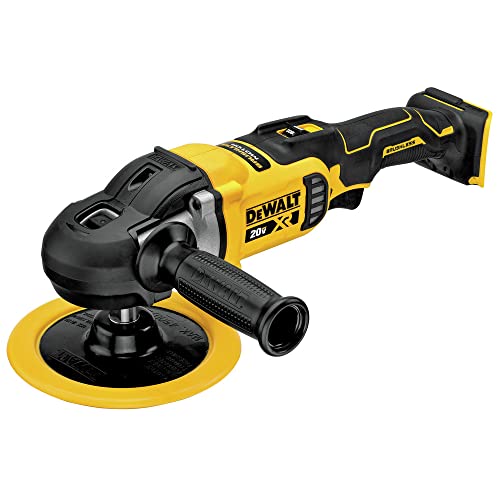
- Cordless 20V rotary design
- 800–2,200 RPM variable-speed range
- Includes 7-inch backing plate and two handles
Best For: DEWALT 20V users seeking mobile rotary polishing
Two-Step Paint Correction
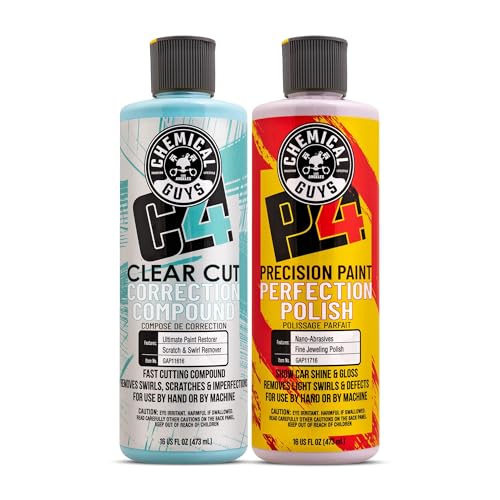
- C4 cuts defects; P4 refines gloss
- Two 16-ounce paint-correction products
- Works by hand, rotary, or dual action
Best For: Users wanting a dedicated cutting-and-finishing system
Power Pick
LDHTHOPI 1600W Rotary Buffer Polisher

- 1600W motor with seven speeds
- Three handle configurations
- Pads and sanding accessories included
Best For: Heavy-duty DIY polishing and multi-surface projects
Simple Waxing Choice
WEN 6010 6-Inch Waxer/Polisher
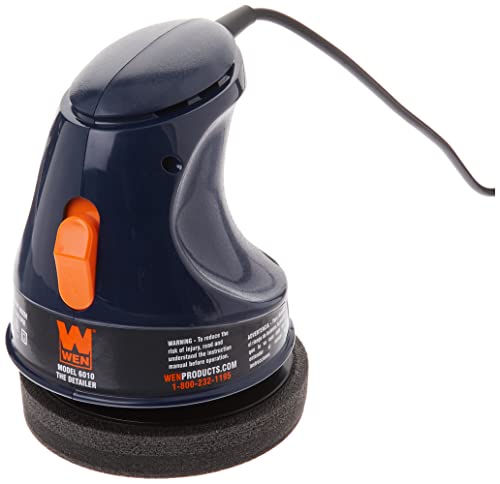
- Lightweight 3.4-pound body
- 3500 RPM motor
- Includes two 6-inch bonnets
Best For: Routine waxing and light buffing at home
Balanced Detailing Kit
SPTA 5-Inch Dual Action Polisher

- 750W dual-action motor
- Six speeds from 2,000 to 5,200 RPM
- Extensive pads, compounds, and tools
Best For: Versatile DIY paint correction and detailing
Best Cordless Starter Kit

- Cordless 8mm random-orbital operation
- Six speeds with LED display
- Two batteries and 18 accessories included
Best For: Beginners and driveway detailers
Best Corded Value
AOBEN 6-Inch Variable-Speed Polisher
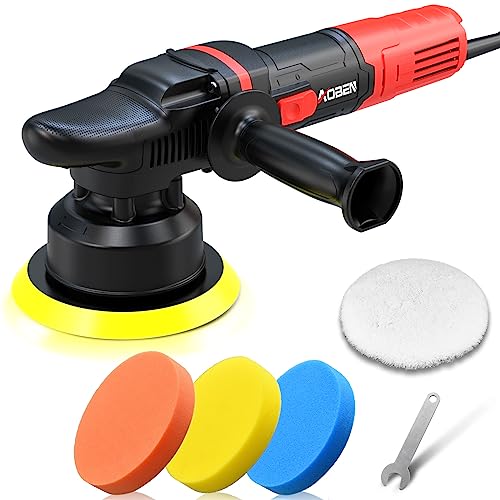
- 700W corded random-orbital motor
- Six speeds from 1000 to 4500 RPM
- Dual-handle design with four polishing pads
Best For: Home users wanting continuous power
Best for DeWalt Owners
VERVEWAVE 20V Cordless Polisher
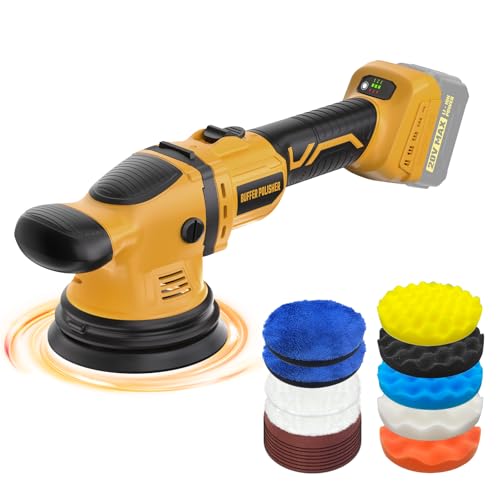
- Works with DeWalt 20V MAX batteries
- Brushless motor with six speeds
- Includes 17 polishing accessories
Best For: Existing DeWalt battery users
Complete Starter Kit – TORQX Random Orbital Polisher
If you want car polishers for approachable paint correction, the Chemical Guys TORQX kit bundles the machine and core polishing supplies in one package. Its random-orbital action, 700W motor, and included pads, compounds, and polishes make it suitable for light scratches, swirls, oxidation, and haze.
Best For: Beginners and DIY detailers who want a complete, corded starter kit.
Pros:
- Includes the polisher, pads, compounds, and polishes in a 9-piece kit.
- Random-orbital action is designed for controlled polishing on paint, clear coat, headlights, and wheels.
- Ergonomic, balanced design and simple controls support extended use.
Cons:
- Corded operation limits mobility compared with a battery-powered polisher.
- The included warranty is listed as 30 days through Amazon.
As an all-in-one option, the TORQX reduces the need to choose compatible accessories separately. It is a practical pick when convenience and beginner-friendly operation matter as much as correction capability.
Correction Compound – Meguiar's Ultimate Compound
Meguiar’s Ultimate Compound is a useful companion for car polishers when the main goal is removing visible paint defects. Its micro-abrasive formula is intended to address scratches, swirls, oxidation, and water spots while restoring clarity and gloss.
Best For: DIY paint correction by hand or with a dual-action polisher.
Pros:
- Targets scratches, swirls, oxidation, and water spots.
- Designed for clear coats and gloss paints without hazing.
- Can be applied by hand or with a dual-action polisher.
Cons:
- This is a 15.2-ounce compound rather than a complete polisher kit.
- It is intended for paint correction, so separate polishing equipment may be needed.
For shoppers who already own car polishers, this single-bottle compound offers a straightforward way to add defect removal to a detailing routine. Follow with an appropriate finishing step when you want to maximize gloss.
Cordless Rotary Power – DEWALT 20V MAX XR Polisher
DEWALT 20V MAX* XR Cordless Polisher, Rotary, Variable Speed, 7-Inch, 180 mm, Tool Only (DCM849B)
Check Price On AmazonThe DEWALT DCM849B is a cordless rotary choice among car polishers, offering variable speed control for different polishing stages. Its brushless motor, 7-inch backing plate, and 800–2,200 RPM no-load range suit users who value battery-powered mobility and a larger working area.
Best For: Detailers and DIY users who already use DEWALT 20V MAX batteries and want cordless rotary control.
Pros:
- Brushless motor is designed for efficient performance and runtime.
- Variable-speed trigger and dial provide control during application.
- Includes a 7-inch backing plate, side handle, and bail handle.
- Rubber gear-case overmold improves grip and helps reduce surface imperfections.
Cons:
- Sold as a tool only, so a compatible battery and charger are not included in the supplied details.
- Rotary operation may require more technique than a random-orbital machine.
This model makes the most sense for users invested in DEWALT’s 20V platform or anyone prioritizing cord-free movement. Its variable controls and multiple grip options add flexibility for larger polishing jobs.
Two-Step Paint Correction – Chemical Guys C4 & P4 Kit
The Chemical Guys C4 and P4 kit gives car polishers a dedicated two-step correction system. C4 is formulated to cut scratches, swirls, oxidation, towel marks, and etching, while P4 refines the finish by reducing micro-marring and enhancing depth and gloss.
Best For: Enthusiasts and professional detailers seeking a complete compound-and-polish sequence.
Pros:
- Includes 16-ounce bottles of both C4 Clear Cut Compound and P4 Precision Polish.
- Provides separate cutting and finishing stages for a more refined process.
- Compatible with dual-action polishers, rotary machines, or hand application.
- Listed as suitable for clear coat, single-stage, and ceramic-coated vehicles.
Cons:
- This is a liquids-only correction kit and does not include a polisher or pads.
- A two-step process takes more time than using a single product.
Choose this kit when you want to pair car polishers with a purpose-built cutting and finishing workflow. It is especially useful for users who prefer adjusting correction strength and final gloss as separate steps.
Power Pick – LDHTHOPI 1600W Rotary Buffer Polisher
For demanding car polishing jobs, the LDHTHOPI rotary buffer combines a 1600W motor with seven speed settings from 1,000 to 3,500 RPM. Its multiple handles and included pads make it a versatile option for polishing, waxing, sanding, and removing oxidation or stubborn surface defects.
Best For: DIY detailers who want a powerful, versatile rotary polisher for cars, boats, furniture, floors, and other surfaces.
Pros:
- Powerful 1600W motor for oxidation, scratches, and stains.
- Seven adjustable speeds support delicate and aggressive applications.
- Can be used with no handle, a D-handle, or a side handle.
- Includes multiple foam and wool pads, sanding discs, handles, and a storage bag.
Cons:
- Rotary design requires careful pressure and technique.
- Recommended work cycles require cooling after 15 minutes to help prevent overheating.
- The extensive accessory selection may be more than casual users need.
This is the most powerful and accessory-rich option in this group, making it appealing for heavier correction work. Its rotary format and usage limits mean it is best suited to users prepared to control speed, pressure, and working time carefully.
Simple Waxing Choice – WEN 6010 6-Inch Waxer/Polisher
The WEN 6010 is a compact car polisher designed for straightforward waxing and buffing. Its 3500 RPM permanent-magnet motor, lightweight 3.4-pound body, and contoured grip make it a practical choice for routine finish work rather than intensive paint correction.
Best For: Home users who want a lightweight, simple corded waxer for cars and general garage tasks.
Pros:
- Lightweight 3.4-pound design helps reduce handling fatigue.
- Contoured palm and body grip support one- or two-hand use.
- Lockable on/off switch provides convenient operation.
- Includes a 6-inch applicator bonnet and terry cloth bonnet.
Cons:
- Its 60W motor and fixed 3500 RPM speed offer less control than variable-speed models.
- Accessory selection is limited to two included bonnets.
- It is less suited to aggressive scratch or oxidation removal.
The WEN is a focused, easy-to-handle option for applying wax and buffing finishes. Buyers seeking speed control, sanding capability, or more extensive paint correction accessories should consider one of the larger polishers instead.
Balanced Detailing Kit – SPTA 5-Inch Dual Action Polisher
The SPTA DAPSET-US is a 750W dual-action car polisher with six speed settings from 2,000 to 5,200 RPM. Its constant-power electronics, smooth start, detachable handles, and broad accessory kit provide useful control for waxing, polishing, sanding, and correcting paint defects.
Best For: DIY car detailers who want a dual-action polisher with variable speed and a complete set of pads, compounds, and tools.
Pros:
- Dual-action movement is designed for polishing and removing swirls, scratches, and defects.
- Six speed settings cover waxing, buffing, polishing, and defect removal.
- Constant power and smooth-start electronics support steadier operation.
- Includes 5- and 6-inch pads, compounds, backing plate, sanding discs, handles, and a packing bag.
Cons:
- The large accessory kit may feel cumbersome for occasional users.
- Its 5-inch format covers less area per pass than a 6- or 7-inch polisher.
- It is a corded 110V tool, limiting mobility without an outlet.
This SPTA offers a well-rounded middle ground for car polishing: more control and versatility than a basic waxer, with a less aggressive dual-action format than a rotary buffer. The included compounds and accessories make it especially convenient for starting a detailing project.
Best Cordless Starter Kit – 21V Dual-Battery DA Polisher
For shoppers comparing car polishers, this cordless random-orbital kit offers a beginner-friendly way to wax, polish, clean, and remove light scratches without managing a power cord. Its two batteries, LED display, and broad accessory selection make it practical for driveway or garage detailing.
Best For: Beginners and detailers who want a lightweight cordless polisher with included batteries and pads.
Pros:
- Cordless 8mm random-orbital design helps provide even, swirl-free coverage.
- Six speed settings from 2800 to 5800 RPM, with an LED speed and battery display.
- Includes two 21V 2000mAh batteries, a fast charger, and 18 assorted accessories.
- Lightweight 3.3-pound design with a comfortable ergonomic grip.
Cons:
- The battery system is not compatible with DeWalt batteries.
- Overheating protection may shut the tool off after more than 20 minutes of continuous high-speed use.
- Full battery charging is recommended before first use.
This is a well-equipped choice when convenience and included accessories matter most. The cordless format and moderate weight make it easy to maneuver, while the cooling pause is worth planning for during longer high-speed sessions.
Best Corded Value – AOBEN 6-Inch Variable-Speed Polisher
Among car polishers, the AOBEN stands out as a corded 700W option for users who prefer continuous power. Its six speed levels and dual-handle setup support different tasks, from low-speed waxing to higher-speed paint-defect and oxidation removal.
Best For: Home detailers who want a corded polisher for cars, boats, furniture, flooring, and metal surfaces.
Pros:
- 700W motor and six variable speeds from 1000 to 4500 RPM.
- Random-orbital motion is designed to enlarge the polishing area and help reduce swirl risk.
- Side handle can be mounted on either side, and a top handle provides another grip option.
- Includes three foam pads and a synthetic wool pad for polishing and wax removal.
Cons:
- Corded operation limits mobility compared with cordless car polishers.
- The tool weighs 6.8 pounds, which may feel tiring during extended use.
- It may stop under excessive pressure at speeds 1–3; higher power requires restarting at a higher setting.
The AOBEN is a sensible pick for users who value steady corded power and flexible handling over portability. Its heavier body and pressure-sensitive low-speed operation call for a controlled technique, especially on longer detailing jobs.
Best for DeWalt Owners – VERVEWAVE 20V Cordless Polisher
For shoppers already invested in DeWalt batteries, this VERVEWAVE is one of the more convenient car polishers to consider. It uses compatible DeWalt 20V lithium-ion batteries, adds six speed settings, and includes pads and sandpaper for polishing, waxing, and related surface work.
Best For: DeWalt 20V MAX battery owners who need a cordless orbital polisher without buying another battery system.
Pros:
- Compatible with a range of DeWalt 20V MAX batteries.
- Brushless motor is designed for lower noise, added power, and longer motor life.
- Six speeds from 1800 to 5500 RPM cover waxing, polishing, cleaning, and oxidation removal.
- Extended ergonomic grip, lock switch, and eccentric motion support controlled operation.
Cons:
- Battery and charger are not included.
- It weighs 2.4 kg, making it heavier than some compact cordless options.
- The accessory kit includes sandpaper as well as polishing and waxing pads, so users may still want task-specific pads.
This tool makes the most sense when a compatible DeWalt battery and charger are already available. Without them, the tool-only format adds an extra purchase, but existing DeWalt users get a flexible cordless platform with a brushless motor and useful speed range.
How We Picked the Best Car Polishers
We evaluated these Car Polishers by looking at the features that matter most during real-world detailing: polishing motion, motor output, speed range, control layout, pad compatibility, included accessories, power source, and intended use. Dual-action models generally offer a forgiving balance for beginners, while rotary machines can deliver faster correction but require more careful technique.
We also considered whether each option is best suited to occasional waxing, regular DIY paint correction, heavier defect removal, or mobile detailing. Kit contents matter, too: pads and compounds can add value, but they should not outweigh a polisher’s handling, speed control, or build quality.
Quick Comparison
| Best For | Recommended Type | What to Look For |
|---|---|---|
| Beginners | Dual-action polisher | Moderate speed range, stable handling, complete pad kit |
| Heavy correction | Rotary polisher | Variable speed, strong motor, secure grip |
| Waxing and light polishing | Compact waxer or DA polisher | Low vibration, manageable weight, soft pads |
| Mobile detailing | Cordless polisher | Battery compatibility, runtime, balanced design |
| Best value setup | Corded kit | Included pads, compounds, backing plates, and accessories |
Key Buying Factors for Car Polishers
Dual Action Versus Rotary Motion
A dual-action polisher combines rotation with an orbital movement, helping distribute heat and making it less likely that a novice will damage the finish. Rotary polishers spin on one axis and can correct defects quickly, but they demand more attention to pressure, speed, pad choice, and panel temperature.
Speed Control and Power
Variable speed is essential. Lower speeds are useful for spreading wax, sealant, or finishing polish; higher speeds help with correction when paired with the right compound and pad. More power is not automatically better if the tool is difficult to control or too heavy for extended use.
Pad Size, Ergonomics, and Accessories
Five- and six-inch pads are versatile for most vehicles, while larger seven-inch pads can cover broad panels faster. Smaller pads improve access around trim and tight contours. Look for a comfortable handle, manageable vibration, accessible controls, and a backing plate that matches readily available pads. A complete kit can be convenient, but replace generic pads with task-specific foam or microfiber options as needed.
Corded or Cordless Power
Corded polishers provide consistent output and are practical for garage work. Cordless models improve mobility and eliminate cable management, but battery runtime, charging time, and platform compatibility become important. Tool-only models make the most sense when you already own compatible batteries.
Who Should Buy Which Car Polishers?
Beginners should start with a dual-action model that includes multiple pads and has predictable speed control. DIY enthusiasts who regularly correct swirls and oxidation may prefer a higher-powered DA with a broad accessory range. Choose a rotary polisher if you already understand paint correction and need faster cutting for demanding work.
For occasional waxing, a compact waxer or entry-level polisher is usually sufficient. Cordless buyers should prioritize balance and battery availability over headline speed. Before purchasing, confirm the backing-plate size, included compounds, battery requirements, and replacement-pad availability so the tool fits your existing detailing setup.