Brake dust, road film, and oily grime can quickly dull a clean vehicle, but the wrong wheel cleaner may damage sensitive finishes. Acid-free formulas offer a gentler option for routine maintenance while still helping lift stubborn contamination.
We compared 10 best acid-free wheel cleaners across cleaning strength, finish compatibility, application style, dilution needs, and value so you can choose the right formula for your wheels and detailing routine.
Best 10 Acid Free Wheel Cleaners Picks for 2026
Professional Pick

- Non-acid formula for multiple wheel finishes
- Foams in a sprayer and tackles brake dust
- 128-ounce size for frequent detailing
Best For: Detailers and high-mileage vehicle owners
Iron-Fallout Specialist
Koch-Chemie Magic Wheel Cleaner

- Turns red while dissolving iron particles
- High-viscosity spray clings to rims
- Works on painted, chromed, and steel wheels
Best For: Visible iron-fallout cleaning in a compact bottle
Compact Value
- Small 16-ounce format for occasional use
- Non-acid formula suits many wheel finishes
- Use directly or dilute for foaming
Best For: DIY detailers with one or two vehicles
Shop Concentrate

- 4:1 concentrate makes up to five gallons
- Targets brake dust and tire browning
- Not for uncoated polished or anodized aluminum
Best For: High-volume professional detailing operations
Color-Change Champion

- pH-neutral, acid-free formula
- Turns red on iron contamination
- Works across many wheel finishes
Best For: Visible brake-dust reaction and versatile routine wheel cleaning
Heavy-Duty Specialist
MAD Acid Heavy Duty Wheel Cleaner

- Targets rust, brake dust, and grime
- Short 15–20 second dwell time
- Not an acid-free formula
Best For: Heavy-duty wheel and chrome cleaning when acid use is acceptable
Bulk Ready-to-Use Pick
Meguiar's D14301 Non Acid Wheel Cleaner

- Pre-diluted with no mixing
- Acid-free and non-abrasive
- 128-fluid-ounce gallon size
Best For: Frequent wheel-and-tire cleaning with a ready-to-use formula
Best Concentrated Formula
Suds Lab XA Zero-Acid Wheel Cleaner

- 100% acid-free, non-corrosive formula
- 64-ounce concentrated size
- Limited scrubbing for brake dust and grime
Best For: Large-volume cleaning of compatible polished rims and tires
Best Visual Cleaning Indicator
SONAX Wheel Cleaner Full Effect

- Acid-free and pH-balanced
- Changes color as it reacts with brake dust
- Ready-to-use 500 ml formula
Best For: Routine cleaning of common wheel finishes with visible activation
Best Foaming Professional Cleaner
Nanoskin Non-Acid Wheel & Tire Cleaner

- 4:1 concentrated dilution ratio
- Clingy foam stays on vertical surfaces
- Cleans wheels and tires with brush compatibility
Best For: DIY and professional detailing workflows needing versatile wheel-and-tire cleaning
Professional Pick – P&S Brake Buster Gallon
For shoppers comparing acid free wheel cleaners, P&S Brake Buster offers a professional-grade, non-acid formula in a large 128-ounce size. It is designed to tackle brake dust, oil, dirt, iron buildup, and light corrosion while remaining suitable for a broad range of wheel finishes.
Best For: Detailers, enthusiasts, and owners of multiple vehicles who want a versatile gallon-size cleaner.
Pros:
- Safe for chrome, aluminum, painted, powder-coated, and steel wheels.
- Can be used straight or diluted in a foam sprayer.
- Foaming action helps reach difficult wheel areas.
- Leaves a coating intended to help repel future grime and brake dust.
Cons:
- The gallon container may be more product than occasional users need.
- Heavy contamination may still require agitation with a brush.
Its large size, flexible application options, and broad finish compatibility make Brake Buster a practical choice for frequent wheel maintenance and professional detailing work.
Iron-Fallout Specialist – Koch-Chemie Magic Wheel Cleaner
Koch-Chemie Magic Wheel Cleaner stands out among acid free wheel cleaners by visibly turning red as it dissolves iron particles. Its high-viscosity spray clings to wheels for extended working time, helping loosen embedded contamination before rinsing and agitation.
Best For: Drivers who want visible iron-particle activity and a concentrated 500-milliliter spray-format cleaner.
Pros:
- Acid-free formula for wheels, tires, and wheel wells.
- Suitable for painted alloy, chromed, and steel rims.
- Red discoloration helps show where iron particles are dissolving.
- Viscous formula adheres well and provides a long working time.
Cons:
- The 500-milliliter bottle offers less volume than gallon-size options.
- Heavily soiled wheels may still benefit from brushing.
Choose Magic Wheel Cleaner when cling and visual iron-fallout reaction matter more than buying the largest quantity. It is a focused option for routine wheel and wheel-well cleaning.
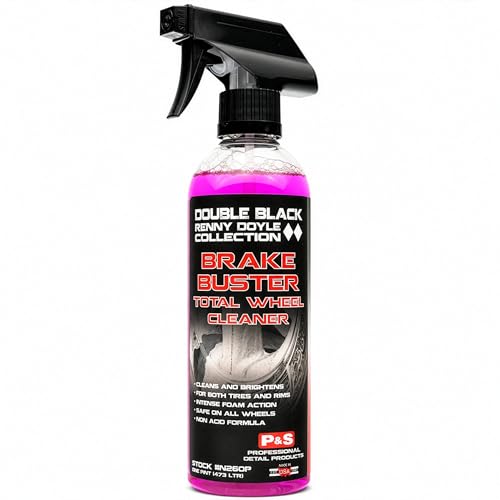
Compact Value – P&S Brake Buster Pint
This pint-size P&S Brake Buster is a practical entry point for shoppers seeking acid free wheel cleaners without committing to a gallon. The non-acid cleaner is intended for brake dust, iron, oil, dirt, and light corrosion across wheels, tires, and brake parts.
Best For: DIY users who want a smaller bottle for occasional vehicle cleaning.
Pros:
- Safe for steel, aluminum, chrome, painted, and powder-coated finishes.
- Works on wheels, tires, and brake parts.
- Can be sprayed directly or diluted in a foam sprayer.
- Leaves a protective coating to help repel future grime.
Cons:
- The 16-ounce size may run out quickly for multiple vehicles.
- Cleaning stubborn buildup can require soft-bristle brushing.
The smaller container makes this version easier to store and test, while retaining the flexible application and broad surface compatibility associated with the Brake Buster formula.
Shop Concentrate – Quan Brown Acid-Free Cleaner
Quan Brown is a concentrated option among acid free wheel cleaners, with a stated 4:1 dilution ratio for routine work and full-strength use for heavier contamination. Its water-based formula is designed for wheels, tires, rubber trim, engine bays, and selected painted surfaces.
Best For: Professional detailers, mobile operators, fleets, and high-volume cleaning where concentrate value matters.
Pros:
- One gallon of concentrate can make up to five gallons of ready-to-use cleaner.
- Targets brake dust, road grime, iron fallout, and tire browning.
- Versatile use across wheels, tires, rubber trim, and engine bays.
- Designed for a spray, dwell, agitate-if-needed, and rinse workflow.
Cons:
- Not recommended for uncoated polished or anodized aluminum.
- Requires dilution for the stated routine 4:1 application.
- Testing on an inconspicuous area is advised before full use.
Quan Brown is most compelling for users who value coverage and repeat-use economy. Its surface limitations make careful testing and adherence to the supplied directions especially important.
Color-Change Champion – SONAX The Beast Wheel Cleaner
For shoppers comparing acid free wheel cleaners, SONAX The Beast stands out with a pH-neutral, color-changing formula. It reacts with iron-containing brake dust, then rinses away after a short dwell time, making it practical for routine cleaning across many wheel finishes.
Best For: Drivers who want visible brake-dust reaction and broad wheel-finish compatibility.
Pros:
- Turns red as it reacts with iron-containing contamination.
- Works on steel, light-alloy, painted, chrome, polished, and matte wheels when used as directed.
- Ready for a spray, dwell, agitation if needed, and rinse process.
- pH-neutral and suitable around wheels equipped with TPMS sensors.
Cons:
- Requires cool, dry wheels and should not be allowed to dry on the surface.
- Heavy contamination may still need agitation.
Its visual color change makes it especially useful when you want feedback during cleaning. The 33.8-ounce bottle is a practical choice for regular wheel-care sessions.
Heavy-Duty Specialist – MAD Acid Heavy Duty Wheel Cleaner
Although it targets stubborn brake dust, rust, and mineral deposits, MAD Acid is not an acid free wheel cleaner. Its concentrated formula is positioned for heavy-duty jobs on several wheel and exterior surfaces, with a brief 15- to 20-second dwell before rinsing.
Best For: Users seeking a heavy-duty cleaner for brake dust, rust, water spots, and grime.
Pros:
- Targets brake dust, rust, grime, calcium, and mineral deposits.
- Listed as suitable for clear-coated, chrome, alloy, and painted wheels.
- Short 15- to 20-second dwell time before rinsing.
- Can be paired with a rim-cleaner brush for additional agitation.
Cons:
- It is explicitly an acid wheel cleaner, so it does not fit an acid-free requirement.
- The 16-ounce bottle is smaller than the gallon-size options in this roundup.
MAD Acid may suit difficult restoration-style cleaning, but shoppers specifically seeking acid free wheel cleaners should choose another product here. Follow the stated dwell time and rinse thoroughly.
Bulk Ready-to-Use Pick – Meguiar's D14301 Non Acid Wheel Cleaner
Meguiar’s D14301 is a straightforward option for shoppers comparing acid free wheel cleaners. This pre-diluted, non-abrasive formula comes ready to spray on wheels and tires, lightly agitate, and hose off without mixing.
Best For: Frequent wheel-and-tire cleaning and buyers who want a large ready-to-use container.
Pros:
- Acid-free, non-acid, and non-abrasive formula.
- Pre-diluted and requires no mixing.
- Removes brake dust, road grime, light grease, and dirt.
- Large 128-fluid-ounce gallon container.
Cons:
- Designed for light grease and dirt, so the notes do not position it as a heavy-contamination specialist.
- The gallon container may be more product than occasional users need.
For uncomplicated maintenance, D14301 offers useful volume and a simple application routine. It is the most practical choice in this group for regular wheel-and-tire washing without dilution.
Best Concentrated Formula – Suds Lab XA Zero-Acid Wheel Cleaner
If you want acid free wheel cleaners in a larger, concentrated format, Suds Lab XA is a practical option for routine wheel and tire cleaning. Its acid-free formula is designed to loosen brake dust and grime with limited scrubbing, but careful application is important: use it only on cool surfaces, do not let it dry, and test compatibility first.
Best For: Drivers and detailers who want a 64-ounce concentrated cleaner for polished rims, chrome, alloy, and compatible metal, plastic, or rubber surfaces.
Pros:
- 100% acid-free and non-corrosive formula.
- Concentrated 64-ounce size can be diluted with water.
- Designed to reduce scrubbing and remove brake dust and grime quickly.
Cons:
- Not recommended for uncoated aluminum, anodized, repainted, or aftermarket wheels.
- Must not be used on hot wheels or allowed to dry on the surface.
- Requires an inconspicuous compatibility test before use.
Suds Lab XA offers strong value for users who need a larger supply and prefer minimal scrubbing. Its surface restrictions mean it is best suited to compatible, known finishes rather than uncertain or specialty wheels.
Best Visual Cleaning Indicator – SONAX Wheel Cleaner Full Effect
SONAX Wheel Cleaner Full Effect is a convenient choice among acid free wheel cleaners when you want visible feedback during cleaning. The ready-to-use, pH-balanced formula changes from yellow-green to deep red or purple as it reacts with iron-containing brake dust, helping you judge when the product has activated.
Best For: Vehicle owners who want a ready-to-use cleaner for cool, dry painted alloy, anodized, clear-coated, chrome, aluminum, or stainless-steel wheels.
Pros:
- Acid-free, pH-balanced formula for finish-conscious cleaning.
- Color-changing reaction makes brake-dust activity easy to see.
- Ready to use without dilution.
- Suitable for several common wheel finishes when used as directed.
Cons:
- The 500 ml bottle provides less product than larger concentrated options.
- Stubborn areas may still require agitation with a brush.
- Must be rinsed thoroughly and not allowed to dry.
SONAX is a strong pick for straightforward maintenance and targeted brake-dust removal. Its visual color change is especially useful for users who prefer an obvious indication that the cleaner is reacting, though careful dwell-time control remains necessary.
Best Foaming Professional Cleaner – Nanoskin Non-Acid Wheel & Tire Cleaner
Nanoskin Non-Acid Wheel & Tire Cleaner stands out among acid free wheel cleaners for its professional-style concentration and clingy foam. Diluted at a 4:1 ratio, it is designed to stay on vertical surfaces while lifting brake dust, oil, dirt, tire residues, and light corrosion with brush agitation when needed.
Best For: DIY users and professional detailers who need one concentrated product for clear-coated, powder-coated, chrome, alloy, and factory-painted wheels as well as tires.
Pros:
- Concentrated 16-ounce formula uses a 4:1 dilution ratio.
- Extreme Cling foaming action helps extend dwell time on vertical surfaces.
- Handles wheel and tire contaminants including oil, dirt, old dressing, and light corrosion.
- Compatible with wheel brushes, tire brushes, and foam sprayers.
Cons:
- Requires dilution before use.
- Best results may require a brush or foaming sprayer.
- Its 16-ounce container is smaller than bulk-format alternatives.
Nanoskin is a versatile choice when foam coverage and repeatable detailing results matter. The concentrate can stretch across multiple applications, while its wheel-and-tire versatility helps simplify a broader cleaning routine.
How We Picked the Best Acid Free Wheel Cleaners
We evaluated these Acid Free Wheel Cleaners for the factors that matter most during real-world detailing: compatibility with common wheel finishes, effectiveness against brake dust and road grime, ease of use, product concentration, bottle size, and overall versatility. We also considered whether each formula is ready to use or requires dilution, and whether it uses color-changing or iron-reactive chemistry to show contamination.
“Acid-free” does not mean risk-free. Always follow the label, test an inconspicuous area, avoid letting cleaner dry on the surface, and use appropriate brushes and water pressure.
Quick Comparison
- Best for regular maintenance: A non-acid, ready-to-use cleaner designed for frequent washing.
- Best for heavy brake dust: A stronger formula with iron-reactive or color-changing action.
- Best for larger vehicles: A gallon-size or concentrated option that reduces cost per wash.
- Best for mixed finishes: A product explicitly labeled safe for painted, clear-coated, chrome, plastic, or glass surfaces.
- Best for smaller jobs: A compact bottle suited to occasional cleaning or keeping in a detailing kit.
Key Buying Factors for Acid-Free Wheel Cleaners
Wheel-Finish Compatibility
Check the label before applying any cleaner. Painted, powder-coated, clear-coated, chrome, polished, and aftermarket wheels can have different care requirements. If the finish is damaged, unsealed, or highly polished, use extra caution and follow the wheel manufacturer’s recommendations.
Cleaning Strength
For lightly soiled wheels, a mild maintenance cleaner may be enough. Heavy brake dust and embedded iron deposits may call for a stronger formula, agitation with a dedicated wheel brush, or an iron-reactive cleaner that changes color as it works.
Ready-To-Use Versus Concentrate
Pre-diluted cleaners are convenient and consistent, while concentrates can offer better long-term value and let you adjust strength for different jobs. Compare the usable volume, not just the bottle price.
Application and Dwell Time
Look for clear instructions on spraying, dwell time, agitation, and rinsing. A foaming trigger can improve coverage, but no cleaner should be allowed to dry on a hot wheel or in direct sun.
Size and Value
Choose a smaller bottle for occasional detailing and a larger container for multiple vehicles, frequent washing, or professional use. Factor in whether you will need a separate tire cleaner, brushes, or a dilution bottle.
Who Should Buy Which Acid Free Wheel Cleaners?
Daily drivers and routine washers should prioritize a gentle, ready-to-use formula that works quickly on lightly to moderately dirty wheels. Detailers handling heavy contamination should consider a stronger non-acid cleaner with iron-reactive action and use it alongside mechanical agitation.
Owners of expensive or delicate wheels should choose a product with broad, clearly stated finish compatibility and perform a spot test first. Families with several vehicles or professional detailers will usually get better value from a larger bottle or concentrate. For occasional users, a smaller ready-to-use bottle avoids storage and dilution hassle.