The best quiet air compressors make workshop tasks more comfortable without sacrificing the airflow needed for inflation, brad nailing, light spraying, or pneumatic tools. This roundup compares 10 oil-free models across compact, portable, and higher-capacity designs.
Use the buying guide below to match tank capacity, operating noise, PSI, and CFM to the work you actually plan to do.
Best 10 Quiet Air Compressors Picks for 2026
Quietest Overall

- 60 dBA operation for quieter indoor work
- 8-gallon aluminum tank with 120 PSI maximum
- Oil-free, wheeled design weighs 37.25 pounds
Best For: Indoor DIY users who need low noise and extra tank capacity
Best Compact Value
3-Gallon Ultra Quiet Air Compressor
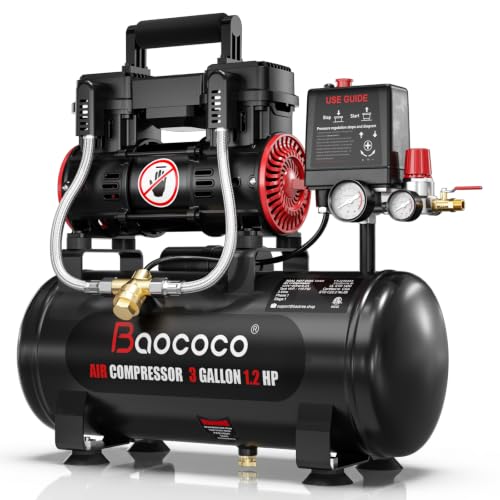
- Compact 3-gallon tank with wheels and carry handle
- 1.2 HP motor reaches 115 PSI
- Oil-free design with two quick couplers
Best For: Home projects and light-duty automotive or pneumatic work
Best Accessory Bundle

- 68 dB operation with 2.8 CFM at 90 PSI
- Includes 25-foot hose and 13-piece tool kit
- 5-gallon wheeled tank with oil-free operation
Best For: DIYers who want a larger tank and accessories included
Best Portable Pick
Metabo HPT EC28M Quiet 1-Gallon Compressor

- Very quiet 59 dB operation
- Portable 25.2-pound design with steel roll cage
- Universal quick coupler and oil-free operation
Best For: Mobile nailing and indoor jobs where low noise matters
Best Compact Power
Stealth 2-Gallon Quiet Compressor

- 60 dB oil-free operation
- 125 PSI maximum pressure
- 2.8 CFM at 40 PSI
Best For: Portable home DIY, inflation, and nailing
Best Lightweight Option
California Air Tools CAT-1P1060S

- 56 dB ultra-quiet operation
- Only 29 pounds
- Oil-free 1-gallon steel tank
Best For: Indoor use and light-duty portable tasks
Best Large-Capacity Choice
VEVOR 13-Gallon Quiet Compressor

- 13-gallon tank for extended use
- 4.6 SCFM at 90 PSI
- 66 dB oil-free operation
Best For: Workshop, auto repair, and spray painting
Quiet Workshop Pick

- 60 dBA oil-free operation
- 2-gallon aluminum tank
- 35-pound portable design
Best For: Indoor workshops, air brushing, and tire inflation
High-Capacity Quiet Choice

- 2HP oil-free motor
- 6.4-gallon listed tank capacity
- 115 PSI maximum working pressure
Best For: Garages, workshops, spray painting, and auto repair
Portable Multi-Tool Pick

- 70 dB oil-free operation
- 5.65 CFM at 115 PSI
- Fast 28–32 second tank fill
Best For: Carpentry, painting, auto repair, and intermittent pneumatic work
Quietest Overall – California Air Tools 8010A
The California Air Tools 8010A is a strong choice for shoppers seeking quiet air compressors for indoor work, workshops, and noise-sensitive spaces. Its 60 dBA operation, 8-gallon aluminum tank, oil-free pump, and wheels offer a useful balance of low noise, capacity, and portability.
Best For: Indoor DIY projects, airbrushing, nailing, inflation, blow cleaning, sanding, and spraying.
Pros:
- Very quiet 60 dBA operation for indoor use.
- 8-gallon tank and 120 PSI maximum pressure provide useful reserve capacity.
- Oil-free design requires less routine maintenance.
- Lightweight 37.25-pound build with wheels improves portability.
Cons:
- Its 2.20 CFM at 90 PSI may be limiting for demanding continuous-use tools.
- It requires a corded 110-volt power source.
With a 165-second initial fill time and 60-second recovery from 90 to 120 PSI, this model is designed to reduce waiting between tasks. It is especially appealing when quiet operation and an 8-gallon tank matter more than maximum airflow.
Best Compact Value – 3-Gallon Ultra Quiet Air Compressor
This 3-gallon model is a practical option for buyers comparing quiet air compressors for home projects and small workshops. It combines approximately 70 dB operation with a 1.2 HP motor, oil-free construction, two quick couplers, and a compact wheeled design.
Best For: Tire inflation, nailing, airbrushing, light painting, furniture assembly, and auto maintenance.
Pros:
- Compact 3-gallon tank with built-in wheels and carry handle.
- Reaches working pressure in about 50 seconds from a cold start.
- Two quick couplers support convenient tool changes.
- Oil-free construction avoids regular oil changes.
Cons:
- 70 dB is quieter than many traditional compressors but not the quietest option here.
- The 3-gallon tank offers less reserve capacity than larger models.
- Maximum pressure is 115 PSI.
Its fast refill claims and compact footprint make it convenient for intermittent tasks, while the 120-volt design suits typical household outlets. For extended high-demand tool use, the smaller tank may require more frequent cycling.
Best Accessory Bundle – Quiet 5-Gallon Air Compressor
This 5-gallon compressor is worth considering among quiet air compressors when an included accessory package is a priority. It offers 68 dB operation, 2.8 CFM at 90 PSI, a wheeled tank, a 25-foot hose, and 13 air-tool accessories for a ready-to-use setup.
Best For: Nailing, blow cleaning, tire inflation, woodworking, garage projects, and general pneumatic-tool use.
Pros:
- 5-gallon tank provides more capacity than compact 1- and 3-gallon models.
- Produces 2.8 CFM at 90 PSI for a range of pneumatic tools.
- Includes a 25-foot PVC hose and 13-piece accessory kit.
- Oil-free design reduces routine maintenance needs.
Cons:
- Its listed noise level is approximately 68–70 dB, so it is not the quietest model in this roundup.
- The supplied notes list a 120 PSI maximum but do not specify a weight.
The advertised 80-second refill and 25-second recovery times are useful for projects that involve repeated nailing or inflation. Its accessory bundle adds convenience, although buyers should verify the included tools meet their specific requirements.
Best Portable Pick – Metabo HPT EC28M Quiet 1-Gallon Compressor
The Metabo HPT EC28M stands out among quiet air compressors for portability and exceptionally low operating noise. Its 59 dB rating, 1-gallon tank, 25.2-pound weight, rubber handle, and steel roll cage make it convenient for moving between jobsites.
Best For: Nailing, finish work, siding, roofing, framing, and other portable pneumatic-tool tasks.
Pros:
- Very quiet 59 dB operation allows normal conversation while cycling.
- Lightweight 25.2-pound design is easy to carry.
- Universal quick coupler supports fast tool changes.
- Oil-free pump and overload protection support low-maintenance use.
Cons:
- The 1-gallon tank has limited reserve for extended air demand.
- Its compact capacity is less suited to continuous-use tools.
- The supplied specifications list a maximum pressure of 125 bar, which buyers may want to verify before purchase.
This is the most portable choice in the group and one of the quietest, making it well suited to indoor work and mobile nailing applications. Choose a larger-tank model if minimizing refill cycles is more important than easy carrying.
Best Compact Power – Stealth 2-Gallon Quiet Compressor
For shoppers comparing quiet air compressors for home projects, the Stealth SAQ-1234 offers a useful balance of portability, pressure, and capacity. Its oil-free 3/4 HP motor reaches 125 PSI, while the soundproofed, low-vibration design keeps operating noise to 60 dB.
Best For: Tire inflation, nailing, airbrushing, stapling, and general DIY work where a compact but capable compressor is useful.
Pros:
- 2-gallon tank and 125 PSI maximum pressure support a range of home tasks.
- Delivers 2.8 CFM at 40 PSI and 1.8 CFM at 90 PSI for relatively quick recovery.
- Oil-free design includes overheat protection and a safety valve for lower maintenance.
- Portable steel build includes a reinforced handle and rubberized bases.
Cons:
- At 41.9 pounds, it is heavier than some smaller portable models.
- The 2-gallon tank is less suited to extended, high-demand tool use.
The SAQ-1234 is a practical middle ground for users who want quiet operation without giving up useful pressure and airflow. Its compact tank favors intermittent DIY tasks rather than continuous-duty applications.
Best Lightweight Option – California Air Tools CAT-1P1060S
The California Air Tools CAT-1P1060S is a strong choice among quiet air compressors for indoor work and noise-sensitive spaces. It operates at 56 dB, weighs 29 pounds, and uses an oil-free pump that requires no routine oil maintenance.
Best For: Indoor tire inflation, airbrushing, blow guns, cleaning, and finish or brad nailing where easy carrying matters.
Pros:
- Its 56 dB noise rating makes it the quietest model in this roundup.
- Lightweight 29-pound design is easy to move around a garage or workspace.
- Oil-free single-piston pump works across varied temperatures and uneven terrain.
- Provides 1.2 CFM at 90 PSI and 1.6 CFM at 40 PSI for light-duty tools.
Cons:
- The 1-gallon tank offers less reserve capacity than larger compressors.
- Its 0.6 HP motor and 1.2 CFM at 90 PSI are aimed at lighter applications.
Choose this model when low noise and portability are higher priorities than extended runtime. The small tank and modest airflow are well matched to intermittent inflation, finishing, and cleanup jobs.
Best Large-Capacity Choice – VEVOR 13-Gallon Quiet Compressor
For buyers needing more reserve air, the VEVOR 13-gallon model stands out among quiet air compressors for its larger tank and 2 HP motor. It operates at 66 dB, reaches 125 PSI, and is rated at 4.6 SCFM at 90 PSI for demanding DIY and repair work.
Best For: Auto repairs, woodworking, spray painting, longer inflation jobs, and other applications that benefit from higher capacity and airflow.
Pros:
- 13-gallon tank provides substantially more air reserve than compact models.
- 2 HP motor builds pressure in under 3 minutes according to the supplied specifications.
- 4.6 SCFM at 90 PSI supports higher-demand tools and spray applications.
- Seven-inch rubber wheels make the 71-pound unit easier to move.
Cons:
- At 66 dB, it is louder than the other two compressors in this roundup.
- The 71-pound weight and 33.3-inch height make it less convenient to carry.
- The larger footprint may be excessive for occasional, light-duty tasks.
The VEVOR is the practical pick when tank capacity and airflow matter more than minimum noise or compact storage. Its oil-free operation and included filters, gauges, wheels, and foot pads add convenience for workshop use.
Quiet Workshop Pick – California Air Tools 2010A
The California Air Tools 2010A is a strong choice for shoppers comparing quiet air compressors for indoor work, tire inflation, and air brushing. Its 60 dBA operating level, oil-free pump, and compact 2-gallon aluminum tank make it practical for noise-sensitive workspaces.
Best For: Indoor workshops, air brushing, tire inflation, and users who want a lightweight, low-maintenance compressor.
Pros:
- Runs at a quiet 60 dBA.
- Oil-free dual-piston pump requires less routine maintenance.
- Lightweight 35-pound design with a rust-free aluminum tank.
- Reaches up to 120 PSI, with 3.10 CFM at 40 PSI and 2.20 CFM at 90 PSI.
Cons:
- The 2-gallon tank is smaller than those on compressors intended for longer continuous applications.
- Its corded 110-volt design requires access to a suitable power outlet.
Fast fill and recovery times help reduce waiting between tasks, while the portable frame is easy to move around a workspace. It is best suited to lighter-duty pneumatic work rather than high-demand continuous use.
High-Capacity Quiet Choice – 6.4-Gallon 2HP Compressor
This 6.4-gallon model is worth considering when quiet air compressors need to support larger projects and common pneumatic tools. It combines a stated approximately 60 dB operating level with a 2HP motor, 115 PSI maximum working pressure, and oil-free operation.
Best For: Workshops and garages handling spray painting, auto repair, tire inflation, and woodwork nailing.
Pros:
- Large 6.4-gallon tank provides more stored air than compact models.
- Oil-free design is intended to reduce routine maintenance.
- Includes an integrated handle, pressure gauge, G1/4 outlet, and condensate drain.
- Safety features include overload protection, a cooling fan, and a safety valve.
Cons:
- The supplied specifications contain conflicting tank-volume and noise information, listing both 6.4 and 13 gallons and both approximately 60 and 75 dB.
- Its larger tank may be less convenient to move than a small portable compressor.
The combination of a larger tank and 2HP motor gives this compressor a broader project range than small models. Because the provided specifications conflict, verify the current listing details before purchasing if tank size or noise level is critical.
Portable Multi-Tool Pick – MZB 2.4-Gallon Compressor
The MZB 2.4-gallon compressor suits shoppers seeking quiet air compressors for varied shop and home projects. Its oil-free 1.2HP motor, 70 dB noise rating, 115 PSI maximum pressure, and stated 5.65 CFM delivery support tasks from nailing to spraying.
Best For: Carpentry, auto repair, painting, tire inflation, and portable pneumatic-tool use.
Pros:
- Supports a wide range of tools, including nailers, spray guns, blow guns, and air drills.
- Fast tank fill time of approximately 28–32 seconds.
- Oil-free motor avoids oil contamination and simplifies maintenance.
- Compact steel-tank design includes silencers and thickened filter cotton.
Cons:
- At 70 dB, it is quieter than many conventional compressors but not as quiet as the 60 dBA models in this roundup.
- The approximately 2.4-gallon tank offers less air storage than larger workshop compressors.
This model emphasizes portability and quick pressurization while offering useful airflow for a broad mix of tools. Its smaller tank makes it a better fit for intermittent work than extended, high-demand applications.
How We Picked the Best Quiet Air Compressors
We focused on models that clearly emphasize reduced operating noise, including compressors rated from the mid-50s to around 70 dBA. We also compared tank capacity, maximum pressure, airflow ratings, oil-free construction, portability, and intended use. Because manufacturer CFM figures may be measured at different pressures, treat them as useful guidance rather than perfectly standardized head-to-head results.
The selection includes small compressors for indoor touch-ups and inflation, mid-size units for nailers and general DIY work, and larger tanks for projects requiring longer operating cycles.
Quick Comparison
| Best For | What to Prioritize | Typical Suitable Size |
|---|---|---|
| Inflating tires and sports equipment | Compact design, easy storage, dependable hose connections | 1–3 gallons |
| Brad and finish nailers | Fast recovery, adequate CFM, portable tank | 2–6 gallons |
| Stapling and light workshop tools | Balanced airflow and tank capacity | 4–8 gallons |
| Spray painting or extended use | Higher delivered CFM, larger tank, moisture control | 6–13 gallons or more |
Key Buying Factors for Quiet Air Compressors
Noise Rating
A lower dBA number generally means a more comfortable compressor for garages, basements, and shared workspaces. Ratings are not always measured under identical conditions, so also consider vibration, mounting, and how close you will work to the machine.
Tank Size and Recovery
A larger tank provides a longer reserve before the motor starts again, while a smaller tank is easier to carry and store. For intermittent tasks such as inflation or nailing, compact models can work well. Continuous tools need both a larger tank and sufficient pump recovery.
CFM and PSI
Maximum PSI indicates pressure capability, but CFM at 90 PSI is usually more useful for comparing tool performance. Match the compressor’s delivered CFM to the tool’s requirement, adding a safety margin when possible. Spray guns, sanders, and grinders typically demand much more airflow than nailers.
Oil-Free Construction and Portability
Oil-free pumps reduce maintenance and avoid oil contamination, making them convenient for home use. Wheels, handles, and a lighter tank improve mobility, while aluminum tanks may reduce weight. Check electrical requirements and use a properly rated extension cord only when the manufacturer permits it.
Who Should Buy Which Quiet Air Compressors?
Choose a compact 1- to 3-gallon model for tire inflation, airbrushing, small fastening jobs, and occasional DIY work where storage and low noise matter most. Choose a mid-size 5- to 8-gallon compressor for a more versatile home workshop, especially if you use brad nailers, staplers, or blow guns regularly. Choose a 13-gallon or similarly high-capacity model when longer duty cycles and stronger airflow are more important than minimum size.
For spray painting, verify the spray gun’s actual CFM requirement, plan for a quality regulator and moisture separator, and remember that a “quiet” rating does not guarantee enough continuous airflow. Finally, compare warranty coverage, replacement fittings, tank drain access, and the unit’s footprint before buying.