The best pure sine wave car inverters provide cleaner, more stable AC power than modified sine wave models, making them a practical choice for laptops, medical equipment, chargers, and other sensitive electronics.
These 10 options range from compact 300-watt car adapters to high-output 2,000-watt inverters. Use the guide below to compare capacity, connection options, safety features, and the right fit for your vehicle or travel setup.
Best 10 Pure Sine Wave Car Inverters Picks for 2026
Best Compact Choice
BESTEK 500W Pure Sine Wave Car Inverter
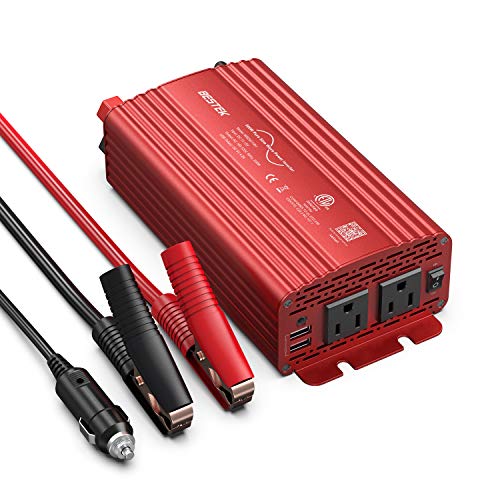
- 500W pure sine wave output
- Two AC outlets and dual USB charging
- Supports cigarette-lighter or battery-clamp connection
Best For: Road trips, sensitive electronics, and off-grid vehicle power
Best High-Power Option
LANDERPOW 2000W Pure Sine Wave Inverter

- 2,000W continuous and 4,000W surge
- Three outlets plus hardwired terminal
- 15-foot remote with LED status display
Best For: RVs, job sites, emergencies, and heavy-startup loads
Best Plug-In Value
BESTEK 300W Pure Sine Wave Inverter

- 300W continuous, 700W peak output
- Two AC outlets and 4.8A dual USB charging
- Simple 11–17V cigarette-lighter operation
Best For: Everyday vehicle charging and lower-power electronics
Best Display-Focused Pick
OLTEANP 600W Pure Sine Wave Inverter

- 600W continuous, 1,200W peak output
- LCD status and protection-code display
- Includes clamps and cigarette-lighter cable
Best For: Camping, RVs, work trucks, and monitored battery power
Best for Easy Setup
Giandel 300W PD30W Pure Sine Inverter

- 300W continuous, 600W peak output
- Two AC outlets plus PD30W and QC 3.0 USB
- Quiet fan and replaceable fuse
Best For: Everyday vehicle charging and portable electronics
Best for Everyday Use
BELTTT 2000W Pure Sine Inverter

- 2,000W continuous and 4,000W surge output
- LCD monitoring and 23-foot remote
- AC, 20A, USB, and hardwire connections
Best For: RV, truck, camping, and off-grid battery systems
Best Midrange Car Pick
BESTEK 500W Pure Sine Inverter

- 500W clean power for sensitive electronics
- 30W USB-C, USB-A, and dual AC outlets
- ETL-certified with broad safety protections
Best For: Travel, camping, CPAP, and moderate vehicle loads
Best with Extra Features

- 1,000W continuous and 2,000W surge output
- Three AC outlets plus USB and 30W PD charging
- 15-foot remote with LED monitoring
Best For: RVs, trucks, job sites, and emergency power
Best Compact Charging Value
BESTEK 300W Pure Sine Wave Inverter

- 300W continuous and 700W peak output
- PD 30W USB-C and QC 18W USB-A charging
- Compact vehicle-plug design with two AC outlets
Best For: Everyday travel and small electronics
Best Midrange Road-Trip Pick
BESTEK 400W Pure Sine Wave Inverter
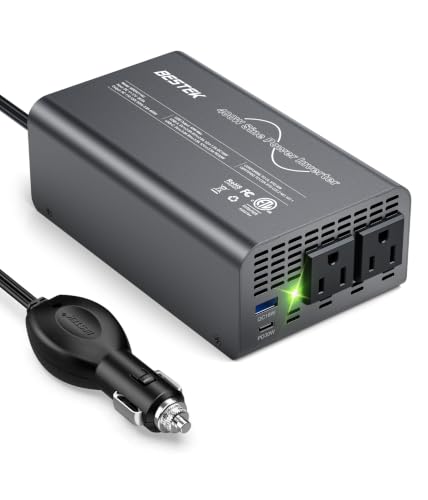
- 400W continuous and 800W peak output
- Two AC outlets with PD 30W and QC 18W charging
- 11–17V input supports Tesla 16V sockets
Best For: Road trips, camping, and moderate AC loads
Best Compact Choice – BESTEK 500W Pure Sine Wave Car Inverter
For drivers seeking pure sine wave car inverters for sensitive electronics and everyday vehicle use, the BESTEK 500W model offers clean 110V AC power, dual outlets, and USB charging. It can connect through a 12V cigarette-lighter plug or directly to a battery with the included clamps, though the cigarette-lighter connection is better suited to lower-wattage loads.
Best For: Road trips, off-grid use, cordless tools, and sensitive electronics that need clean power.
Pros:
- 500W continuous pure sine wave output with lower electrical interference.
- Includes two AC outlets, two USB ports, battery clamps, and a cigarette-lighter cable.
- Provides protection against overload, overheating, voltage issues, reverse polarity, and short circuits.
- Replaceable external fuses and automatic overload shutdown add practical safety.
Cons:
- The 500W capacity requires direct battery clamps; the cigarette-lighter connection should generally stay under about 150W.
- The cooling fan may run even when the inverter is not under load.
- The power switch controls the three-prong outlets, not the 12V plug itself.
This is a versatile midrange option when you want clean AC power and flexible connection methods. Its main limitation is that the vehicle outlet cannot deliver the inverter’s full rated capacity.
Best High-Power Option – LANDERPOW 2000W Pure Sine Wave Inverter
Among pure sine wave car inverters, the LANDERPOW 2000W model is designed for demanding 12V battery systems. It delivers 2,000W continuously and 4,000W at surge, with grid-quality output for appliances, tools, and sensitive electronics. This is a direct-battery installation rather than a small plug-in car adapter.
Best For: RVs, job sites, emergency power, solar-and-battery systems, and high-startup-load equipment.
Pros:
- 2,000W continuous and 4,000W surge pure sine wave output.
- Three AC outlets, a hardwired terminal, USB charging, and a 30W PD port provide flexible connectivity.
- Includes thickened 2 AWG battery cables and a 15-foot wired remote with LED monitoring.
- Offers protection against undervoltage, overvoltage, overload, overheating, short circuits, and reverse connection.
Cons:
- Its high output requires a suitable 12V battery system and proper direct-battery wiring.
- The larger chassis and cable installation are less convenient than compact cigarette-lighter inverters.
- The supplied notes do not specify the unit’s full dimensions or weight.
This is the strongest choice here for users who need substantial AC capacity and remote monitoring. Its power level makes battery sizing, cabling, and installation more important than with lower-wattage models.
Best Plug-In Value – BESTEK 300W Pure Sine Wave Inverter
The BESTEK 300W model is a practical pick among pure sine wave car inverters when you want simple cigarette-lighter operation. It provides 300W of continuous power, 700W peak power, two AC outlets, and two smart USB ports for phones, tablets, laptops, and other modest vehicle loads.
Best For: Everyday car charging, road trips, laptops, cameras, speakers, game consoles, and other lower-power electronics.
Pros:
- Compact 300W pure sine wave design with 700W peak output.
- Two AC outlets and two smart USB ports deliver up to 4.8A total USB charging.
- Easy cigarette-lighter installation and compatibility with 11–17V systems, including Tesla vehicles.
- Built-in fuse, smart fan, and protection against overheating, voltage problems, short circuits, overloads, and overcharging.
Cons:
- Its 300W continuous rating limits use with larger appliances and high-draw tools.
- It does not offer the direct-battery clamp setup included with the higher-output alternatives.
- USB charging speed depends on the connected device and available port capacity.
This is the easiest option for routine vehicle use and moderate electronics. Choose it when convenience and compact size matter more than running large appliances.
Best Display-Focused Pick – OLTEANP 600W Pure Sine Wave Inverter
The OLTEANP 600W inverter combines pure sine wave output with an LCD status screen, making it useful for drivers who want visible operating information. It converts power from an external 12V car, truck, or RV battery into 600W of continuous 120V AC power, with 1,200W peak capacity and both clamp and cigarette-lighter connection options.
Best For: RV travel, camping, work trucks, remote work, small appliances, and emergency vehicle power.
Pros:
- 600W continuous and 1,200W peak pure sine wave output.
- LCD display shows operating status and protection codes such as low voltage, overvoltage, overheating, and overload.
- Includes two AC outlets, two USB ports, alligator clips, and a cigarette-lighter cable.
- Automatic cooling fans and built-in protection support safer operation.
Cons:
- It requires an external 12V battery and does not include a built-in battery.
- The 600W rating is intended for small appliances and electronics rather than very high-demand equipment.
- The supplied details do not specify the USB output for each port beyond identifying dual USB ports.
The LCD makes this a useful choice for monitoring battery and fault conditions during mobile use. Its included connection accessories also make it more adaptable than a plug-only inverter, provided the battery system can support the load.
Best for Easy Setup – Giandel 300W PD30W Pure Sine Inverter
For everyday vehicle charging, this 300-watt model is a practical choice among pure sine wave car inverters. It provides clean AC power through two outlets while adding USB-C PD30W and QC 3.0 charging for phones, tablets, laptops, and other portable electronics.
Best For: Road trips, everyday car charging, string lights, laptops, cameras, game consoles, and other modest-power electronics.
Pros:
- Pure sine wave output with 300 watts of continuous power and 600 watts of peak power.
- Includes two AC outlets, USB-C PD30W, and QC 3.0 USB charging.
- Quiet cooling fan, low idle consumption, replaceable fuse, and multiple protection features.
Cons:
- Its 300-watt capacity is not intended for high-demand appliances.
- Designed for vehicle-powered 12-volt use rather than larger off-grid installations.
This is a compact, feature-rich option when you mainly need clean power and fast device charging from a car socket. Its built-in protections and replaceable fuse add useful convenience for regular travel.
Best for Everyday Use – BELTTT 2000W Pure Sine Inverter
When your power needs extend beyond small electronics, this 2,000-watt model stands out among pure sine wave car inverters. It converts 12-volt battery power to 120-volt AC, with 4,000 watts of surge capacity for starting compatible loads.
Best For: RVs, trucks, camping, off-grid setups, solar-and-battery systems, and sensitive equipment such as televisions or home-theater components.
Pros:
- Provides 2,000 watts of continuous power and 4,000 watts of peak surge power.
- LCD display shows input and output voltage, battery status, load status, and operating conditions.
- Includes dual AC sockets, a 20A outlet, USB port, hardwire connection, and 23-foot remote control.
- Offers over 93% normal-use efficiency and multiple safety protections.
Cons:
- Its 7.7-pound, 14.8-inch form factor is less compact than car-socket inverters.
- Requires battery cables or hardwiring rather than simple cigarette-lighter operation.
- Higher output capacity may be excessive for basic phone and laptop charging.
This is the most capable option here for sustained, higher-demand AC power. The display, remote, hardwire port, and protection package make it better suited to a planned battery installation than casual in-car use.
Best Midrange Car Pick – BESTEK 500W Pure Sine Inverter
This BESTEK model offers a useful middle ground for shoppers comparing pure sine wave car inverters. Its 500-watt continuous output, dual AC outlets, and 30W USB-C charging can handle common travel electronics while providing clean, stable power for sensitive devices.
Best For: Road trips, camping, emergency use, laptops, CPAP machines, routers, TVs, gaming consoles, and small power tools within the 500-watt rating.
Pros:
- Delivers 500 watts of continuous pure sine wave power for sensitive electronics.
- Offers dual AC outlets, a 30W PD USB-C port, and a 4.2A USB-A port.
- Includes thermal management, ventilation, automatic fan operation, and multiple protection mechanisms.
- ETL-certified with a 12-month replacement warranty and 24/7 technical support.
Cons:
- Loads above 500 watts trigger automatic overload shutoff.
- The cigarette-lighter connection uses a vehicle-specific 15A fuse, while battery use requires separate fuse arrangements.
- Its listed dimensions may be incomplete or inaccurate, so buyers should confirm fit before installation.
For users who want more capacity than a compact 300-watt adapter without moving to a large hardwired inverter, this BESTEK is a sensible compromise. It combines useful fast charging with clean output and a broad protection system.
Best with Extra Features – 1000W Pure Sine Wave Inverter
For demanding vehicle, RV, or emergency-power setups, this 1000-watt option is one of the more capable pure sine wave car inverters. It delivers 1,000 watts continuously, handles up to 2,000 watts of surge power, and includes multiple AC and USB charging outputs.
Best For: RVs, trucks, job sites, and backup situations requiring higher continuous output and remote monitoring.
Pros:
- Provides 1,000 watts continuous power and 2,000 watts peak output.
- Pure sine wave output is designed for sensitive electronics and inductive or capacitive loads.
- Offers three AC outlets, USB charging, and a 30W PD port.
- Includes a 15-foot wired remote with an LED status display.
Cons:
- Requires a suitable 12V battery connection and substantial cabling rather than a standard lighter socket.
- Its higher output may be more than needed for basic phone or laptop charging.
- At 3.6 pounds and over 10 inches long, it is less compact than lower-power car models.
This is the strongest choice here for users who need substantial AC capacity and want to monitor the inverter from a cab or campsite. Its protection features, metal housing, thick battery cables, and three-year total coverage add reassurance for more demanding use.
Best Compact Charging Value – BESTEK 300W Pure Sine Wave Inverter
This compact BESTEK model suits everyday vehicle charging and moderate AC loads. Among pure sine wave car inverters, it stands out for combining 300 watts of continuous output with a PD 30W USB-C port, QC 18W USB-A charging, and two AC outlets.
Best For: Drivers who primarily need to charge laptops, phones, cameras, speakers, and other small electronics while traveling.
Pros:
- Pure sine wave output provides 300 watts continuously and up to 700 watts of peak power.
- Includes two AC outlets, PD 30W USB-C, and QC 18W USB charging.
- Compact 7-by-5-by-2-inch design connects through a vehicle cigarette-lighter plug.
- Has temperature, voltage, short-circuit, and fuse protection, plus a temperature-controlled fan.
Cons:
- Its 300-watt continuous rating limits it to smaller appliances and electronics.
- The 24-inch vehicle cable may not suit installations requiring a longer reach.
- It provides less surge capacity than the 400W and 1000W alternatives.
Choose this inverter when portability and fast device charging matter more than high-wattage appliance support. Its vehicle-plug design is convenient for road use, while the pure sine wave output is appropriate for electronics that benefit from cleaner AC power.
Best Midrange Road-Trip Pick – BESTEK 400W Pure Sine Wave Inverter
The BESTEK 400W balances portability with more capacity than a typical compact car adapter. It is a practical choice among pure sine wave car inverters for powering small appliances and sensitive electronics, while also supporting fast USB-C and USB-A charging.
Best For: Road trips, camping, RV travel, and drivers who need moderate AC power for devices such as laptops, CPAP machines, cameras, or small appliances.
Pros:
- Supplies 400 watts continuously and up to 800 watts during startup surges.
- Pure sine wave output is designed to reduce noise and support sensitive equipment.
- Includes two AC outlets, PD 30W USB-C, and QC 18W USB-A ports for up to four devices.
- Supports an 11–17V input range, including 16V cigarette-lighter sockets in Tesla vehicles.
Cons:
- It cannot continuously run appliances rated above 400 watts.
- It has fewer AC outlets than the 1000W model.
- As a vehicle-powered inverter, its installation and output depend on the vehicle’s 12V system.
This model is a sensible middle ground for travelers who want more headroom than a 300W inverter without moving to a larger battery-cable installation. Its charging ports, safety circuitry, and Tesla-compatible input range make it versatile for modern road use.
How We Picked the Best Pure Sine Wave Car Inverters
We focused on the specifications that matter most in real vehicle use: continuous wattage, surge capacity, output type, connection method, USB charging, voltage compatibility, and built-in protections. The lineup includes compact plug-in models for phones and laptops, midrange choices for camping and RV use, and higher-output units designed for heavier loads.
Because advertised wattage can vary by model and installation method, treat maximum output as a limit rather than a target. Check the manufacturer’s continuous rating, cable requirements, and vehicle connection instructions before purchasing.
Quick Comparison
| Power class | Best for | Typical connection |
|---|---|---|
| 300–400W | Phones, tablets, laptops, cameras, and small electronics | 12V accessory socket or compact vehicle plug |
| 500–600W | Several devices, small appliances, and light camping loads | Accessory socket or direct battery connection |
| 1,000W | Higher-demand electronics and brief appliance use | Direct battery connection recommended |
| 2,000W | Heavy loads with substantial startup demand | Direct battery connection required |
Key Buying Factors for Pure Sine Wave Car Inverters
Continuous and Surge Wattage
Continuous wattage determines what an inverter can run over time, while surge wattage handles short startup spikes from motors and compressors. Add the running wattage of everything you plan to use, then leave extra headroom. A 2,000-watt rating does not mean every vehicle can safely supply that much power.
Connection and Installation
Lower-output units can often use a 12V accessory outlet, but many sockets are limited to about 10 or 15 amps. Higher-output Pure Sine Wave Car Inverters generally need short, heavy-gauge cables connected directly to the battery, along with appropriate fusing. Follow the included wiring guidance and never use an undersized cable.
Ports, Voltage, and Protection
Look for the outlets and charging ports you actually need, including USB-A, USB-C Power Delivery, and standard AC receptacles. Confirm whether the model outputs 110V or 120V AC and accepts your vehicle’s 12V system. Overload, short-circuit, over-temperature, and low-voltage shutdown features can help protect both the inverter and vehicle battery.
Battery and Ventilation Needs
Inverters draw power quickly, especially at higher loads. Use the engine-running guidance from the manufacturer, maintain good ventilation, and avoid blocking cooling fans. A larger inverter will not extend battery life; it only allows larger loads when the electrical system can support them.
Who Should Buy Which Pure Sine Wave Car Inverters?
Choose a 300W or 400W model for everyday charging, road trips, laptops, cameras, and small electronics. A 500W or 600W inverter is a better middle ground for camping, multiple devices, and modest appliances. Consider a 1,000W model when you need more headroom but still have a relatively simple setup. The 2,000W options are for demanding applications and should be installed directly to a suitably capable battery system rather than treated like ordinary plug-in car adapters.