The best floor jacks make lifting, supporting, or leveling heavy loads more controlled and predictable. This roundup includes automotive service jacks alongside adjustable post jacks designed for home and foundation work.
Use the comparison and buying advice below to match capacity, lift range, clearance, portability, and construction to the job you actually plan to do.
Best 10 Floor Jacks Picks for 2026
Low-Clearance Pick
Maxority 3-Ton Low-Profile Floor Jack

- Ultra-low design with extended reach
- Dual-piston RAPID PUMP lifting system
- 6,600-pound steel construction
Best For: Lowered cars, sports cars, and home garages
Heavy-Duty Support Pair
VEVOR Adjustable Basement Floor Jacks

- Two Q235 steel support posts
- 53- to 93-inch adjustable height
- 18,000-pound capacity per jack
Best For: Temporary structural and construction support
Professional Safety Pick
SATA 3-Ton Ultra-Low Floor Jack

- 1.5-times overload tested
- Dual-piston quick-lift pump
- 2.13-inch minimum height
Best For: Frequent shop and heavy-duty vehicle maintenance
Extra-Tall Support Pick
VEVOR 150-Inch Adjustable Floor Jacks
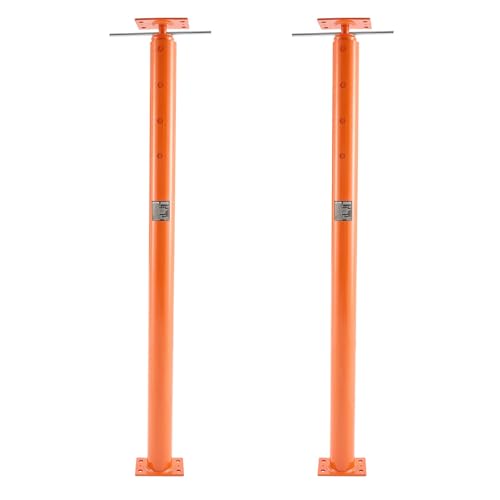
- 54- to 150-inch height range
- 11,200-pound capacity per jack
- Two Q235 steel support posts
Best For: Tall temporary beam and construction support
Best Low-Profile Value
AV Steel 3-Ton Low-Profile Floor Jack

- 3-ton, 6,600-pound lifting capacity
- 3-1/8-inch minimum height
- Dual-piston pump and overload protection
Best For: Low-clearance cars and general garage maintenance
Best for Structural Support
Four-Pack Adjustable House Floor Jacks
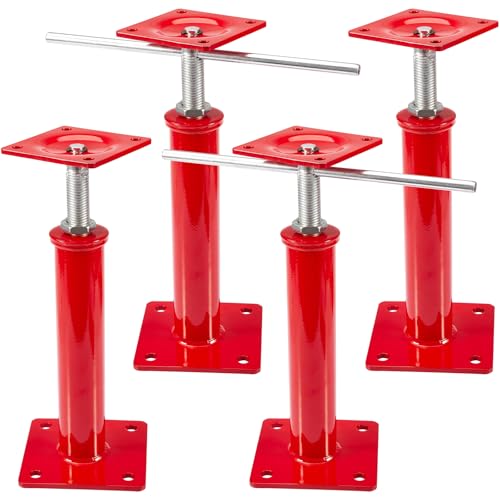
- Four Q235 steel support jacks
- 11- to 16-inch adjustable height
- 11,023-pound capacity per jack
Best For: Temporary beam, patio, and sagging-floor support
Best Racing-Style Build
Jack Boss 3-Ton Aluminum-Steel Floor Jack
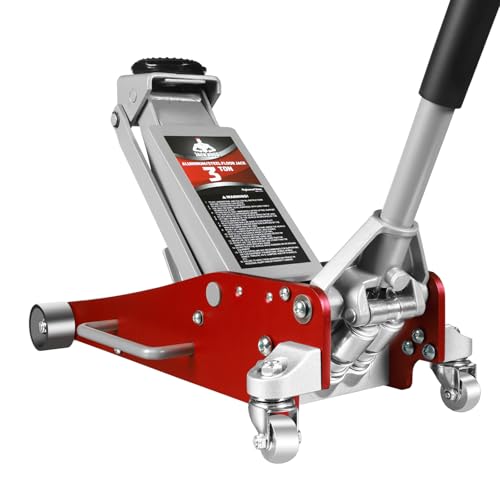
- Aluminum body with welded steel frame
- Dual-piston quick-lift pump
- 1.5X overload-tested 3-ton capacity
Best For: Garage mechanics servicing cars, SUVs, and trailers
Best for High-Capacity Temporary Support
Adjustable 53-93 in. House Floor Jack

- 18,000-pound load capacity
- 53- to 93-inch adjustable height
- Q235 steel with two lock pins
Best For: Tall beams, patios, and construction support
Best for Garage Vehicle Lifting
2-Ton Low-Profile Trolley Floor Jack
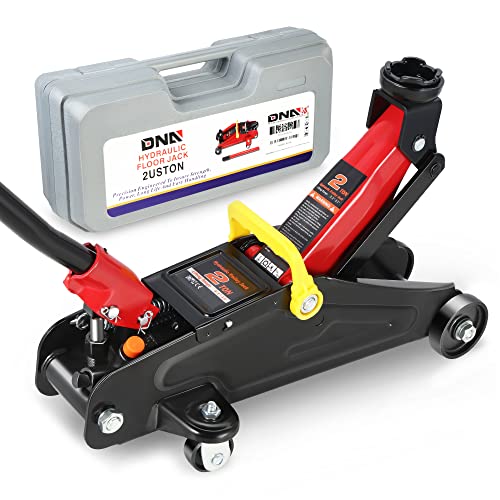
- 5.1- to 13-inch lifting range
- 4,000-pound capacity for compatible cars
- Swivel casters and overload protection
Best For: Home-garage lifting of most cars
Best for Low Structural Clearance
Compact 19-36 in. House Floor Jack

- 19- to 36-inch adjustable range
- 18,000-pound load capacity
- Tool-free adjustment with lock pins
Best For: Lower-clearance beams, patios, and construction support
Low-Clearance Pick – Maxority 3-Ton Low-Profile Floor Jack
For drivers comparing floor jacks for sports cars, lowered vehicles, or routine garage work, the Maxority combines an ultra-low profile with a long reach. Its dual-piston RAPID PUMP system is designed to reduce pumping effort, while the steel construction supports loads up to 6,600 pounds.
Best For: Home garages and owners of low-clearance or modified vehicles.
Pros:
- Ultra-low profile and extended reach improve access under lowered vehicles.
- RAPID PUMP technology helps lift vehicles with fewer handle strokes.
- High-strength steel construction and a built-in safety valve support regular use.
Cons:
- The color is selected at random.
- The listed manufacturer warranty is 90 days.
Choose this Maxority model when low access and faster lifting are more important than added features. Its 19.9-inch maximum lift and 6,600-pound capacity make it a practical general-purpose option for car maintenance.
Heavy-Duty Support Pair – VEVOR Adjustable Basement Floor Jacks
These VEVOR floor jacks are adjustable support posts rather than automotive lifting jacks. The two Q235 steel posts extend from 53 to 93 inches and are designed for temporary support, leveling, beams, patios, and construction work, with each jack rated for up to 18,000 pounds.
Best For: Temporary beam, basement, patio, and construction support.
Pros:
- Two-post set provides adjustable support from 53 to 93 inches.
- Each post is rated for up to 18,000 pounds.
- Tool-free lever adjustment, locking pins, and welded base plates simplify setup.
Cons:
- These are support posts, not standard car floor jacks.
- The height range is not suitable for spaces below 53 inches or above 93 inches.
This pair makes sense for structural leveling and temporary support where substantial capacity is needed. Confirm the application and required height before buying, since the design is intended for construction-related support rather than vehicle servicing.
Professional Safety Pick – SATA 3-Ton Ultra-Low Floor Jack
Among floor jacks for frequent garage or shop use, the SATA 3-ton model stands out for its overload testing and controlled-lowering features. Its ultra-low 2.13-inch minimum height, dual-piston pump, and 6,600-pound rating suit cars, SUVs, and light trucks.
Best For: Professional shops, fleet maintenance, and demanding home-garage work.
Pros:
- Tested to 1.5 times its rated capacity, or 9,900 pounds.
- Dual-piston pump is designed to reduce handle effort and lifting time.
- Overload protection and precision slow-release systems improve operating control.
Cons:
- At 70 pounds, it is a relatively heavy floor jack to move.
- The supplied components list includes only a user manual.
SATA is the stronger choice when safety-focused design and repeated use are priorities. Its 3-3/4- to 19-1/8-inch stated lifting range covers a broad selection of vehicles, while the low minimum height helps with low-profile cars.
Extra-Tall Support Pick – VEVOR 150-Inch Adjustable Floor Jacks
For structural projects needing unusually tall temporary supports, this pair of VEVOR floor jacks adjusts from 54 to 150 inches. The Q235 carbon-steel posts are intended for beams, patios, construction, and leveling, with each jack rated for up to 11,200 pounds.
Best For: Tall basement, beam, patio, and construction support applications.
Pros:
- 54- to 150-inch adjustment range covers tall support requirements.
- Two steel posts provide up to 11,200 pounds of capacity per jack.
- Lever adjustment, eight locking pins, and integrated welded base plates support setup.
Cons:
- These are temporary structural support posts, not conventional automotive floor jacks.
- The tall design is unnecessary for lower-clearance support spaces.
This VEVOR set is worth considering when maximum height is the deciding factor. Its broad adjustment range offers flexibility for construction and leveling tasks, but buyers should verify both the required height and the load demands of the intended application.
Best Low-Profile Value – AV Steel 3-Ton Low-Profile Floor Jack
For drivers looking for versatile floor jacks, this AV Steel model combines a 3-ton capacity with a particularly low 3-1/8-inch minimum lift height. Its dual-piston pump is designed to raise vehicles with fewer handle strokes, while the steel construction and 360-degree rotating saddle support routine maintenance work.
Best For: Low-clearance cars, SUVs, and home garages that need a heavy-duty 6,600-pound floor jack.
Pros:
- Low 3-1/8-inch entry height suits many low-riding vehicles.
- Dual pistons help speed up lifting.
- Steel construction, overload protection, and ANSI/ASME PASE compliance add practical safety features.
- Includes a 12-month warranty and 24/7 customer service.
Cons:
- Its steel construction may be less convenient to carry than an aluminum racing jack.
- Vehicle compatibility and clearance should be verified before purchase.
With a 19-7/8-inch maximum lift and mobile rear wheels, this is a practical all-around option when low access and lifting capacity matter more than portability.
Best for Structural Support – Four-Pack Adjustable House Floor Jacks
Not all floor jacks are intended for vehicles. This four-pack is designed as adjustable house support equipment, with each Q235 steel jack rated for up to 11,023 pounds and an 11- to 16-inch height range for stabilizing beams, sagging floors, patios, and construction areas.
Best For: Temporary or supplemental residential and construction support where adjustable leveling posts are appropriate.
Pros:
- Four-jack package provides multiple support points.
- Each jack supports up to 11,023 pounds.
- Swiveling top plates help align with uneven or tight spaces.
- M22 locking screws and pins add adjustment security.
Cons:
- Designed for house and construction support rather than lifting vehicles.
- Its 11- to 16-inch adjustment range may not suit every installation.
- Proper placement on a flat surface and tightening with a wrench are required.
This set is best viewed as a support solution rather than a conventional automotive floor jack. Its adjustable design and four-piece format make it useful for planned stabilization tasks, provided the installation requirements are followed.
Best Racing-Style Build – Jack Boss 3-Ton Aluminum-Steel Floor Jack
This Jack Boss is one of the more portable-minded floor jacks in the group, pairing an aluminum body with a welded steel frame and a 3-ton rating. The dual-piston quick-lift pump, rubber saddle, and swivel casters are aimed at faster positioning and lifting for cars, SUVs, trailers, and similar vehicles.
Best For: Home mechanics who want a low-profile automotive jack with aluminum construction and racing-style maneuverability.
Pros:
- 3-ton, 6,600-pound capacity covers many sedans, SUVs, minivans, and trailers.
- 3-15/16-inch minimum height fits vehicles with limited ground clearance.
- Aluminum body and steel frame balance lower weight with durability.
- Factory tested to 1.5 times its rated capacity and meets ANSI/ASME PASE standards.
Cons:
- Its 18-5/16-inch maximum lift is lower than some competing models.
- At 58.5 pounds, it is still substantial to move or carry.
- Compatibility should be checked for the specific vehicle and lifting points.
The combination of dual-pump lifting, a protective rubber saddle, and swivel casters makes this a capable choice for routine automotive work when maneuverability and mixed aluminum-steel construction are priorities.
Best for High-Capacity Temporary Support – Adjustable 53-93 in. House Floor Jack
If you need floor jacks for beams, patios, or construction support, this VEVOR house floor jack offers substantial capacity and a broad adjustable height range. Its steel telescoping design is intended for temporary support and leveling rather than routine vehicle lifting.
Best For: Supporting tall beams, patios, and construction projects where a 53- to 93-inch range is suitable.
Pros:
- Supports up to 18,000 pounds.
- Adjusts from 53 to 93 inches without additional tools.
- Includes two lock pins and an integrated welded base plate.
- Made from Q235 steel and includes a lever for adjustment.
Cons:
- Its tall minimum height limits use in lower-clearance spaces.
- Designed for temporary support, not described as a conventional rolling automotive jack.
Choose this model when height and load capacity matter more than portability. At 25 pounds and up to 93 inches tall, it is best suited to structural support applications with adequate working room.
Best for Garage Vehicle Lifting – 2-Ton Low-Profile Trolley Floor Jack
For floor jacks intended for routine garage work, the DNA Motoring hydraulic trolley jack combines a 5.1- to 13-inch lifting range with rolling casters for positioning. Its 4,000-pound capacity is aimed at most cars, but the manufacturer does not recommend it for pickups, large SUVs, or trucks.
Best For: Lifting compatible cars in a home garage or service setting.
Pros:
- Low 5.1-inch minimum height fits many lower-clearance vehicles.
- Handles loads up to 2 tons or 4,000 pounds.
- Swivel casters help with positioning.
- Includes overload protection and a large saddle.
Cons:
- Not recommended for pickups, trucks, or oversized SUVs.
- Must not be used as a jack stand or to hold a load for prolonged periods.
- Suitable only for vertical lifting, not side or downward force.
This is the most conventional automotive option in the group. Its low profile and casters make it practical for compatible cars, provided you use separate jack stands for support after lifting.
Best for Low Structural Clearance – Compact 19-36 in. House Floor Jack
When structural support requires a shorter post, this VEVOR house floor jack provides an adjustable 19- to 36-inch range while retaining an 18,000-pound capacity. It is designed for temporary leveling and support beneath beams, patios, and construction projects.
Best For: Lower-clearance beams, patios, and construction areas needing temporary support.
Pros:
- Supports up to 18,000 pounds.
- Adjusts from 19 to 36 inches.
- Tool-free lever adjustment with two lock pins.
- Integrated welded base plate simplifies setup.
Cons:
- Its 36-inch maximum height is unsuitable for taller support points.
- Intended for temporary structural support rather than standard vehicle lifting.
This compact version is a practical choice when a full-size support post would be too tall. Its 14-pound weight also makes it easier to handle than the taller VEVOR model, while maintaining the same stated load capacity.
How We Picked These Floor Jacks
We grouped the selection by intended use rather than treating every jack as interchangeable. Automotive models were assessed by rated capacity, minimum clearance, maximum lift height, pump design, frame material, and maneuverability. House Floor Jacks were considered for their adjustable height ranges, stated load capacities, pack sizes, and suitability for leveling or temporary support.
Specifications can vary by seller and production run, so verify the product page before buying. A jack should lift a load; it should not be the only support underneath a vehicle or structure while work is performed.
Quick Comparison
| Use case | Best fit in this roundup | What to prioritize |
|---|---|---|
| Routine car maintenance | 3-ton low-profile steel jacks | Clearance, capacity, saddle stability, and reach |
| Performance or track use | Aluminum-and-steel racing jack | Lower weight, fast lifting, and portability |
| Smaller vehicles or light service | 2-ton trolley jack | Vehicle weight, lift range, and compact storage |
| Floor or beam leveling | Adjustable house floor jacks | Height range, rated load, and secure contact points |
| Multiple support locations | Two- or four-pack house jacks | Consistent adjustment and total system capacity |
Key Buying Factors for Floor Jacks
Capacity and Safety Margin
Choose a jack rated above the load it must lift. For a car, use the vehicle’s curb weight and remember that you are usually lifting only one end or corner, not the entire vehicle. Never exceed the rated capacity, and use properly rated jack stands after lifting.
Minimum and Maximum Height
Low-profile automotive jacks are useful for cars with limited ground clearance, while taller house jacks are intended for beams, posts, or structural leveling. Confirm both measurements against the access point and the final support height before ordering.
Construction and Portability
Steel generally favors durability and lower cost; aluminum can reduce carrying weight but may cost more. Swivel casters, a long handle, quick-lift pumping, and a broad saddle can make frequent garage work easier.
Intended Application
Automotive trolley jacks and house-leveling post jacks solve different problems. Do not substitute one category for the other simply because its advertised capacity appears higher. For structural work, follow local guidance and use additional permanent or temporary support as required.
Who Should Buy Which Floor Jacks?
Most home mechanics should start with a 3-ton low-profile automotive jack, especially if they service modern cars, crossovers, or lowered vehicles. Choose an aluminum-and-steel racing model when carrying weight and quick movement matter more than minimum purchase price. A 2-ton jack is suitable only when its capacity and lift range clearly match the vehicle.
For sagging floors, beam adjustment, or basement support, choose an adjustable house floor jack with a height range that reaches the installation point. Multi-packs make sense when several support points are needed, but calculate the capacity at each point and keep loads distributed evenly. Regardless of category, inspect the frame, hydraulic system, saddle, and locking or support hardware before every use.