The right floor jack makes routine service safer, faster, and less frustrating. For mechanics, lift capacity matters—but so do minimum height, pump speed, stability, reach, and how easily the jack moves around a vehicle.
We compared 10 low-profile and heavy-duty options across aluminum, steel, and mixed-material designs to help you match a jack to your cars, trucks, workspace, and typical workload.
Best 10 Floor Jacks for Mechanics Picks for 2026
Lightweight Professional Pick
SATA 3-Ton Aluminum Floor Jack

- 30% lighter aluminum construction
- Dual-piston rapid-lift pump
- 3-3/4-inch low-profile entry
Best For: Frequent shop movement and roadside repairs
Heavy-Duty Capacity Pick
Big RED 4-Ton Low-Profile Floor Jack

- 8,000-pound lifting capacity
- Dual-piston quick-lift pump
- 20-inch maximum lifting height
Best For: Heavy-duty garage and industrial applications
Value Steel Workhorse

- 6,000-pound steel lifting capacity
- Safety valve helps prevent overloads
- 12-month warranty and 24/7 support
Best For: Routine maintenance on standard vehicles
Racing-Style Versatility Pick
Jack Boss 3-Ton Low-Profile Jack
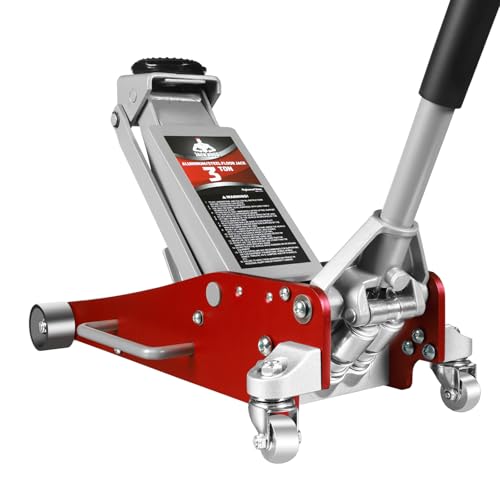
- Aluminum body with steel frame
- Dual-piston quick-lift pump
- Low 3-15/16-inch entry height
Best For: Portable servicing of low-clearance vehicles
Compact Garage Pick
Low-Profile 2-Ton Trolley Jack
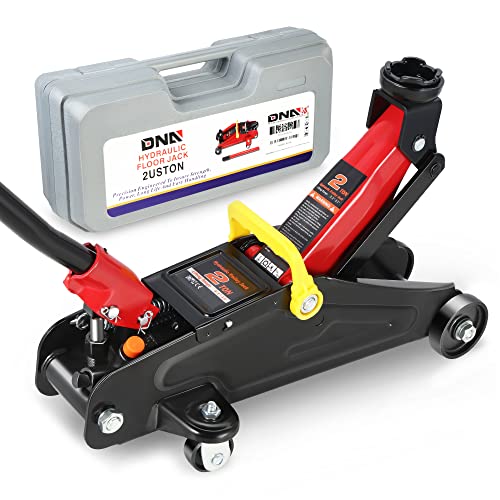
- 5.1- to 13-inch lifting range
- 4,000-pound steel construction
- Overload protection and swivel casters
Best For: Standard cars and home garage service
Professional Heavy-Duty Pick
SATA 3-Ton Ultra-Low Floor Jack

- 2.13-inch ultra-low minimum height
- 6,600-pound rated capacity
- Dual-piston rapid-lift pump
Best For: Shops, fleet maintenance, and low-clearance vehicles
Versatile DIY Pick
VEVOR 2.5-Ton Racing Floor Jack

- 5,500-pound capacity for varied vehicles
- 3.35- to 14.96-inch lifting range
- Long handle and protective rubber saddle
Best For: DIY maintenance on cars, trucks, and SUVs
Best with Extra Features
4-Ton Dual-Piston Steel Floor Jack
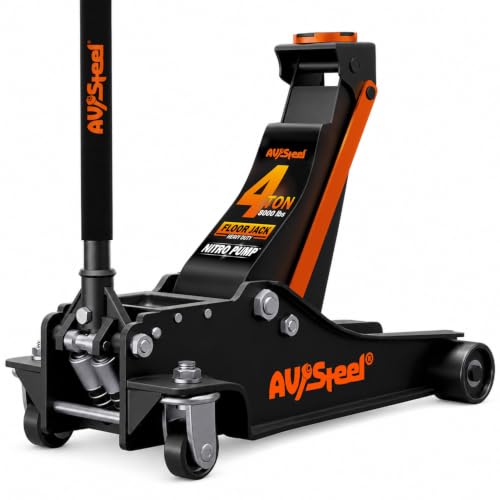
- 8,000-pound capacity and 19-3/4-inch maximum lift
- Dual-piston pump for faster lifting
- Heavy steel build with overload protection
Best For: Standard cars, SUVs, vans, and pickup trucks in a workshop
Best for Low Clearance
3-Ton Low-Profile Hydraulic Floor Jack

- Ultra-low profile for lowered and modified vehicles
- 6,600-pound capacity with extended reach
- Dual-piston RAPID PUMP system
Best For: Sports cars, lowered vehicles, and home workshops
Best Maximum Capacity
5-Ton Low-Profile Steel Floor Jack

- 11,000-pound capacity with 22-inch maximum lift
- Dual-piston pump and extra-long handle
- Heavy-duty steel build with padded anti-slip saddle
Best For: Workshop lifting of compatible cars, trucks, and SUVs
Lightweight Professional Pick – SATA 3-Ton Aluminum Floor Jack
For mechanics comparing floor jacks for mechanics, the SATA 3-ton aluminum model stands out when frequent repositioning and low vehicle clearance matter. Its 3,000-pound capacity, 3-3/4-inch minimum height, and aluminum construction suit many cars, SUVs, and light trucks.
Best For: Mechanics and home users who want a lighter jack for repeated shop use or roadside repairs.
Pros:
- Aluminum construction is 30% lighter than traditional steel models and resists corrosion.
- Dual-piston pump reduces handle effort and lifting time.
- Low-profile 3-3/4-inch to 19-1/8-inch lifting range accommodates many vehicles.
- Overload protection and controlled slow-release lowering add safety.
Cons:
- Its 3-ton capacity is lower than the 4-ton option in this roundup.
- Aluminum construction may not feel as heavy-duty as a full-steel jack for some shop applications.
This is a strong choice when portability, quick lifting, and low clearance are higher priorities than maximum capacity. The overload testing and dual safety systems also make it a practical professional-grade option.
Heavy-Duty Capacity Pick – Big RED 4-Ton Low-Profile Floor Jack
The Big RED 4-ton steel jack is built for mechanics who need extra capacity and a stable platform. Its 8,000-pound rating, low-profile lift range, and wide stance make it suitable for cars, SUVs, trucks, and utility vehicles.
Best For: Heavy-duty garage or industrial work involving larger vehicles and frequent lifting.
Pros:
- 4-ton, 8,000-pound capacity provides the highest rating among these products.
- Dual-piston pump lifts loads faster than a single-pump design.
- 3-7/8-inch to 20-inch lifting range supports low-profile and taller vehicles.
- Steel casters, swivel casters, and a rubber saddle pad aid positioning and vehicle protection.
Cons:
- At 100.8 pounds, it is considerably heavier than the aluminum models.
- Steel construction may be less convenient for mobile or roadside work.
Choose this model when capacity and a solid steel build matter more than portability. Its wide stance, quick-lift pump, and 20-inch maximum height give it useful versatility for demanding shop work.
Value Steel Workhorse – AV Steel 3-Ton Floor Jack
The AV Steel 3-ton floor jack offers a straightforward steel design for common maintenance jobs. For mechanics shopping for floor jacks for mechanics, its 6,000-pound capacity and 5.5-inch to 18.5-inch lift range fit standard cars, SUVs, minivans, and pickup trucks.
Best For: Home garages and workshops handling tire changes, brake work, oil changes, and suspension repairs on standard vehicles.
Pros:
- Heavy steel construction supports durability and stability.
- Built-in safety valve helps prevent overloading.
- 360-degree rotating saddle and rear wheels support positioning.
- Includes a 12-month warranty and 24/7 customer support.
Cons:
- Single-piston operation may require more strokes than a dual-piston jack.
- Its 5.5-inch minimum height is not suited to especially low vehicles.
- Not recommended for lifted vehicles, heavy-duty trucks, or RVs.
This jack makes sense for routine work on standard-height vehicles when durability and stability are more important than lightweight portability. Check your vehicle’s clearance and lift-point requirements before buying, especially for EVs.
Racing-Style Versatility Pick – Jack Boss 3-Ton Low-Profile Jack
The Jack Boss 3-ton aluminum-and-steel jack combines lower weight with a durable welded frame. It is a practical option among floor jacks for mechanics who need low clearance, fast lifting, and easier maneuverability around a garage.
Best For: Mechanics working on sedans, SUVs, minivans, trailers, and other vehicles where portability and low entry height are useful.
Pros:
- Aluminum body and steel frame balance reduced weight with durability.
- Dual-piston pump reduces the number of strokes needed for lifting.
- 3-15/16-inch minimum height suits many low-clearance vehicles.
- Rubber saddle, swivel casters, and two-piece handle support safe handling.
Cons:
- Its 18-5/16-inch maximum height is lower than the Big RED’s 20-inch reach.
- It has a 3-ton capacity rather than the higher capacity of a 4-ton jack.
- The supplied notes do not specify a dedicated overload valve, although the unit is overload tested.
This model is a well-rounded pick for users who want the maneuverability of an aluminum jack without giving up a steel supporting frame. Its low profile and dual-pump design are especially useful for frequent vehicle servicing.
Compact Garage Pick – Low-Profile 2-Ton Trolley Jack
For mechanics seeking floor jacks for mechanics that are easy to position in a home garage, this 2-ton hydraulic trolley jack offers a practical balance of capacity, low clearance, and maneuverability. Its 5.1-inch minimum height and 13-inch maximum height suit most cars up to 4,000 pounds, but it is not intended for pickups, large trucks, or oversized SUVs.
Best For: Garage service and lifting most standard cars up to 2 tons.
Pros:
- 5.1- to 13-inch lifting range works with many standard cars.
- Heavy-duty steel construction provides rigidity and stability.
- Swivel casters and a large saddle help with positioning and support.
- Built-in overload protection helps prevent damage from excessive loads.
Cons:
- Its 4,000-pound capacity is not suitable for larger trucks or oversized SUVs.
- It is designed for lifting only and must be paired with jack stands for support.
- The 13-inch maximum height may be limiting for some service tasks.
This is a straightforward choice for routine car maintenance when compact maneuverability matters more than extra capacity. Always use appropriately rated jack stands after lifting.
Professional Heavy-Duty Pick – SATA 3-Ton Ultra-Low Floor Jack
Among floor jacks for mechanics, the SATA 3-ton model stands out for professional-oriented construction and an ultra-low 2.13-inch minimum height. Its dual-piston pump is designed to reduce handle effort and speed lifting, while the 6,600-pound capacity provides more headroom for demanding automotive work.
Best For: Repair shops, fleet maintenance, and users who need high capacity with very low clearance.
Pros:
- 3-ton capacity supports heavier vehicles than a typical 2-ton jack.
- Ultra-low 2.13-inch profile accommodates low-clearance vehicles.
- Dual-piston pump is designed to reduce effort and lifting time.
- Steel construction, overload protection, and controlled lowering support repeated use.
Cons:
- At 70 pounds, it is substantially heavier than compact garage jacks.
- The 28.35-inch length and 13.58-inch width require significant storage space.
- Its 19.125-inch maximum height may not meet every high-clearance requirement.
This is the strongest fit for mechanics who prioritize low entry height, lifting speed, and durability over portability. Its heavier frame is better suited to a dedicated shop than occasional roadside use.
Versatile DIY Pick – VEVOR 2.5-Ton Racing Floor Jack
For shoppers comparing floor jacks for mechanics across cars, trucks, and SUVs, this VEVOR model offers a useful middle ground: a 2.5-ton capacity, a 3.35- to 14.96-inch lifting range, and steel wheels for maneuverability. The long handle, protective saddle, and compact two-piece storage design make it practical for routine maintenance.
Best For: DIYers and mechanics lifting family cars, trucks, and SUVs for tires, oil, or brake work.
Pros:
- 2.5-ton, 5,500-pound capacity covers a broad range of vehicles.
- 3.35- to 14.96-inch range offers useful clearance and reach.
- Long 31.5-inch handle and single-piston pump make lifting easier.
- Rubber saddle, foam handle bumper, and swiveling rear wheels improve usability.
Cons:
- Its 3.35-inch minimum height is not as low as the SATA model’s profile.
- The single-piston pump may be less efficient than a dual-piston design.
- It is rated at 2.5 tons, so vehicle weight must be checked before use.
This model is a flexible choice when one jack needs to cover multiple vehicle types without moving up to a heavier professional unit. Its certifications and built-in load protection add useful reassurance for home maintenance.
Best with Extra Features – 4-Ton Dual-Piston Steel Floor Jack
For mechanics needing a full-size jack for general vehicle work, this 4-ton hydraulic model combines an 8,000-pound capacity with a dual-piston pump. Its broad lift range suits many cars, vans, SUVs, and pickup trucks, but its 87.3-pound steel construction is better suited to a workshop than frequent transport.
Best For: Standard cars, SUVs, vans, and pickup trucks that need a durable, high-capacity floor jack; it is not recommended for sports cars, RVs, heavy commercial trucks, or lifted vehicles.
Pros:
- 4-ton, or 8,000-pound, lifting capacity with a 4-1/4- to 19-3/4-inch lift range.
- Dual-piston pump reaches lifting height with fewer handle strokes.
- Heavy steel construction, overload protection, and a 360-degree rotating saddle support stable operation.
- Rear rotating wheels and a 12-month warranty add practical convenience.
Cons:
- At 87.3 pounds, it is heavy and less portable.
- Its minimum lift height is not intended for especially low sports cars.
- Compatibility should be verified before use with lifted or unusually heavy vehicles.
This is a strong choice among floor jacks for mechanics who prioritize capacity, steel durability, and faster pumping for routine shop work. Confirm the vehicle fit and use appropriate support equipment whenever the vehicle is raised.
Best for Low Clearance – 3-Ton Low-Profile Hydraulic Floor Jack
Low-clearance access is the main reason to consider this 3-ton hydraulic jack. Its ultra-low-profile design and extended reach are aimed at sports cars, lowered vehicles, and cars with aftermarket modifications, while the dual-piston RAPID PUMP system helps reduce the number of strokes during maintenance.
Best For: Home garages and workshops servicing low-clearance, lowered, or modified vehicles, provided the 6,600-pound capacity matches the vehicle.
Pros:
- Ultra-low-profile design and extended reach improve access under low vehicles.
- RAPID PUMP dual-piston hydraulics support quicker lifting.
- High-strength steel construction is designed for frequent use.
- Built-in safety valve and stable saddle help guard against overloads and movement.
Cons:
- The 3-ton capacity is lower than the 4- and 5-ton alternatives in this roundup.
- Only a 90-day manufacturer warranty is listed.
- Color is random, so the delivered finish cannot be selected.
For floor jacks for mechanics working on lowered cars, this model offers the most targeted access of the three. Check both the vehicle’s clearance and its total weight before buying, and follow safe lifting procedures.
Best Maximum Capacity – 5-Ton Low-Profile Steel Floor Jack
When lifting capacity is the priority, this 5-ton low-profile jack supports loads up to 11,000 pounds and lifts to 22 inches. The dual-piston pump, extra-long handle, and heavy-duty steel construction make it suited to demanding workshop tasks involving cars, trucks, and SUVs.
Best For: Mechanics and workshops that need a high-capacity jack for compatible cars, trucks, and SUVs and value extra leverage during lifting.
Pros:
- 11,000-pound capacity and a maximum lift height of 22 inches.
- Dual-piston quick-lift system reduces pumping effort and time.
- Extra-long handle provides additional leverage.
- Steel construction, overload protection, anti-slip saddle, and rubber padding support demanding use.
Cons:
- At 100 pounds, it is the heaviest option and not especially portable.
- Its 90-day manufacturer warranty is relatively short.
- The product notes do not specify a minimum lift height, so low-clearance compatibility should be confirmed.
This is the most capable option here for mechanics who regularly handle heavier compatible vehicles. Its size and weight favor a dedicated garage or workshop, and the vehicle’s lifting points and weight should be verified before use.
How We Picked the Best Floor Jacks for Mechanics
We focused on specifications that have the greatest effect on real workshop use: rated capacity, minimum and maximum lift height, construction, pump design, portability, and intended vehicle type. The selection includes compact 2-ton jacks, versatile 3-ton models, and high-capacity 4- and 5-ton options. We also considered low-profile access for lowered cars, rapid-lift features for faster setup, and the practical differences between aluminum, steel, and hybrid construction.
A floor jack is a lifting tool, not a support stand. Always use properly rated jack stands on a level surface, follow the manufacturer’s instructions, and confirm that the jack’s capacity and lifting range suit the vehicle.
Quick Comparison
| Capacity range | Best suited to | Typical advantage |
|---|---|---|
| 2 to 2.5 tons | Cars and lighter home-garage work | Lower cost and easier storage |
| 3 tons | Most cars, crossovers, and standard trucks | Strong balance of capacity and versatility |
| 4 to 5 tons | Large SUVs, pickups, vans, and demanding shop use | More reserve capacity and heavier-duty construction |
Key Buying Factors for Floor Jacks for Mechanics
Capacity and Safety Margin
Choose a jack rated above the portion of the vehicle you will lift, not merely equal to the vehicle’s total curb weight. A higher rating can provide useful margin, but it does not make an unsafe lifting point acceptable. Check the vehicle manual and the jack’s stated limits before use.
Lift Range and Clearance
Low-profile designs are valuable for sports cars, lowered vehicles, and cars with limited clearance. Maximum height matters for trucks, SUVs, and suspension or wheel work. Compare both numbers rather than choosing based on capacity alone.
Steel, Aluminum, or Hybrid Construction
Steel jacks are typically heavier and well suited to permanent workshop use. Aluminum and mixed-material models can be easier to roll and carry, making them attractive for mobile mechanics or crowded garages. Weight, chassis rigidity, and floor condition all affect how convenient a jack feels in practice.
Pump Speed, Reach, and Stability
Dual-piston or rapid-lift pumps can reduce the number of strokes needed before the saddle reaches the vehicle. Also look for a broad chassis, smooth casters, a precise lowering valve, and a saddle that contacts the manufacturer-approved lifting point securely.
Who Should Buy Which Floor Jacks for Mechanics?
For a home mechanic working mostly on compact cars and sedans, a 2- or 2.5-ton low-profile jack is often the easiest fit. A 3-ton model is the most flexible choice for mixed car, crossover, and light-truck maintenance, especially when you want one jack for several vehicles.
Choose a 4-ton jack if you regularly service larger SUVs, pickups, or vans and have room for a heavier unit. A 5-ton model makes the most sense for demanding workshop use, frequent commercial-vehicle work, or buyers who prioritize maximum capacity over portability. If you move tools between locations, favor aluminum or hybrid construction; if the jack will stay in a dedicated bay, a heavy steel chassis may offer the better long-term trade-off.