Garages need dependable moisture control, especially when low temperatures make conventional compressor dehumidifiers less effective. The best desiccant garage dehumidifiers keep working in colder conditions while helping protect vehicles, tools, storage items, and metal equipment from condensation and corrosion.
This roundup compares reusable silica gel packs with powered rotary desiccant units, focusing on coverage, capacity, drainage, controls, operating temperature, and ease of maintenance.
Best 10 Desiccant Garage Dehumidifiers Picks for 2026
Best Reusable Bag Set
WiseDry 2 x 500g Silica Gel Bags

- Two large 500g reusable silica gel bags
- Absorb up to 150g each under listed conditions
- Microwave- or oven-reactivated design
Best For: Localized moisture control in garages, vehicles, and storage areas
Best Powered Cold-Weather Pick
AEOCKY X1-Pro Rotary Desiccant

- Designed for operation down to 34°F
- Humidistat and continuous-drain hose option
- Up to 10 pints per day in listed lab conditions
Best For: Small garages and basements needing automatic winter moisture control
Best Visual Moisture Indicator
Wisesorb 2-Pack Desiccant Bags

- Color-changing window shows saturation status
- Reusable with microwave or oven reactivation
- Durable fabric construction with reinforced stitching
Best For: Enclosed garage storage, tools, firearms, and filament
Best for Cold Garages
Eva-Dry EDV-4000H Rotary Desiccant

- Cold-rated to 34°F for unheated spaces
- Covers up to 444 square feet
- Tank auto-shutoff plus continuous-drain option
Best For: Unheated garages, crawl spaces, basements, and cabins
Best Smart Whole-Home Pick
6000 Sq. Ft. WiFi Dehumidifier

- Covers up to 6,000 sq. ft.
- App, Alexa, and touch controls
- Continuous-drain option included
Best For: Large garages and connected home humidity control
Best Cold-Garage Desiccant Unit

- Works in temperatures as low as 32°F
- Warm-air rotary desiccant operation
- Quiet, washable, and drain-hose ready
Best For: Unheated garages and cool basements
Best Passive Moisture Absorber
- Four 500-gram reusable bags
- Recharges in about 10–16 minutes
- Works without electricity
Best For: Cars, storage cabinets, safes, and localized garage moisture
Best Compact Garage Pick
Ivation 13-Pint Desiccant Dehumidifier
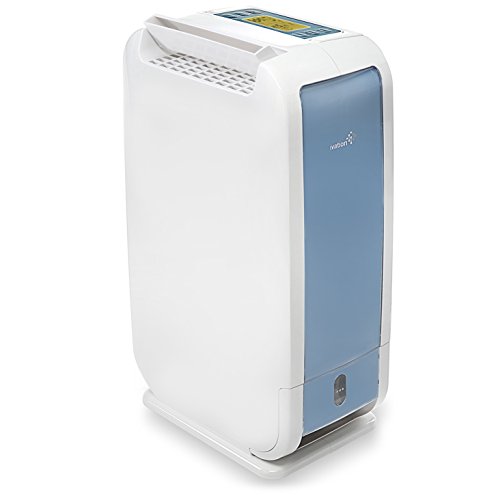
- Covers spaces up to 270 square feet
- Continuous drain hose or removable tank
- Quiet, low-temperature-friendly operation
Best For: Small garages and enclosed utility spaces
Best Heavy-Duty Pick
Wisesorb Rechargeable Desiccant Packs

- Two reusable 500-gram silica gel packs
- Color indicator shows approaching saturation
- Microwave or oven reactivation
Best For: Cabinets, vehicles, tools, and localized garage moisture
Best Large-Area Rotary Option
2000-Sq.-Ft. Desiccant Dehumidifier

- Rated for areas up to 2,000 square feet
- Works in temperatures as low as 34°F
- Tank, hose drainage, and 35 dB operation
Best For: Large garages and cooler storage spaces
Best Reusable Bag Set – WiseDry 2 x 500g Silica Gel Bags
For targeted moisture control rather than whole-room operation, these reusable silica gel bags are a practical option among desiccant garage dehumidifiers. The two 500-gram bags can help reduce condensation in garages, storage areas, tool shops, vehicles, and other enclosed spaces.
Best For: Garages, vehicles, storage areas, and valuables that need portable, reusable moisture protection.
Pros:
- Each 500g bag absorbs up to 150g of moisture, with a listed maximum of 180g.
- Reusable more than 10 times when reactivated according to the instructions.
- Can be recharged in a microwave or oven in approximately 10–16 minutes, depending on the microwave.
- Double packaging helps protect unused bags from moisture.
Cons:
- Requires manual reactivation rather than automatic moisture removal.
- Best suited to localized or enclosed spaces, not as a replacement for a powered room dehumidifier.
- Users should weigh the bag before recharging and avoid recharging an unsaturated bag.
This WiseDry set makes sense when you want a simple, electricity-free way to manage condensation around stored equipment or inside a garage. Its reusable design keeps ongoing waste and replacement costs lower, provided you are comfortable monitoring and recharging the bags.
Best Powered Cold-Weather Pick – AEOCKY X1-Pro Rotary Desiccant
The AEOCKY X1-Pro is a powered choice for shoppers comparing desiccant garage dehumidifiers for smaller rooms and cold-season use. Its rotary desiccant system is designed to keep extracting moisture in temperatures where compressor and Peltier units may struggle, with a humidistat, tank, and drain-hose option.
Best For: Small garages, basements, RVs, and other spaces needing continuous powered moisture control in cooler conditions.
Pros:
- Rotary desiccant technology is rated for operation from 34°F to 95°F and is designed to resist frosting.
- Offers a listed peak extraction rate of 10 pints per day under specified laboratory conditions.
- Includes an 85-ounce tank, hands-free drainage with a hose, and humidistat control.
- Sleep Mode is rated as low as 25 dB, with real-test maximum output listed at 39 dB from 3 feet.
Cons:
- The manufacturer describes it for compact spaces and small basements, not large rooms.
- Actual extraction varies by temperature and humidity; the notes cite about 5 pints per day in specified real-world conditions.
- Warmth and a slight scent may occur during first use or after long storage.
Choose this model when you want the convenience of an automatic appliance instead of manually recharging desiccant bags. Its low-temperature performance and continuous-drain option are especially useful for a garage that is difficult to heat or check frequently.
Best Visual Moisture Indicator – Wisesorb 2-Pack Desiccant Bags
These Wisesorb bags are a convenient low-maintenance option among desiccant garage dehumidifiers for cabinets, storage zones, and other contained areas. Their transparent windows show when the beads change from orange to light green, giving you a visual cue that reactivation is needed.
Best For: Garages, tool storage, firearms, 3D-filament storage, and other enclosed spaces where easy saturation monitoring matters.
Pros:
- Transparent indicator windows make the moisture status easy to check.
- Can be reactivated in a microwave at low power or in an oven at 200°F–250°F.
- Breathable, heat-resistant fabric and reinforced stitching are designed for repeated use.
- Suitable for garages, cabinets, vehicles, basements, RVs, boats, and firearms storage.
Cons:
- Manual reactivation is required after saturation.
- Designed for localized moisture control rather than automatic whole-garage dehumidification.
- Microwave reactivation requires low power and careful timing to avoid damaging the viewing window.
The visible indicator is the standout feature here: you do not have to guess when the bags need attention. They are a strong fit for protecting specific items or enclosed storage spaces where a powered unit would be unnecessary.
Best for Cold Garages – Eva-Dry EDV-4000H Rotary Desiccant
The Eva-Dry EDV-4000H is a full-size rotary unit for shoppers who need more coverage than bag-style desiccant garage dehumidifiers provide. It covers up to 444 square feet, is cold-rated to 34°F, and offers a two-liter tank or continuous drainage for garages, crawl spaces, basements, and cabins.
Best For: Unheated garages, crawl spaces, basements, and cabins requiring powered moisture removal through fall and winter.
Pros:
- Rotary desiccant technology is designed to work where conventional compressors may stop, down to 34°F.
- Removes up to 14.81 pints per day and covers up to 444 square feet, according to the supplied specifications.
- Two-liter tank includes auto shut-off, with a continuous-drain option for hands-free operation.
- Provides two fan speeds, three preset humidity levels, and a dedicated clothes-drying setting.
Cons:
- Its two-liter tank may require frequent emptying if continuous drainage is not used.
- At 13 pounds and 18 inches tall, it is less portable than small desiccant bags.
- The built-in ionizer and clothes-drying mode may be unnecessary for buyers seeking basic garage humidity control.
For a cold, enclosed garage or crawl space, this model offers the convenience and capacity of a powered appliance without relying on a compressor or refrigerant. Its drain-hose compatibility is particularly helpful when the unit will run unattended near a suitable floor drain.
Best Smart Whole-Home Pick – 6000 Sq. Ft. WiFi Dehumidifier
For large garages or connected living spaces, this ENERGY STAR-certified unit offers powerful compressor-based moisture control. It covers up to 6,000 square feet, supports continuous drainage, and works with app and voice controls, making it a flexible option among desiccant garage dehumidifiers and larger electric models.
Best For: Large garages, basements, and homeowners who want app-based humidity monitoring and control.
Pros:
- Rated to remove up to 100 pints of moisture per day under specified test conditions.
- WiFi, Tuya/Smart Life app, touch-panel, and Alexa voice controls.
- Includes a 4.28-liter tank, drain hose, adjustable 30%–80% humidity control, and three operating modes.
- Operates at a stated noise level of 45 dB and has wheels for easier relocation.
Cons:
- This is a compressor dehumidifier rather than a true desiccant model.
- Continuous drainage may require a suitable slope or a separately purchased 3/4-inch garden hose for extended routing.
This is the strongest choice here for broad coverage and automated control, particularly where a garage has substantial humidity. Its large capacity and drainage options reduce daily maintenance, while the washable filter adds practicality.
Best Cold-Garage Desiccant Unit – Rotary Desiccant Dehumidifier
This rotary desiccant dehumidifier is specifically suited to cooler spaces where compressor units may lose efficiency. It uses an absorbent wheel, produces warm dry air, and is designed to continue operating in temperatures as low as 32°F, making it one of the more purpose-built desiccant garage dehumidifiers in this roundup.
Best For: Cold garages, basements, workshops, and other moderately humid spaces where low-temperature operation matters.
Pros:
- Rotary desiccant technology is stated to work steadily from 32°F and above.
- Rated to remove up to 75 ounces of moisture per day under specified conditions.
- Produces warm, dry air and avoids chemical refrigerants.
- Offers an 85-ounce tank, included drain hose, washable filter, and automatic shutoff protections.
Cons:
- Its stated coverage of 270–2,200 square feet is smaller than the large compressor model.
- The 85-ounce tank may require more frequent emptying when continuous drainage is unavailable.
- The seven-color light may be unnecessary for a utilitarian garage setup.
For an unheated garage or basement, this model’s low-temperature desiccant design is its main advantage. It combines cold-weather performance with quiet operation under 40 dB, though its moisture capacity is better suited to moderate rather than extreme humidity.
Best Passive Moisture Absorber – Reusable Silica Gel Bags
These four 500-gram rechargeable silica gel bags provide a no-power approach to moisture control in enclosed areas. Rather than actively drying an entire garage like electric desiccant garage dehumidifiers, they absorb humidity where placed and can also help reduce foggy car windows, protect tools, and limit moisture in storage areas.
Best For: Cars, gun safes, closets, tool storage, RVs, boats, and small enclosed garage areas.
Pros:
- Each 500-gram bag can adsorb up to 150 grams of moisture, with a stated maximum of 180 grams.
- Reusable more than 10 times when reactivated as directed.
- Can be recharged in a microwave or oven in about 10–16 minutes, depending on power.
- Requires no electricity during use and comes individually packaged for storage.
Cons:
- They do not actively circulate air or provide whole-garage dehumidification.
- Recharging requires access to a microwave or oven and careful adherence to the instructions.
- Capacity is limited, so heavily damp spaces may require frequent reactivation.
These bags are a practical supplement for localized moisture problems rather than a replacement for an electric unit in a damp garage. Their reusable, power-free design makes them especially useful for vehicles, cabinets, safes, and stored equipment.
Best Compact Garage Pick – Ivation 13-Pint Desiccant Dehumidifier
If you need desiccant garage dehumidifiers for a smaller enclosed area, the Ivation IVADDH06 is designed for spaces up to 270 square feet. Its desiccant rotor technology can remove up to 13 pints of moisture per day under the stated test conditions, while its operation warms the surrounding air slightly—useful in cooler seasons.
Best For: Small garages, workshops, crawlspaces, attics, bathrooms, and closets where quiet operation and flexible drainage matter.
Pros:
- Compact design for areas up to 270 square feet.
- Desiccant technology operates effectively in cooler conditions and gently warms ambient air.
- Offers a removable 3.8-pint tank or continuous drainage with the included hose.
- LCD controls include humidity targeting, fan speed, timer, sleep mode, and vent swing.
Cons:
- Its 270-square-foot coverage is limited for larger garages.
- High-power operation uses 470 watts.
- The 3.8-pint reservoir may require frequent emptying during damp periods if a drain hose is not used.
This is a practical choice when you want a compact, quiet desiccant unit with both manual and continuous drainage. For a full-size garage, however, its stated coverage may be too limited.
Best Heavy-Duty Pick – Wisesorb Rechargeable Desiccant Packs
For cabinets, vehicles, tool storage, or localized damp spots, these Wisesorb packs offer a low-maintenance alternative to powered desiccant garage dehumidifiers. The set includes two 500-gram indicating silica gel packs that can be reactivated in a microwave or oven and reused.
Best For: Garages, storage cabinets, vehicles, tool areas, firearms storage, RVs, boats, and other contained spaces where passive moisture control is appropriate.
Pros:
- Reusable 500-gram packs with two included in the set.
- Transparent windows and color indication help show when moisture absorption is nearing saturation.
- Can be reactivated in a microwave or oven according to the supplied instructions.
- Requires no electricity and is suitable for localized moisture protection.
Cons:
- Passive packs are not a substitute for a powered unit when treating an entire large garage.
- They must be reactivated after becoming saturated.
- Microwave reactivation requires low power and careful attention to the stated time limits.
These packs make sense for protecting tools, vehicles, cabinets, or other specific items rather than drying a whole room. Their visible indicator and reusable design make maintenance straightforward.
Best Large-Area Rotary Option – 2000-Sq.-Ft. Desiccant Dehumidifier
When shopping for desiccant garage dehumidifiers for a larger area, this rotary model is rated for spaces up to 2,000 square feet and removes up to 101 ounces of water per day under the stated test conditions. It is designed to continue working in temperatures as low as 34°F, making it suitable for cooler basements, garages, and storage areas.
Best For: Larger garages, basements, laundry rooms, bedrooms, RVs, and cold-weather storage spaces needing continuous drainage and broad coverage.
Pros:
- Rated to cover up to 2,000 square feet and remove up to 101 ounces daily under specified conditions.
- Desiccant rotary technology operates in temperatures as low as 34°F.
- Provides a 2.5-liter tank or included 3.3-foot hose for continuous drainage.
- Includes 35 dB quiet operation, sleep mode, humidity display, timer, and auto shutoff protection.
Cons:
- The supplied notes do not specify its wattage or exact physical dimensions.
- Its 7-color ambient lighting may be unnecessary in a garage setting.
- The stated 101-ounce daily extraction rate is based on testing at 86°F and 80% relative humidity.
This model is the strongest fit of the three for broad-area moisture control, especially where temperatures fall below the range preferred by many compressor units. Continuous drainage can also reduce hands-on emptying.
How We Picked These Desiccant Garage Dehumidifiers
We selected products representing the main ways to manage garage humidity: compact rechargeable silica gel packs for enclosed areas and powered rotary desiccant dehumidifiers for larger spaces. We considered stated coverage, moisture-removal capacity, low-temperature performance, drainage options, humidity controls, noise, portability, and reactivation or maintenance requirements.
Because manufacturer ratings can vary by temperature and humidity conditions, treat coverage figures as estimates rather than guarantees. A poorly sealed garage may require more capacity than the listed square footage suggests.
Quick Comparison
| Type | Best for | Main advantage | Key limitation |
|---|---|---|---|
| Rechargeable silica gel packs | Cars, cabinets, gun safes, small storage areas | No outlet or drain required | Limited moisture capacity and periodic reactivation |
| Compact rotary desiccant units | Small garages, workshops, attics, and crawl spaces | Effective in colder conditions | Requires electricity and produces some heat |
| High-capacity rotary units | Large or persistently damp garages | Higher extraction and hands-free drainage | Higher purchase cost and energy use |
| Compressor models | Warm, humid spaces | Often efficient in suitable temperatures | May lose effectiveness in cold garages |
Key Buying Factors for Desiccant Garage Dehumidifiers
Coverage and Moisture Load
Match the unit to the garage’s actual conditions, not just its floor area. Concrete floors, wet vehicles, poor ventilation, water leaks, and frequent door opening all increase the moisture load. For a vehicle or storage cabinet, reusable packs may be enough; for a full garage, choose a powered unit with a realistic coverage rating.
Cold-Weather Operation
Desiccant technology is often a strong choice for unheated garages because it does not depend on a compressor and evaporator coil operating above freezing. Check the manufacturer’s minimum temperature rating before buying, particularly for detached garages, sheds, and crawl spaces.
Drainage and Controls
A collection tank is acceptable for occasional use, but continuous drainage is more convenient when humidity is persistent. Look for a supplied hose, a suitable drain location, automatic shutoff, humidistat control, timer settings, and a readable humidity display.
Reusable Packs Versus Powered Units
Silica gel packs are quiet, portable, and inexpensive to operate, but they must be reactivated—often in a microwave or oven according to the instructions. Powered models work continuously and cover more space, though they need an outlet and may add warmth to the garage.
Who Should Buy Which Desiccant Garage Dehumidifiers?
Choose rechargeable silica gel packs for vehicles, toolboxes, gun safes, closets, and sealed storage areas where a powered appliance is impractical.
Choose a compact rotary unit for a small garage, workshop, attic, or crawl space that becomes damp in cold weather and needs ongoing automatic control.
Choose a higher-capacity rotary model with a drain hose for a large, poorly ventilated, or consistently damp garage. Prioritize a humidistat and continuous drainage so the unit can operate with less supervision.
Whichever option you select, repair leaks, improve ventilation where appropriate, keep doors and windows managed, and use a hygrometer to verify that humidity is staying at a safe level.