Finding dependable car ramps for low cars can make oil changes, inspections, and other routine maintenance easier without relying on a floor jack alone. The right ramp must offer a gradual approach angle, sufficient weight capacity, and secure traction for your vehicle and workspace.
We selected 10 low-profile options spanning compact garage ramps, detachable designs, heavy-duty models, and lightweight foam ramps. Use the guide below to compare the features that matter most before choosing a set.
Best 10 Car Ramps for Low Cars Picks for 2026
Best Low-Profile Drive-On Ramps
Black Widow 2.5-Inch Car Ramps

- 9.05° loading angle for low-clearance vehicles
- 2.5-inch lift for oil changes and service
- 10,000-pound total vehicle GVW capacity
Best For: Routine maintenance on compatible low cars
Best Detachable Option
Megan Racing Low-Profile Service Ramps
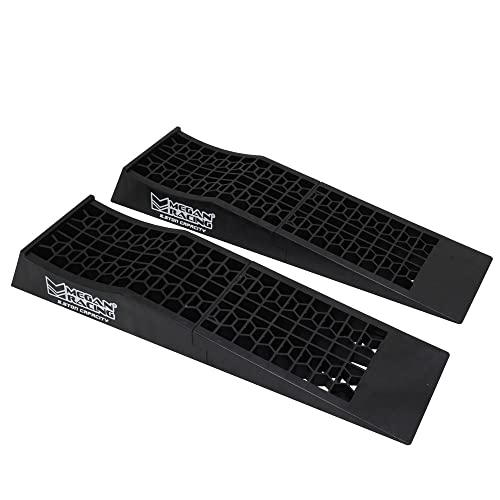
- Raises vehicles 2.56 inches
- Detaches into four pieces
- High-strength plastic composite construction
Best For: Portable service setups for low-profile cars
Best Four-Piece Set
VIVOHOME 2.75-Inch Vehicle Ramps

- Four-piece set with a 2.75-inch lift
- 9.05° incline for low-clearance vehicles
- 13,200-pound stated combined capacity
Best For: Garage maintenance across several vehicle types
Best Trailer Approach Ramps
Race Ramps 5-Inch Foam Loading Ramps

- Gradual 4.3° approach angle
- Built-in trailer-door notch
- 6,000-pound total vehicle capacity
Best For: Loading lowered cars onto trailers
Best Extendable Option
MaxxHaul 50709 Detachable Car Ramps

- 6,500-pound pair capacity
- 6-1/2-inch lift height
- Detachable, extendable design
Best For: Adjustable ramp setups and higher-clearance maintenance
Best Low-Profile Lift
OULEME 2.44-Inch Service Ramps

- 2.44-inch lift for low chassis
- 17-degree loading angle
- 12,300-pound pair capacity
Best For: Low cars, oil changes, and jack access
Best Routine-Maintenance Value
MaxxHaul 50516 Low Profile Ramps

- 2.5-inch lift height
- 9.05-degree loading angle
- 4,400-pound pair capacity
Best For: Basic maintenance on low-clearance vehicles
Best Wide-Base Pick
ROBLOCK 2.6-Inch Low-Profile Car Ramps

- 10-inch width for wider tires
- 2.6-inch lift with a 17-degree slope
- Lightweight PP pair with traction features
Best For: Low cars, sports cars, and modified vehicles needing portable garage ramps
Best Compact Option
Nilight Low-Profile Service Ramps

- 10,000-pound pair GVW capacity
- 2.6-inch lift for low-clearance vehicles
- Compact design with wheel stops and anti-slip features
Best For: Sedans and coupes needing routine maintenance access
Best Lightweight Support Ramps

- 20,000-pound stated GVW capacity
- 10-inch-wide platform for wider tires
- 5.3-pound-per-pair portable PP construction
Best For: Low-chassis cars and home mechanics wanting easy-to-store ramps
Best Low-Profile Drive-On Ramps – Black Widow 2.5-Inch Car Ramps
These Black Widow ramps are a practical option when you need car ramps for low cars and basic underbody service. Their 9.05° loading angle is designed to accommodate many lower vehicles, while the 2.5-inch lift provides access for oil changes and general maintenance. Confirm clearance and vehicle weight before use.
Best For: Low-clearance cars needing modest lift for oil changes and underbody access.
Pros:
- Gentle 9.05° loading angle helps reduce approach-clearance concerns.
- Honeycomb plastic construction supports strength while allowing moisture drainage.
- Pair supports up to 10,000 pounds total vehicle GVW, or 5,000 pounds per axle.
- Low-profile design allows a jack to fit underneath for easier lifting.
Cons:
- The 2.5-inch lift may not provide enough room for every repair.
- Plastic construction requires careful adherence to the stated capacity and safety guidance.
- Vehicle clearance must be confirmed before driving onto the ramps.
For routine service on a compatible low car, this pair combines a gradual approach with a compact lift. Use a spotter and verify the vehicle’s clearance, weight, and ramp positioning before use.
Best Detachable Option – Megan Racing Low-Profile Service Ramps
The Megan Racing ramps offer a flexible setup for shoppers seeking car ramps for low cars. This two-ramp set raises vehicles 2.56 inches and can detach into four pieces, making the components easier to arrange or store. Check the manufacturer’s capacity specifications and vehicle fit before use.
Best For: Low-profile cars needing a portable, detachable drive-on ramp system.
Pros:
- Low-profile design is intended for cars with limited ground clearance.
- Detaches into four pieces for more flexible handling and storage.
- High-strength plastic composite construction keeps the ramps portable.
- Rated for 5,000 pounds per side according to the supplied specifications.
Cons:
- The 2.56-inch raise is limited for tasks requiring substantial underbody room.
- The supplied capacity information should be checked carefully against the complete vehicle weight and load distribution.
- Plastic composite ramps still require a stable, suitable surface and careful positioning.
This is a useful choice when detachable construction matters as much as low approach height. Its modest lift suits basic service, while the multi-piece design can simplify carrying and storage.
Best Four-Piece Set – VIVOHOME 2.75-Inch Vehicle Ramps
For buyers comparing car ramps for low cars across different vehicle types, this four-piece VIVOHOME set provides a broad platform and a 2.75-inch lift. Its 9.05° incline is intended to ease loading, while the honeycomb channels, textured surface, and non-slip feet support routine garage or service use.
Best For: Owners of cars, SUVs, vans, and pickups who want a four-ramp maintenance set.
Pros:
- Gentle 9.05° inclination helps limit undercarriage scraping during ascent.
- Four-ramp configuration supports a range of vehicle service and display tasks.
- Each ramp is rated for 3,300 pounds, with a stated combined capacity of 13,200 pounds.
- Textured surfaces, curved tire grooves, and non-slip feet are designed to improve stability.
Cons:
- The 2.75-inch lift may be insufficient for larger repairs.
- Capacity must be evaluated per ramp and against the vehicle’s actual weight distribution.
- Plastic ramps should be used on an appropriate stable surface as directed.
The VIVOHOME set stands out for its four-piece format and relatively high stated combined capacity. It is best suited to basic maintenance where a low-angle approach, tire contact, and portable storage are priorities.
Best Trailer Approach Ramps – Race Ramps 5-Inch Foam Loading Ramps
These Race Ramps address a different need from ordinary service ramps: loading low cars onto trailers. The gradual 4.3° approach angle helps low bumpers and splitters clear the transition, while the built-in trailer-door notch creates a smoother connection. They are not intended as a general substitute for raised service stands.
Best For: Loading lowered cars, sports cars, and race cars onto trailers.
Pros:
- 4.3° approach angle is designed to reduce scraping when loading low vehicles.
- Built-in 5-inch by 2-inch notch connects to a trailer door.
- High-density foam construction is lightweight and described as non-scratch.
- Pair supports up to 6,000 pounds total vehicle weight.
Cons:
- Each ramp supports 1,500 pounds, so vehicle weight and distribution require careful checking.
- They provide an approach solution rather than the substantial lift typically needed for underbody servicing.
- The supplied product information lists a 5-inch height, but the ramps are specifically designed for trailer loading.
If your main problem is getting a low bumper onto a trailer without scraping, this pair is purpose-built for that transition. Its shallow angle and trailer-door notch make it more specialized than conventional oil-change ramps.
Best Extendable Option – MaxxHaul 50709 Detachable Car Ramps
For drivers comparing car ramps for low cars, the MaxxHaul 50709 stands out for its long, extendable design and 6-1/2-inch lift height. Its detachable sections can also help create more working room beneath a vehicle.
Best For: Larger vehicles, users who want adjustable ramp length, and maintenance on a hard, level surface.
Pros:
- 6,500-pound capacity per matched pair
- 9.5-degree incline and 52-1/2-inch overall length
- Detachable sections and built-in carrying handles
Cons:
- Extensions are sold separately
- Requires a hard, level, stable surface
- Heavier than the other listed options at approximately 33 pounds per pair
The 50709 is a versatile choice when lift height and adjustable configuration matter most, provided your workspace meets the surface requirements.
Best Low-Profile Lift – OULEME 2.44-Inch Service Ramps
The OULEME service ramps are designed specifically for low-profile vehicles, using a 17-degree loading angle and 2.44-inch lift height to help provide access without contacting the front bumper. Their wide, short footprint leaves room for jacks and tools.
Best For: Low-chassis cars needing modest lift for oil changes or jack access.
Pros:
- 2.44-inch lift height for lowered vehicles
- Wider 9-1/4-inch ramp design for added stability
- Mesh channels help shed oil, water, and debris
- Rated for up to 12,300 pounds per pair
Cons:
- Provides less lift than taller service ramps
- Short 17-inch length may not suit every vehicle setup
Choose this pair when bumper clearance and a compact working footprint are more important than maximum lift height.
Best Routine-Maintenance Value – MaxxHaul 50516 Low Profile Ramps
MaxxHaul 50516 4,400 lb. Capacity Low Profile Car Ramps, 2-Count, Black (Pack of 1)
Check Price On AmazonThe MaxxHaul 50516 offers a low 9.05-degree loading angle for easier access with low-clearance vehicles. With a 2.5-inch lift and honeycomb channels, it is a straightforward option for routine maintenance work.
Best For: Low-clearance vehicles and basic under-car maintenance requiring a moderate lift.
Pros:
- 2.5-inch maximum lift height
- 9.05-degree loading angle for low-clearance access
- Honeycomb channels help remove debris and moisture
- Heavy-duty plastic construction
Cons:
- 4,400-pound total capacity is lower than the other options
- Provides less lift than the MaxxHaul 50709
This ramp pair is a practical fit for routine jobs when you want low-angle loading without the extra height or adjustability of a larger ramp system.
Best Wide-Base Pick – ROBLOCK 2.6-Inch Low-Profile Car Ramps
For shoppers comparing car ramps for low cars, the ROBLOCK pair combines a 2.6-inch lift with a 10-inch width. Its 17-degree slope is designed to help low-chassis vehicles reach a supported position while leaving room for jack access and other maintenance tools.
Best For: Low-profile cars, sports cars, tuners, and drivers who want wider portable ramps for garage maintenance.
Pros:
- 10-inch width helps accommodate wider modified tires.
- 2.6-inch lift and 17-degree slope suit low-chassis vehicles.
- Honeycomb traction surface, curved wheel support, drainage, and bottom non-slip pads promote stability.
- Lightweight design weighs 5.3 pounds per pair for easier storage and carrying.
Cons:
- The 2.6-inch lift may not provide enough elevation for every maintenance task.
- Users should verify vehicle ground clearance and ramp compatibility before purchase.
ROBLOCK is a practical choice when tire width and portability matter. Its low lift is useful for initial access, but buyers needing substantial under-car working height should confirm that 2.6 inches meets their needs.
Best Compact Option – Nilight Low-Profile Service Ramps
Nilight’s service ramps are designed for low-clearance sedans and coupes that may be difficult to lift directly with a jack. The 2.6-inch rise and 17-degree loading angle provide initial elevation for routine inspections and jack access, while the shortened design keeps the working area accessible.
Best For: Sedan and coupe owners seeking compact car ramps for low cars and routine garage maintenance.
Pros:
- Supports up to 10,000 pounds of gross vehicle weight per pair.
- 2.6-inch lift and 17-degree angle are intended for low-clearance vehicles.
- Anti-slip texture, silicone bottom pads, drainage holes, and raised wheel stops add stability features.
- Shorter, wider profile helps leave room for jacks and fits more tire sizes.
Cons:
- The 2.6-inch lift is limited for tasks requiring more underbody clearance.
- Vehicle fit and ground clearance should be checked before use.
Nilight stands out as a compact routine-maintenance solution with several traction and positioning features. Its stated 10,000-pound pair capacity is useful, but the modest lift makes it better suited to access and inspections than extensive under-car work.
Best Lightweight Support Ramps – HOXWELL 2.6-Inch Car Ramps
HOXWELL offers a lightweight pair of car ramps for low cars with a 2.6-inch tire lift and a 17-degree slope. The 10-inch-wide, shortened profile is intended to accommodate wider tires while leaving the jack’s working area less restricted during garage maintenance.
Best For: Low-chassis vehicles, tuners, and home mechanics who prioritize easy carrying and storage.
Pros:
- Rated for up to 20,000 pounds of gross vehicle weight.
- 10-inch width helps reduce tire overhang on modified vehicles.
- Honeycomb traction design, curved wheel support, drainage, and bottom non-slip pads help secure the ramps.
- Weighs 5.3 pounds per pair for convenient portability.
Cons:
- The 2.6-inch lift may be insufficient for some repairs or vehicles.
- Buyers need to confirm ground clearance and maintenance requirements before use.
HOXWELL is a sensible pick for low vehicles when portability and a wider tire platform are priorities. Like the other low-profile options here, it provides initial elevation rather than a tall working lift, so check the required clearance for each job.
How We Picked the Best Car Ramps for Low Cars
We focused on the specifications that affect real-world usability: approach height, rated capacity, ramp width, traction, construction, portability, and storage. Low cars need a gradual incline and enough clearance to prevent bumper or underbody contact. We also considered whether each design supports routine tasks such as oil changes, inspections, wheel work, or positioning a jack underneath the vehicle.
Capacity ratings should be treated as a starting point, not a reason to overload a ramp. Check whether the listed rating applies to the pair, each ramp, or the vehicle’s gross weight, and leave a sensible safety margin for passengers, cargo, and uneven loading.
Quick Comparison
- Lowest-clearance priorities: Look for low-profile ramps with a gradual approach and a lift around 2.5 inches when bumper clearance is a concern.
- Maximum capacity: Heavy-duty steel or reinforced polymer ramps are better suited to trucks and larger vehicles, provided the rating matches your application.
- Easy storage: Detachable or compact two-piece designs are useful in small garages.
- Portable use: Lightweight foam ramps are easier to carry, but confirm their load rating and intended surface before use.
Key Buying Factors for Car Ramps for Low Cars
Approach Angle and Lift Height
A low ramp is not automatically suitable for every lowered vehicle. Compare the approach angle, ramp length, and stated lift height with your front bumper, splitter, and underbody clearance. Longer ramps usually create a gentler climb.
Capacity and Construction
Steel ramps generally provide strong load support but can be heavy. Reinforced plastic or composite ramps may be easier to move and resist corrosion. Select a capacity that comfortably exceeds the loaded vehicle weight, and follow the manufacturer’s limits.
Traction and Stability
Anti-slip surfaces, textured platforms, wheel stops, and rubber feet help keep ramps in place. Use them only on a level, hard surface. Avoid wet, loose, cracked, or sloped ground, and center each tire carefully before leaving the vehicle supported.
Clearance and Working Room
Measure the raised height against the task you plan to perform. Oil changes may need less room than exhaust, suspension, or underbody work. Never rely on ramps for work that requires unsupported wheels or components to be removed.
Who Should Buy Which Car Ramps for Low Cars?
For compact cars and tight garages: Choose a low-profile, compact pair that stores easily and provides enough clearance for basic servicing.
For lowered sports cars: Prioritize a long, gradual approach and verify the ramp’s actual compatibility with your splitter and chassis height before purchase.
For trucks and larger vehicles: Select a heavy-duty model with a clearly stated capacity and broad, stable tire platform.
For frequent portability: Consider lightweight or detachable ramps, but never trade away capacity, traction, or stability for easier carrying.
Before every use, inspect the ramps for cracks, bending, loose parts, and damaged anti-slip surfaces. Set the parking brake, follow the vehicle manufacturer’s service instructions, and use wheel chocks and additional support equipment whenever the job requires it.