Choosing among the best dust extractors under $300 means balancing airflow, filtration, capacity, portability, and compatibility with your tools. The right setup can reduce airborne debris and make cleanup faster without requiring a professional-scale budget.
This roundup covers compact shop vacuums, portable extractors, wall-mounted collectors, air filtration systems, and larger bag-style dust collectors. Use the buying guide below to match the design and specifications to your workshop.
Best 10 Dust Extractors Under 300 Picks for 2026
Best Budget Dust Collector

- 600 CFM airflow from a 7.4-amp motor
- 15-gallon, 5-micron collection bag
- Mobile base with optional wall mount
Best For: General woodworking dust collection in a workshop
Best Feature-Rich Extractor

- Dual vacuum and dust-extractor modes
- HEPA filter with semi-automatic cleaning
- Power-tool activation and 10-foot anti-static hose
Best For: Workshop, garage, and power-tool cleanup
Best Air Filtration Unit
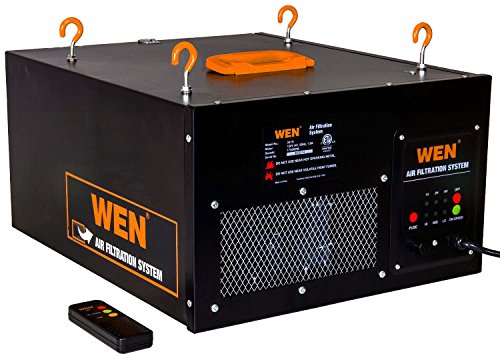
- Three speeds up to 400 CFM
- 1-micron filter with replaceable pre-filter
- RF remote and programmable timer
Best For: Supplemental airborne-dust filtration in workshops
Best HEPA Workshop Extractor

- 0.5-micron HEPA filtration
- 12-gallon tank with mobile-wheel option
- Linked switch for automatic tool start
Best For: Portable woodworking with fine-particle filtration
Heavy-Duty Workshop Pick
Dual-Cyclone Wet/Dry Dust Extractor

- 1400W motor with up to 19KPA suction
- Dual cyclone stages help slow HEPA filter loading
- 9-gallon wet/dry collection tank
Best For: Woodshops and heavy workshop cleanup
High-Airflow Shop Pick
VEVOR 560 CFM Wall-Mount Collector

- 560 CFM airflow from a 1 HP motor
- 21-gallon non-woven collection bag
- 2.5-micron filtration for wood dust
Best For: Dedicated small and medium woodworking shops
Most Portable Pick
DEWALT 20V MAX Brushless Extractor

- Compact 3.7-pound design
- HEPA filter included
- Optimized for SDS Plus drilling and chipping
Best For: Mobile jobsite drilling and chipping
Compact Workshop Choice
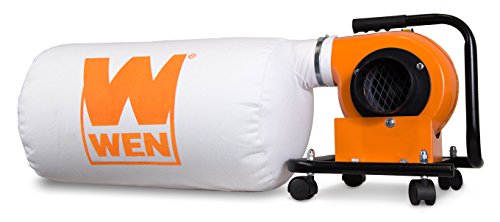
- 660 CFM airflow with a 5.7-amp motor
- 12-gallon, 5-micron zippered bag
- Mobile base plus optional wall mount
Best For: Portable collection in small woodworking shops
Benchtop Filtration Pick
Portable 725 CFM HEPA Dust Collector

- 725 CFM airflow from a triple-fan system
- HEPA and carbon filtration for fine dust and odors
- Variable speed plus dual grounded outlets
Best For: Compact benchtop woodworking stations
High-Capacity Shop System

- 1100 CFM airflow with a 1.5HP induction motor
- 2.5-micron vortex-cone filtration
- Large 42-gallon filter bag and 35-gallon dust bag
Best For: Dedicated workshops and longer woodworking sessions
Best Budget Dust Collector – WEN DC3474
For shoppers comparing dust extractors under 300, the WEN DC3474 is a straightforward option for general woodworking dust collection. Its 7.4-amp induction motor and 9-inch impeller move up to 600 CFM, while the rolling base and optional wall mount add flexibility in the shop.
Best For: Woodworkers who need a mobile or wall-mounted collector for tools with a 4-inch dust port.
Pros:
- Moves up to 600 CFM of air.
- Includes a 15-gallon, 5-micron zippered collection bag.
- Mobile casters, carrying handle, and optional wall mounting support flexible placement.
- Backed by a two-year warranty.
Cons:
- Its 43.3-inch height may require substantial storage space.
- Designed around a 4-inch dust port, so tool compatibility should be checked.
The WEN DC3474 is a practical pick when airflow and capacity matter more than compact size. Its combination of portability, wall-mount capability, and a large collection bag suits a dedicated workshop setup.
Best Feature-Rich Extractor – ECOMAX EM18412PE-8AA
Among dust extractors under 300, the ECOMAX Shop Vac stands out for combining everyday cleanup with power-tool extraction. It offers power-tool activation, semi-automatic filter cleaning, a dust-full indicator, and HEPA filtration in an 8-gallon polymer tank.
Best For: Woodworkers and garage users who want one vacuum for general debris, liquids, and connected power tools.
Pros:
- Dual-mode operation supports standard vacuuming and dust extraction.
- Power-tool activation starts the vacuum when the connected tool turns on.
- HEPA filtration, semi-automatic filter cleaning, and a dust-full indicator support sustained use.
- Includes a 10-foot anti-static hose and a broad accessory kit.
Cons:
- Its listed noise level is 75 dB.
- The 8-gallon capacity is smaller than some workshop dust collectors.
The ECOMAX is a versatile choice for users who value convenience features and broad accessory coverage. Its automatic activation and filter-maintenance features make it especially useful when moving between several power tools.
Best Air Filtration Unit – WEN 3410
For shoppers researching dust extractors under 300, the WEN 3410 is a different kind of workshop solution: an overhead air filtration system rather than a tool-connected collector. It filters down to 1 micron, covers rooms up to 400 square feet, and provides three airflow settings controlled by an RF remote.
Best For: Workshops that need supplemental airborne-dust filtration after cutting, sanding, or other woodworking tasks.
Pros:
- Offers 300, 350, and 400 CFM airflow settings.
- Uses a 1-micron filter and replaceable 5-micron pre-filter.
- RF remote works from up to 26 feet and does not require direct line of sight.
- Programmable timer can shut the unit off automatically.
Cons:
- It is an air filtration system, not a direct-connect dust extractor.
- It is rated for rooms up to 400 square feet.
The WEN 3410 makes sense as a complementary layer of dust control in a woodworking space. Its remote operation, timer, and relatively low 50–60 dB noise rating make it convenient for continued air cleaning.
Best HEPA Workshop Extractor – DYNAVEX DC10003
The DYNAVEX DC10003 is a compelling option for dust extractors under 300 when fine-particle filtration and portable capacity are priorities. Its 10-amp, 1.5 HP motor delivers 142 CFM, while the 12-gallon tank, HEPA filter, and linked switch support active woodworking use.
Best For: Portable sawing, sanding, and routing setups that need HEPA filtration and automatic tool-start operation.
Pros:
- Uses a 0.5-micron HEPA filter for fine-particle capture.
- 12-gallon tank reduces the need for frequent emptying.
- Linked switch starts the extractor with a connected power tool.
- Includes a 6.5-foot hose, adaptors, clamps, and replacement paper filters.
Cons:
- The linked socket supports tools up to 550 watts.
- Continuous linked-switch use is limited to one hour.
- Wheels require optional installation.
The DYNAVEX balances a large tank with a relatively portable 29.9-pound design. It is best suited to users who can work within the linked-switch limits and want fine filtration for common woodworking operations.
Heavy-Duty Workshop Pick – Dual-Cyclone Wet/Dry Dust Extractor
If you need dust extractors under 300 for demanding woodworking cleanup, this 9-gallon wet/dry model combines a 1400W motor, up to 19KPA suction, and dual-cyclone separation. The pre-separator helps keep larger debris away from the HEPA filter, supporting more consistent airflow during longer jobs.
Best For: Woodshops, cabinet shops, carpentry jobsites, garages, and cleanup around saws, planers, jointers, routers, and CNC equipment.
Pros:
- Dual-stage cyclone separation helps reduce filter loading.
- 9-gallon capacity supports heavier debris loads.
- Handles wet and dry waste, including wood chips, shavings, sawdust, and non-corrosive spills.
- Includes an 8.2-foot anti-static hose.
Cons:
- At 35.5 pounds, it is less portable than a compact extractor.
- Its 80 dB noise level may be noticeable during extended use.
- It is corded and designed for indoor use.
The combination of large capacity, wet/dry capability, and pre-filtration makes this a practical choice when stable airflow and reduced filter maintenance matter more than portability.
High-Airflow Shop Pick – VEVOR 560 CFM Wall-Mount Collector
Among dust extractors under 300, this VEVOR unit is aimed at workshop setups that need high airflow and a large collection bag. Its 1 HP induction motor produces 560 CFM, while 2.5-micron filtration helps capture fine wood dust and shavings.
Best For: Small and medium woodworking projects where a wall-mounted dust collection system can remain in a dedicated workshop position.
Pros:
- 560 CFM airflow provides strong suction for coarse and fine woodworking dust.
- 21-gallon collection bag reduces the frequency of emptying.
- 2.5-micron filtration helps reduce airborne wood dust.
- Bottom zipper allows bag emptying without detaching it.
Cons:
- It is a wall-mount collector rather than a portable canister extractor.
- The stated operating noise is up to 90 dB.
- It is intended for woodworking dust collection rather than wet pickup.
This model makes the most sense for a dedicated workshop that values airflow, bag capacity, and simpler debris removal over compact mobility.
Most Portable Pick – DEWALT 20V MAX Brushless Extractor
For shoppers seeking dust extractors under 300 for drilling and chipping work, the DEWALT DWH161B emphasizes mobility. This compact 3.7-pound extractor includes a HEPA filter, strap connection points, and a belt hook, while its brushless motor is optimized for SDS Plus rotary hammers.
Best For: Mobile drilling and chipping applications, especially when working with compatible SDS Plus rotary hammers.
Pros:
- Compact, lightweight design supports high mobility.
- Includes a HEPA filter and is described as OSHA Table 1 compliant.
- Multiple strap points and a belt hook support flexible positioning.
- Wireless Tool Control can link the extractor and tool for remote activation.
Cons:
- This listing is tool-only, so a compatible 20V MAX battery is required.
- Its stated runtime is 3 minutes.
- It is optimized for rotary-hammer drilling and chipping rather than large workshop debris collection.
Choose this DEWALT when portability and point-of-use dust control are priorities. Its compact format is convenient on jobsites, but it is not a substitute for a high-capacity shop collector.
Compact Workshop Choice – WEN DC3401 Dust Collector
For shoppers comparing dust extractors under 300, the WEN DC3401 offers a compact rolling design with a 5.7-amp motor, 660 CFM airflow, and a 12-gallon collection bag. Its casters, carrying handle, and optional wall mount make it practical for flexible workshop setups.
Best For: Small woodworking shops and hobbyists who need portable collection for tools with a 4-inch dust port.
Pros:
- 660 CFM airflow from a 5.7-amp motor and 6-inch impeller
- 12-gallon, 5-micron zippered collection bag
- Lockable swivel casters, carrying handle, and optional wall mount
- Compact 17-pound design with a two-year warranty
Cons:
- Uses a single speed and single power level
- Designed around a 4-inch dust port, so tool compatibility should be checked
The DC3401 is a straightforward option when portability and storage flexibility matter more than maximum extraction capacity. Its moderate airflow and compact footprint suit lighter-duty woodworking applications.
Benchtop Filtration Pick – Portable 725 CFM HEPA Dust Collector
This tabletop model is a distinctive choice among dust extractors under 300 for compact work areas. It combines 725 CFM airflow, a HEPA and activated-carbon filtration system, variable speed control, and dual grounded outlets in a 22-pound benchtop enclosure.
Best For: Woodcarvers, turners, and DIY users working at a bench or in workshops up to 300 square feet.
Pros:
- Triple-fan system provides up to 725 CFM airflow
- HEPA and activated-carbon filtration is rated to stop 99.5% of micro dust
- Three-speed variable control and dual 110V grounded outlets
- Portable 23.2-inch-wide design with noise listed at 65 dB or less
Cons:
- Filter replacement is recommended every four months
- Its tabletop format is intended for compact work areas rather than large shops
With adjustable airflow and integrated outlets, this collector is built for convenience around a dedicated bench. The compact format and low-power 1.29A operation make it especially suitable where floor space is limited.
High-Capacity Shop System – VEVOR 1100 CFM Dust Collector
For buyers seeking dust extractors under 300 with more capacity, this VEVOR system pairs 1100 CFM airflow with a 1.5HP induction motor and a 2.5-micron vortex-cone filtration system. Its large bags are suited to sustained small- and medium-scale woodworking jobs.
Best For: Woodworkers who need high airflow and extended collection capacity for coarse sawdust, chips, and fine debris.
Pros:
- 1100 CFM airflow from a 1.5HP induction motor
- 2.5-micron filtration captures fine particles and coarse debris
- Large 42-gallon non-woven filter bag and 35-gallon dust collection bag
- Clip-style bag access simplifies emptying and maintenance
Cons:
- Large 75.59-inch-tall design requires substantial floor and ceiling clearance
- At 68.1 pounds, it is less portable than compact collectors
- Noise is listed at under 90 dB
The VEVOR is the capacity-focused option in this group, offering strong airflow and fewer interruptions between bag changes. Its tall, heavy construction is better suited to a dedicated workshop than a space-conscious bench setup.
How We Picked the Best Dust Extractors Under 300
We compared these models by looking at the features that matter most in real workshops: motor power, airflow, filtration, dust capacity, hose and tool compatibility, portability, noise-related convenience, and maintenance requirements. We also considered whether each design is better suited to capturing dust at the tool, collecting chips from stationary machines, or filtering residual airborne particles.
Because “dust extractor” can describe several different product types, this list includes both wet/dry vacuum-style extractors and traditional dust collectors. Their performance is not directly interchangeable, so the best choice depends on your tools and the kind of debris you produce.
Quick Comparison
| Best For | Recommended Type | Features to Prioritize |
|---|---|---|
| Handheld power tools | Portable extractor | Compact size, tool activation, HEPA filtration, anti-static hose |
| Table saws and planers | Bag-style dust collector | High airflow, large capacity, mobile base, broad inlet |
| Small workshops | Wall-mounted collector | Space-saving installation, adequate CFM, easy bag changes |
| Residual airborne dust | Air filtration system | Room coverage, multiple speeds, timer or remote control |
| Mixed wet and dry cleanup | Wet/dry extractor | Sealed tank, filter cleaning, durable hose and casters |
Key Buying Factors for Dust Extractors Under 300
Airflow and Suction
CFM describes the volume of air a collector moves, while sealed suction or water-lift figures indicate how strongly it can pull through a hose. High airflow is especially useful for stationary woodworking machines; stronger suction and automatic tool switching are often more useful for sanders, routers, and saws.
Filtration
Look for HEPA filtration or a clearly stated fine-particle rating when health protection is a priority. A pre-separator or cyclone can remove larger debris before it reaches the main filter, improving capacity and helping maintain suction. No extractor replaces ventilation, safe work habits, and appropriate respiratory protection.
Capacity and Maintenance
Larger bags and tanks reduce emptying frequency but add bulk. Filter-cleaning systems, dust-full indicators, accessible replacement filters, and disposable or reusable collection bags can make a noticeable difference during frequent use.
Compatibility and Portability
Check hose diameter, adapters, outlet size, power requirements, and whether the unit supports automatic tool activation. Wheels, a mobile base, a wall-mount option, or a cordless design can matter more than headline motor ratings in a crowded shop.
Who Should Buy Which Dust Extractors Under 300?
Choose a portable extractor if you primarily sand, rout, drill, or cut with handheld tools and want dust captured directly at the source. A HEPA filter, anti-static hose, and linked power control are particularly useful.
Choose a traditional dust collector for a table saw, planer, jointer, or multiple stationary machines. Prioritize airflow, collection-bag size, and duct or hose compatibility over compact dimensions.
Choose a wall-mounted model when floor space is limited or you need a dedicated collector near a bench. Choose an air filtration unit as a supplement for fine particles that remain suspended after cutting or sanding, not as a replacement for source extraction.
Before ordering, confirm the product’s included hose, adapters, filters, bags, power cord, and mounting hardware. Those details can determine whether the extractor works immediately with your tools or requires additional accessories.